Oh yeah? I’ll add it to my list. I’ve served and I was thinking of passing on it.
Luckily I was well versed before I showed up to Uncle Sam’s doorstep. Catch-22 paints paints a good picture. And had a high counselor who was a Vietnam vet and said Apocalypse Now was the most realistic Vietnam movie he’d. And I can’t say that my experiences in were too far from my expectations.
I think the thing people don’t get about the military, at least speaking of my experience in the US’s, is even in places like special operations units and doing the stuff that reads great in a newspaper, often enough there’s an absolute, epic, comedic shitshow going on inside with a cast of characters that you couldn’t even do justice to in a goofball comedy. Suppose that might apply to lots of things. Luckily, no military really has to have their shit together, they just gotta be better than the other side.
Both Kurt Vonnegut and Neal Stephenson seek to plumb the intersection between technology and religion, between science and popular culture - but where Vonnegut adheres to the literary traditions of the Western Satirical Canon, Stephenson choose to plough a far more meta-referential narrative path that is weighted by all the detrimental issues associated with Young Adult fiction without representing any of the strengths of the genre.
This is fairly understandable when you look at their respective backgrounds. Vonnegut was a Combat Infantry veteran, earning a Purple Heart in World War 2. He was interned in Dresden, where he survived the Allied bombing of the city in a meat locker of the slaughterhouse where he was imprisoned - emerging to find an alien landscape not unlike the moon. This was, in fact, the eponymous 'Slaughterhouse Five' from which his magnum opus takes its name.
His use of satire, gallows humour and science fiction was rooted in the tradition of the golden era of Science Fiction - namely, the use of these literary devices to try and make sense of a seemingly uncaring and alien world and society that was changing with unprecedented rapidity.
You see Joseph Heller doing very similar in 'Catch 22' when utilising similar narrative devices like non-chronological timelines, omniscient 3rd person narrators, and satirical paradoxes to describe and to try and make sense of his own brutal and often paradoxical experiences serving in the Korean War.
Stephenson, in contrast, is mired in the self-referential and meta posturing of late 80s American University culture - as befitted his first and possibly most insightful book 'The Big U' - a scathing indictment of the homogenisation of the American University system as it geared towards research over pure academia.
The book he is most lauded for - Snow Crash - is in many ways a poor facsimile of Gibson's Neuromancer. Even the title, which Stephenson contends was a result of his computer crashing with a malformed bitmap that '...looked vaguely like static on a broken television set—a 'snow crash...' is lifted conceptually from the opening pages of Neuromancer - "The sky above the port was the color of television, tuned to a dead channel.".
The plotting characterisation and story beats when not directly lifted from Neuromancer, are reinterpreted chunks of Philip K Dicks 'A Scanner Darkly' and the 'The Three Stigmata of Palmer Eldritch' respectively, and what little innovation he brings to the world building is mired in a comic book aesthetic, versus the film noir salience of Neuromancer.
Many would content that this is the point - that Stephenson is playing with the tropes of the Cyberpunk genre. Unfortunately this doesn't explain away his stylistic choice (or sheer lack of ability) to avoid huge explanatory passages that destroy any semblance of pacing or advancing a narrative midway through the book. This, in many ways, is indicative of the 'tell, don't show' fumbling of Cory Doctorow in the way he punches down to his predominantly YA audience.
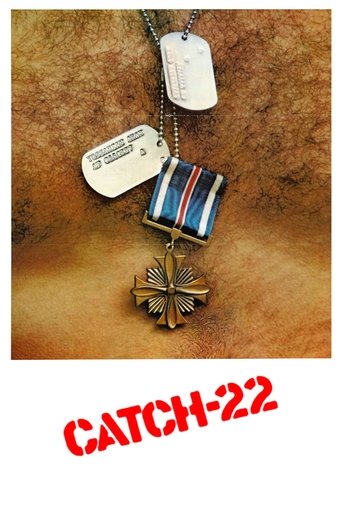
>Garfunkel began acting, and played Captain Nately in the Nichols film Catch-22 (1970). Simon was to play the character of Dunbar, but screenwriter Buck Henry felt the film was already crowded with characters and wrote Simon's part out.[83][84] Filming began in January 1969 and lasted about eight months, longer than expected.[85][86] The production endangered the duo's relationship;
Entirely possible since they weren't making music, touring or doing fuckall but wait for their part in the movie. Garfunkel's character doesn't have particularly crazy amounts of screen time either.
"Catch 22" was also presumably read for work, he played Nately in the film version that was in production in 1969: https://www.imdb.com/title/tt0065528/
“The Egyptian” by Mika Waltari is a bit rare in English but it’s really a stupefyingly good historical novel. There is also a Hollywood film from 1954 but can’t really recommend it. The book is timeless, and describes all sorts things a person can face in a complex society (while retaining a historical context). It’s a bit like Catch-22 but without the humour, but the dark tone results in a cathartic reading experience.
The protagonist is effectively an expert professional and a fallible human rather than a Mary-sue swashbuckler - and as such is very relatable.
I always feel like 'Catch 22' is underrated as a reference point for bonkers situations, including current US politics. It is very lengthy though, so that explains why it's not so widely read.
The movie 'Brazil' treads some of the same themes. Basically, not just dystopia, but incomprehensible absurdity.
The pasted text is from the film script, which isn't really optimal for reading. The passage from the book[1] is a bit more readable. The scene does work well in the film, but it leaves a little something to be desired on the page.
The book is a classic; the film is pretty good but not groundbreaking the way the book is. The passage out of context lacks a bit of the overall flow that helps the book work. It looks like mere absurdism rather than the rigid but off-kilter logic that pervades the narrative. It's about the way the military forces you to buy into an authoritarian system as the only way to risk your own life for no reason you can see, which manifests as ridiculous incentives. And that goes well beyond military life, which is why the book is widely held as a classic.
I really can't say if you'd enjoy it or not, but if you like Monty Python and Douglas Adams you might find it reminiscent.
It's a nice meditative film review, and a piece of history; but what does it actually tell us about air combat? It tells us that WW2 strategic bombing suffered appalling losses, and that this left the survivors with what we would now call PTSD. Also the lesson of Catch-22.
>Finishing an amazing story, you feel a let down afterwords; the characters were not real and you can never interact with them.
For whatever reason I've never heard anyone say this before but that's exactly the experience I had after I went and saw James Cameron's "Avatar" (2009) in 3D at the cinema back when it came out. I think I may have had that same feeling after finishing a couple of books as well -- probably after Catch-22 and after Cryptonomicon -- and likely some other movies too but Avatar is the one that I remember having had that feeling after.
Anyway, thanks for making me aware that others have felt the same way about fiction. Of course, I don't believe that any of my feelings are unique in the way that nobody else has felt the same but I hope you get what I mean. Also, when I say that I remember the feeling, I don't mean mean to say that I still keep wishing I could travel to Pandora or interact with the blue catpeople -- the feeling itself faded within a few hours or days or something like that, but the memory of having had that feeling stuck with me :)
I had the same thought, and my personal opinion is "not even close." Idiocracy was good, but very much "one note." I can think of other better films - MAS*H comes to mind, not to mention Catch-22 (though somewhat uneven, still better). Even Mel Brook's movies - Young Frankenstein, and The Producers, especially.
Nothing in Idiocracy matches "Springtime for Hitler."
I think it would be super boring. I myself would not read a documentary account of my life.
Technically, it's basically either "learning how to do increasingly advanced satellite tech/eng work in the field, starting from a strong IP networking and sort of college ee/rf background" at the same time the industry itself was developing (late 1990s-mid 2000s). Also, political crap trying to deploy linux based servers on windows/activedirectory centric networks, with multiple layers of policymakers involved in every decision. Very very little worthwhile technology. The only people in the overall government space doing commercially-normal interesting tech seem to be TIGR, and for mostly-awesome (but still inferior to b2c webapps, by a mile!), Palantir.
On top of that, the whole sealand thing from 2000-2002, and anon ecash stuff in the caribbean from 1995 (mit) through 1999 or so.
Then, learning more about defense contracting and how the military works, having zero background to start, from 2003 onward.
And the "going to iraq thinking it would just be reconstruction and a technology land-grab, and it turns into a shooting war after the war itself is done" thing.
Combine that with generic startup things with somewhat more fraud and logistics problems than you'd face in the US, and living in a mix of crappy (iraq, afghanistan) and boring (5-star hotels in dubai and kuwait).
If you're interested in the war part, actual soldiers have way more interesting stories from iraq or afghanistan. For the tech part, the technology itself is really boring. For the military psychology part, just read catch-22 and slaughterhouse five.
Plus, writing it fully accurately would make me either look dumb or naive most of the time, and there are OPSEC and liability concerns detailing what other people have done or failed to do.
I think the most workable solution would be some kind of "techno-thriller" set in relevant places, but fictionalized.
 Hacker Cinema



13 comments on Hacker News
Oh yeah? I’ll add it to my list. I’ve served and I was thinking of passing on it.
Luckily I was well versed before I showed up to Uncle Sam’s doorstep. Catch-22 paints paints a good picture. And had a high counselor who was a Vietnam vet and said Apocalypse Now was the most realistic Vietnam movie he’d. And I can’t say that my experiences in were too far from my expectations.
I think the thing people don’t get about the military, at least speaking of my experience in the US’s, is even in places like special operations units and doing the stuff that reads great in a newspaper, often enough there’s an absolute, epic, comedic shitshow going on inside with a cast of characters that you couldn’t even do justice to in a goofball comedy. Suppose that might apply to lots of things. Luckily, no military really has to have their shit together, they just gotta be better than the other side.
Both Kurt Vonnegut and Neal Stephenson seek to plumb the intersection between technology and religion, between science and popular culture - but where Vonnegut adheres to the literary traditions of the Western Satirical Canon, Stephenson choose to plough a far more meta-referential narrative path that is weighted by all the detrimental issues associated with Young Adult fiction without representing any of the strengths of the genre.
This is fairly understandable when you look at their respective backgrounds. Vonnegut was a Combat Infantry veteran, earning a Purple Heart in World War 2. He was interned in Dresden, where he survived the Allied bombing of the city in a meat locker of the slaughterhouse where he was imprisoned - emerging to find an alien landscape not unlike the moon. This was, in fact, the eponymous 'Slaughterhouse Five' from which his magnum opus takes its name.
His use of satire, gallows humour and science fiction was rooted in the tradition of the golden era of Science Fiction - namely, the use of these literary devices to try and make sense of a seemingly uncaring and alien world and society that was changing with unprecedented rapidity.
You see Joseph Heller doing very similar in 'Catch 22' when utilising similar narrative devices like non-chronological timelines, omniscient 3rd person narrators, and satirical paradoxes to describe and to try and make sense of his own brutal and often paradoxical experiences serving in the Korean War.
Stephenson, in contrast, is mired in the self-referential and meta posturing of late 80s American University culture - as befitted his first and possibly most insightful book 'The Big U' - a scathing indictment of the homogenisation of the American University system as it geared towards research over pure academia.
The book he is most lauded for - Snow Crash - is in many ways a poor facsimile of Gibson's Neuromancer. Even the title, which Stephenson contends was a result of his computer crashing with a malformed bitmap that '...looked vaguely like static on a broken television set—a 'snow crash...' is lifted conceptually from the opening pages of Neuromancer - "The sky above the port was the color of television, tuned to a dead channel.".
The plotting characterisation and story beats when not directly lifted from Neuromancer, are reinterpreted chunks of Philip K Dicks 'A Scanner Darkly' and the 'The Three Stigmata of Palmer Eldritch' respectively, and what little innovation he brings to the world building is mired in a comic book aesthetic, versus the film noir salience of Neuromancer.
Many would content that this is the point - that Stephenson is playing with the tropes of the Cyberpunk genre. Unfortunately this doesn't explain away his stylistic choice (or sheer lack of ability) to avoid huge explanatory passages that destroy any semblance of pacing or advancing a narrative midway through the book. This, in many ways, is indicative of the 'tell, don't show' fumbling of Cory Doctorow in the way he punches down to his predominantly YA audience.
From ze vikipedia pages of Simon und Garfunkel:
>Garfunkel began acting, and played Captain Nately in the Nichols film Catch-22 (1970). Simon was to play the character of Dunbar, but screenwriter Buck Henry felt the film was already crowded with characters and wrote Simon's part out.[83][84] Filming began in January 1969 and lasted about eight months, longer than expected.[85][86] The production endangered the duo's relationship;
Entirely possible since they weren't making music, touring or doing fuckall but wait for their part in the movie. Garfunkel's character doesn't have particularly crazy amounts of screen time either.
"Catch 22" was also presumably read for work, he played Nately in the film version that was in production in 1969: https://www.imdb.com/title/tt0065528/
Too many facets to this question...
to adolescent me: https://en.wikipedia.org/wiki/Weird_Science_(film)
to middle aged me: https://en.wikipedia.org/wiki/Office_Space
But, in relation to HN? Perhaps https://en.wikipedia.org/wiki/Catch-22 mixed with https://en.wikipedia.org/wiki/Schizopolis
“The Egyptian” by Mika Waltari is a bit rare in English but it’s really a stupefyingly good historical novel. There is also a Hollywood film from 1954 but can’t really recommend it. The book is timeless, and describes all sorts things a person can face in a complex society (while retaining a historical context). It’s a bit like Catch-22 but without the humour, but the dark tone results in a cathartic reading experience.
The protagonist is effectively an expert professional and a fallible human rather than a Mary-sue swashbuckler - and as such is very relatable.
[0] https://en.wikipedia.org/wiki/The_Egyptian
I always feel like 'Catch 22' is underrated as a reference point for bonkers situations, including current US politics. It is very lengthy though, so that explains why it's not so widely read.
The movie 'Brazil' treads some of the same themes. Basically, not just dystopia, but incomprehensible absurdity.
The pasted text is from the film script, which isn't really optimal for reading. The passage from the book[1] is a bit more readable. The scene does work well in the film, but it leaves a little something to be desired on the page.
The book is a classic; the film is pretty good but not groundbreaking the way the book is. The passage out of context lacks a bit of the overall flow that helps the book work. It looks like mere absurdism rather than the rigid but off-kilter logic that pervades the narrative. It's about the way the military forces you to buy into an authoritarian system as the only way to risk your own life for no reason you can see, which manifests as ridiculous incentives. And that goes well beyond military life, which is why the book is widely held as a classic.
I really can't say if you'd enjoy it or not, but if you like Monty Python and Douglas Adams you might find it reminiscent.
[1] https://www.google.com/books/edition/Catch_22/Xfze51E7TEoC?hl=en&gbpv=1&dq=Chocolate-covered+cotton&pg=PA245&printsec=frontcover
Source is the movie. https://en.wikiquote.org/wiki/Catch-22_(film)
It's a nice meditative film review, and a piece of history; but what does it actually tell us about air combat? It tells us that WW2 strategic bombing suffered appalling losses, and that this left the survivors with what we would now call PTSD. Also the lesson of Catch-22.
>Finishing an amazing story, you feel a let down afterwords; the characters were not real and you can never interact with them.
For whatever reason I've never heard anyone say this before but that's exactly the experience I had after I went and saw James Cameron's "Avatar" (2009) in 3D at the cinema back when it came out. I think I may have had that same feeling after finishing a couple of books as well -- probably after Catch-22 and after Cryptonomicon -- and likely some other movies too but Avatar is the one that I remember having had that feeling after.
Anyway, thanks for making me aware that others have felt the same way about fiction. Of course, I don't believe that any of my feelings are unique in the way that nobody else has felt the same but I hope you get what I mean. Also, when I say that I remember the feeling, I don't mean mean to say that I still keep wishing I could travel to Pandora or interact with the blue catpeople -- the feeling itself faded within a few hours or days or something like that, but the memory of having had that feeling stuck with me :)
I had the same thought, and my personal opinion is "not even close." Idiocracy was good, but very much "one note." I can think of other better films - MAS*H comes to mind, not to mention Catch-22 (though somewhat uneven, still better). Even Mel Brook's movies - Young Frankenstein, and The Producers, especially.
Nothing in Idiocracy matches "Springtime for Hitler."
I think it would be super boring. I myself would not read a documentary account of my life.
Technically, it's basically either "learning how to do increasingly advanced satellite tech/eng work in the field, starting from a strong IP networking and sort of college ee/rf background" at the same time the industry itself was developing (late 1990s-mid 2000s). Also, political crap trying to deploy linux based servers on windows/activedirectory centric networks, with multiple layers of policymakers involved in every decision. Very very little worthwhile technology. The only people in the overall government space doing commercially-normal interesting tech seem to be TIGR, and for mostly-awesome (but still inferior to b2c webapps, by a mile!), Palantir.
On top of that, the whole sealand thing from 2000-2002, and anon ecash stuff in the caribbean from 1995 (mit) through 1999 or so.
Then, learning more about defense contracting and how the military works, having zero background to start, from 2003 onward.
And the "going to iraq thinking it would just be reconstruction and a technology land-grab, and it turns into a shooting war after the war itself is done" thing.
Combine that with generic startup things with somewhat more fraud and logistics problems than you'd face in the US, and living in a mix of crappy (iraq, afghanistan) and boring (5-star hotels in dubai and kuwait).
If you're interested in the war part, actual soldiers have way more interesting stories from iraq or afghanistan. For the tech part, the technology itself is really boring. For the military psychology part, just read catch-22 and slaughterhouse five.
Plus, writing it fully accurately would make me either look dumb or naive most of the time, and there are OPSEC and liability concerns detailing what other people have done or failed to do.
I think the most workable solution would be some kind of "techno-thriller" set in relevant places, but fictionalized.