 Hacker Cinema
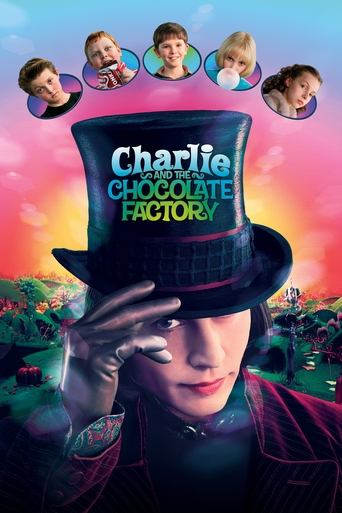
Charlie and the Chocolate Factory
2005 · Film · 115 min
Directed by Tim Burton
A young boy wins a tour through the most magnificent chocolate factory in the world, led by the world's most unusual candy maker.
1 positive13 neutralfrom 14 commenters
Where to watch
No streaming data for this title.

14 comments on Hacker News
Life led me to consultancy to tech oriented companies, and I can say that like the father at Charlie and the Chocolate Factory (film), I make more money fixing the machine than I did doing the work the machine is now doing.
From what I saw, people might be able to produce code faster, but at least for now its design frays heavily at the edges (scaling, resiliency, security).
On back to school, I can personally report that I tried that and gave up because uni knowledge cramming felt much more boring compared to learning work-related stuff.
> back in 2005 when movies were still far from the rock bottom current era of spandex, sequels, and remakes!
Really? If anything, I’d say the frequency of remakes and sequels is going down from how I remember things back then.
The top movies in 2005 were Star Wars 3, a Harry Potter Sequel, a War of the Worlds remake, Charlie and the Chocolate factory remake. We also got spandex remakes of Batman Begins and Fantastic Four. Hardly some golden era of original storytelling
The first movie adaptation of Charlie and the Chocolate Factory was quite good, nonetheless they're already working on a 3rd.
they edited "Charlie and the Chocolate factory". As the Umpa-Loompas where... something else. Of course that was done to the book before the movie was made.
https://www.roalddahlfans.com/dahls-work/books/charlie-and-the-chocolate-factory/politically-correct-oompa-loompa-evolution/
Then you need to stop reading Dahl, because he rewrote his own books as part of the culture war.
In his original Charlie and the Chocolate Factory, the Oompa-Loompas were African Pygmies. The NAACP complained, and Dahl rewrote them in 1973 to be white-skinned. In the 1971 movie they were portrayed as orange-skinned, and in the 2005 movie as brown.
Each of those falsifies the original literature.
And you're right - these changes affect the interpretation of the original story!
As "Charlie and the Great Glass Elevator" more clearly shows, the books are also commentary about then-current society. Post-war England opened the labor market and granted British citizenship to the New Commonwealth. Black-skinned Anglo-Caribbean and brown-skinned people from the Indian subcontinent moved to England, causing English people to protest how "white" English jobs were being stolen. It's not hard to draw a parallel between that and how the workers in Wonka's chocolate factory were kicked out, replaced by Oompa-Loompas who were illegally smuggled in to the country.
Rewriting the books and movies to avoid possible associations with African slavery obscures this interpretation.
Also, don't read Agatha Christie's "And Then There Were None". Even though it's the world's best-selling mystery, it's also been rewritten, including even the title.
There's been a disappointing lack of nuance in the HN discussion of this topic.
The particular changes that were made to the altered editions strike me as quite stupid, for the most part.
However, there is nothing new about media being edited to remove offensive language. It may be pointless and stupid in many instances – but it's not the sign of some incoming cultural apocalypse.
I can easily think of less recent examples:
* Charlie and the Chocolate Factory. The book was edited (within Dahl's lifetime) to change the depiction of the oompha loompas as black slaves.
* Biggles. The Wikipedia article mentions that "...later editions had to be somewhat edited in line with changing norms of acceptability, especially regarding race..."
* Under Drake's Flag. I remember reading a heavily edited version of this as a child in the 90s. I haven't read the original, but I think G.A. Henty was, err, less than entirely progressive on issues relating to race and colonialism.
* The Dam Busters movie. The n-word (used as the name of a dog!) is usually edited out or overdubbed (https://www.theguardian.com/media/2001/jun/11/itv.broadcasting).
Each change has to be judged on its merits. What I think is silly is the pretense that these changes to the Dahl canon signal a new phase in the culture wars or some new era of censorship. Kids today actually have access to a much wider variety of literature than at any point in the past.
also the image of the Oompa Loompa in 'charlie and the chocolate factory' can also be interpreted as racist. The NAACP launched a protest, back in 1971 - at a time when racism was much more common. https://daily.jstor.org/roald-dahls-anti-black-racism/
The movie paints them with orange colored skin, no one was protesting that edition of the original text.
A common meme to refer to Google, based on Charlie and the Chocolate Factory movie.
What do you suppose the mechanism is for the Charlie and the Chocolate Factory image having a golden ticket held aloft by somebody’s right hand, with a person in a purple outfit and top hat? The page says:
> a brief text description of a movie
However apart from the existence of a golden ticket, I wouldn’t expect those details to make it into a brief description of the film. And yet there’s an original poster matching those details that the VQGAN + CLIP generated image seems to draw from.
Dahl wrote a lot of very unique children's books - fantasy novels. Several have been adapted into films: "James and the Giant Peach", "Matilda", "Charlie and the Chocolate Factory", "The Witches", "Fantastic Me Fox".
>Morbidly fat teenagers were basically nonexistent then.
This is always striking to see in movies with the "fat" kid. As an example, look at Willy Wonka from 1971 and 2005
https://www.bbc.com/news/entertainment-arts-37220788 ['71 on the left]
https://www.digitalspy.com/movies/a798428/what-tim-burton-charlie-and-the-chocolate-factory-young-cast-look-like-now/ [2005 on the left]
The fat gluttonous kid from 1971 barely looks abnormal today. While the one from 2005 is morbidly obese.
We could also check whether "The Willy Wonka elevator" arouses more curiosity: It's a feature of the Charlie and the Chocolate Factory book (and in the movie from Tim Burton).
The movie itself is no longer the value. You have your 50" TV at home, with your own drinks and friends.
Why would you go out and pay a lot of money if you can One-Click-Download your way to better "value" watching the movie at home?
So focus on creating extra value. The movie ticket has a dual role as a lottery ticket. Maybe you can win 1% of the revenue -or- your can win a trip for 2 to a Hollywood red carpet event.
Hell, Charlie and the Chocolate Factory style golden ticket: win yourself a chance to star in the movie studio's next big production.
IMDB reports that 2322 movies were released in 1939 alone, is it really surprising that there were a handful of good movies among them?
1980 for comparision, IMDB lists 6007 movies (8000+ if you include TV movies), and contains modern (popular) classics such as Stir Crazy, Superman II, Empire Strikes Back, Airplane!, The Blue Lagoon, Ordinary People, Urban Cowboy. The Shining, Caddyshack, Raging Bull, Friday The 13th, The Fog, The Blues Brothers.
Hmm, looks like 1980 was a much more 'classic' era than the 40s for hollywood, but you wouldn't have heard that from film buffs in the 80s.
Hollywood has always been a great abuser of the 'sling lots of shit at the wall and see what sticks' approach to 'greatness', they're just slinging a lot more shit these days.
Even if we take a really contemporary year and do the same study, we see a pattern of greats no matter what year, take 2005 at random:
Batman Begins, Sin City, V for Vendetta, Revenge of the Sith, King Kong, Brokeback Mountain, Harry Potter/Goblet of Fire, Serenity, Charlie and the Chocolate Factory, Mr & Mrs Smith, Wedding Crashers, Munich, Saw 2, Hostel, Hitchhiker's Guide to the Galaxy, Madagascar, Pride & Prejudice, Land of the Dead.
Ah, but the movie buff will point out that they're not established classics like Gone with the Wind, or Wizard of Oz. Not yet, anyway.
Edit: Btw, for 2005, the number of movies was 28,000+. Is it any wonder that there is a lot of formulaic stuff in there as well?