 Hacker Cinema
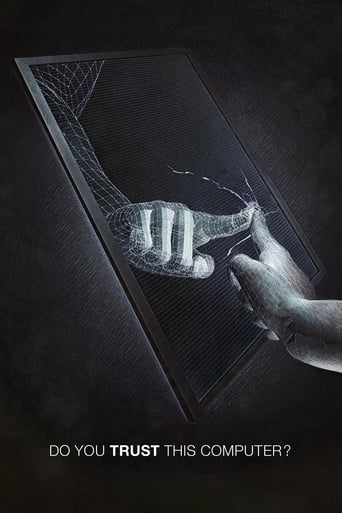
Do You Trust This Computer?
2018 · Film · documentary · 78 min
Directed by Chris Paine
Science fiction has long anticipated the rise of machine intelligence, and today a new generation of self-learning computers has begun to reshape every aspect of our lives. Will A.I. usher in an age of unprecedented potential, or prove to be our final invention?
1 positive2 neutralfrom 3 commenters
Where to watch
No streaming data for this title.






3 comments on Hacker News
Given that it's the experts themselves talking in Do You Trust This Computer, and Pinker describing experts in his own work, I'd give stronger credit to the former, more direct, evidence. That is: letting the experts express their views directly.
There remains the possibility that there is a difference between "the set of top experts in the field included in this documentary" and "a survey or statement from the larger share of practitioners within the field". This ... runs into a few additional problems.
Documentaries can (and with some frequency are) selective and nonrepresentational. That is, a documentary's goal is not to Reveal The Statistical Truth, but To Tell a Specific Story. Documentaries are driven by narrative, not random sampling and statistical analysis.
That said, stats can lie and crafted stories can be quite useful.
A large-scale sampling of opinion is also ... largely just that. A large-scale sampling of opinion. Even if that's expert opinion. It is not the same as arriving at a truth (unless the truth you're seeking to arrive at is "what is the typical or general opinion held on some matter by some population?").
The views and concerns of top practitioners within a field is often highly significant. It may still be inaccurate (or be inaccurately portrayed). But these are the people who've worked with a thing for a long time, who've seen what does and doesn't work, what is or isn't hyped. And you'll often find exceptionally strong critics of various fields or technologies.
Leading atomic scientists in the U.S. and USSR both came to oppose nuclear weapons: Robert J. Oppenheimer and Andrei Sakharov. The Father of the Nuclear Navy, USN Admiral Hyman Rickover, came to oppose nuclear power. There are numerous technologists who are now questioning the goal of universal connectivity (myself included, though my qualifications are expressly not available for or any basis for credence). And in the field of AI, there are numerous significant, long-term, and leading researchers who are raising profound questions of advisability and risk.
Or, you know, you could go with the Good Humour guy, Pinker.
They can apply this same system to outsiders too as long as they can buy or gather the data.
They could then use this inside of countries other than China, where they own increasing numbers of business interests including employers.
So this will start affecting behaviors even of non-Chinese people as people anticipate their behavior getting put into the system at some date in the future. Even if the system isn’t in place here yet.
It’s like a preview version of the immortal dictator Elon Musk talks about in the new “Do You Trust This Computer” movie.
https://vimeo.com/263108265#t=3513s
Tangential sidenote on who is actually in control. This 5 minute snippet from the new documentary 'Do You Trust This Computer?' presents an interesting perspective on how easily FB can be used to influence entire nations. Poses an interesting question of who is driving our electorate.
Seems like if FB acting in it's own best interest to promote user engagement, then it'll be very hard for them to prevent bad actors from weaponizing these very algorithms to influence large swaths of people.