 Hacker Cinema
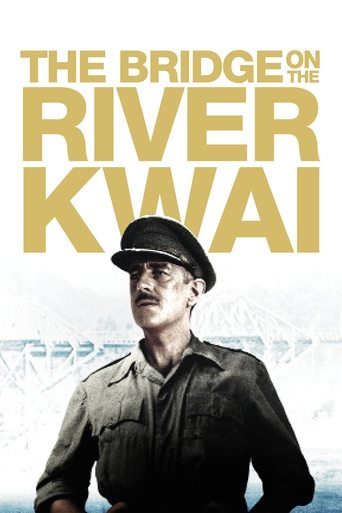
The Bridge on the River Kwai
1957 · Film · 162 min
Directed by David Lean
The classic story of English POWs in Burma forced to build a bridge to aid the war effort of their Japanese captors. British and American intelligence officers conspire to blow up the structure, but Col. Nicholson, the commander who supervised the bridge's construction, has acquired a sense of pride in his creation and tries to foil their plans.
1 positive9 neutralfrom 10 commenters
Where to watch
No streaming data for this title.
Videos commenters linked
From YouTube links in the comments below. Most are clips and trailers; “Full” means the uploader says so.




10 comments on Hacker News
One minor issue I've noticed with streaming is the quality. I went to watch A Bridge on the River Kwai the other day. I could borrow it from my library on Kanopy for free, but the audio was only in stereo. The $4 iTunes rental supported Dolby Atmos, which took advantage of my speaker system, and the video quality was comparably better. I ended up paying despite the library having it because iTunes offered a better experience that was easy to access.
iTunes movie rentals seem to almost always win out when it comes to streaming specifically. I don't know why I would want to watch something on Prime Video at a lower quality and sit through ads. I've also encountered a number of services such as Peacock that absolutely refused to run on my Linux laptop even though I was a paying customer.
Further, the iTunes versions of movies often come with special features (e.g. The making of the Lord of the Rings). They also earned a lot of goodwill from me when they upgraded a number of my HD movies to 4k for free.
I do maintain a Jellyfin server with movies and shows I have legally purchased because I didn't like how the digital version of my James Bond movies had the final movie on a different streaming app. It's really hard to beat that setup if you know how to configure it. My Jellyfin server contains an episode of community from the DVD I own that was removed from streaming services, and that's where it really shines. I also have higher quality versions of Star Wars than the VHS copies I own.
Nonetheless, I think iTunes proves what an effective model is in a similar vain as Steam is to gaming. Shame that unlike Steam's relationship with Linux, iTunes is much more tied to Apple. At least the Apple TV is genuinely a good streaming box.
I think this is basically the final scene from "The Bridge on the River Kwai" movie as well
I had hopes that we would be modifying them genetically to help everone have productive places in our society. Instead, we seem determined to live out the movie Idiocracy while simultaneously living out Bridge on the River Kwai.
I think of the film The Bridge on the River Kwai as being a great cautionary tale for engineers, the myopic pursuit and pride in solving engineering problems at the expense of one's larger mission.
Say what you will about the Hays Code, but I would hardly consider Gone With the Wind, The Great Dictator, Casablanca, It's a Wonderful Life, Sunset Boulevard, The Ten Commandments, The Bridge on the River Kwai, Ben-Hur, Spartacus, Psycho, West Side Story, Lawrence of Arabia, To Kill a Mockingbird, Paths of Glory, It's a Mad, Mad, Mad, Mad World, Mary Poppins, The Sound of Music, or, you know, Citizen Kane to be especially "crappy" movies.
I love your comment. So insightful. Let me tell you why.
Earlier today I spent some time to read about "Lawrence of Arabia" (I watched it a couple of days ago, essentially for the first time in my life), and I discovered so many interesting things, such as:
1) The movie received 7 oscars!
2) It was based on the life of T.E. Lawrence
3) The director, David Lean, also directed "Bridge on the river Kwai" in 1957 (which also won some oscars), before working on Lawrence of Arabia.
4) There's no love story. The movie lasts for almost 4 hours! It was shot in 70mm.
5) It's interesting how the protagonist's sexuality is never openly discussed, but it's hinted that he might have been homosexual.
Etc. So, after half an hour reading about it, I realized how much more there is, besides the movie itself.
Your comment on Metropolis gave me similar insights about that movie. Thanks again for sharing it.
HAL was following static orders in a radically changed environment which was not thought of when the static orders were designed. This is really a problem of any formal / religious / moral system designed by humans and ultimately comes down to the fact that we cannot look into the future.
If you want to see a movie where this problem is brought to the extreme and affects a human instead of a computer, watch The Bridge on the River Kwai. It's the (SPOILER ALERT) story of a British military commander (Col. Nicholson) who as a POW in a Japanese camp is ordered to build a railway bridge. Following his "western" standards regarding work ethic and craftsmanship, he and his men against all odds succeed in building a high quality bridge which he thinks is proof of the superiority of their western values and knowledge. At the end, he finds himself in a battle to safe this (as he perceives it) monument to the superiority of his culture against attackers - only to realize too late that because of a radical environmental change he could not foresee, the attackers are actually American and British forces. By defending his culture, he actively battled it. In the end, as he realizes his mistake, he is a broken man: https://www.youtube.com/watch?v=tRHVMi3LxZE&feature=youtu.be&t=51
Whether a machine (HAL) will ever be capable of the insight of realizing such a mistake on a grander scale like Colonel Nicholson in the last minutes of the movie is another question :)
Cartrivision: https://en.wikipedia.org/wiki/Cartrivision
> Cassettes of major movies such as The Bridge on the River Kwai, Guess Who's Coming to Dinner, Dr. Strangelove, High Noon, It Happened One Night, Divorce Italian Style, The Quiet Man, The Belles of St Trinian's, Two Rode Together and Brother Rat[4] were ordered via the initial 200-movie catalog at a retailer, delivered by parcel mail, and then returned to the retailer after viewing. These rental cassettes were red, approximately 7 inches (180 mm) high by 6.5 inches (170 mm) wide by 1.5 inches (38 mm) deep (however used the same videotape used today) and could not be rewound by a home Cartrivision recorder. Rather, they were rewound by a special machine upon their return to the retailer.[5] Other cassettes on sports, travel, art, and how-to topics were available for purchase. These cassettes were black, and could be rewound on a Cartrivision recorder. An optional monochrome camera manufactured for Cartrivision by Eumig could be bought to make home videos. A color camera was in the works but never materialized before CTI's demise.
Well, let's flip it around. Would Bridge on the River Kwai have been a better movie if it depicted gruesome carnage?
There's some interesting stuff on that list but I don't think it'd be competition to anything. I like the idea that the kids would be watching Bridge on the River Kwai instead of the latest recruitment video but it doesn't seem likely.
Of course, the studios would lose the long-tail revenue from controlling movies like Bridge on the River Kwai (or licensing the movie rights to things like the old version of 3:10 to Yuma) and that does add up.