 Hacker Cinema
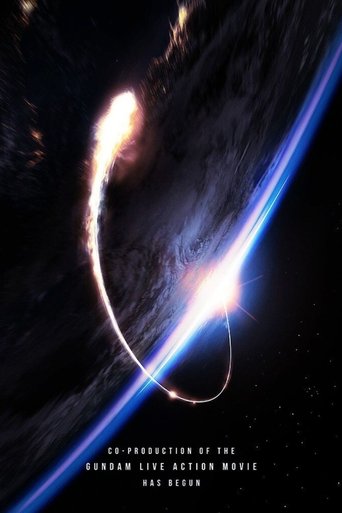
Gundam
Film
Directed by Jim Mickle
Rival mech pilots fight on opposite sides of decades-long war between Earth and its space former colonies. As shifting allegiances and a growing threat set them on a collision course for one another, these pilots are pulled into a high-stakes race across the stars that could define the fate of humanity.
1 positive4 neutralfrom 5 commenters
Where to watch
No streaming data for this title.




5 comments on Hacker News
> Because we could buy stuff without leaving the house?
I'm guessing you were still pretty young/not yet born at the time?
Online shopping didn't just mean "I don't have to leave the house", it opened up a whole world of what was even possible.
Prior to the web if you didn't live in a big city (and less people did then) then your access to books, music, movies was insanely restricted.
I deeply recall how painfully limited my local Sam Goody was, even major "alternative" bands only had partial discographies available. I remember visiting my father's college campus as an early teen and being beyond excited to find a copy of NIN's "halo 1" in a college town record store. True indie music was reserved for kids with cool older siblings that both knew where the stores were and could drive there. In order to watch Dragon Ball Z I had to rely on a friend whose dad was a plumber in NYC and knew where the bootleg stores in China-town were. I got to tag along once and picked up a single random episode of a Gundam series, never to be finished because I could never find another.
Sure it was sort of fun to figure all this stuff out, but at the same time my bookshelf is filled with books that changed my life in various ways I would simply never had been able to find (or even be aware of) in the pre-web days. If you wanted to learn programming in the 90s you had to hope your local Walden books had some good options, and you certainly weren't going to learn Haskell or Lisp. Mine only had books on Excel, so I didn't learn to program until I was older.
Now the fact that American suburbs where a complete cultural wasteland in the 90s might be the bigger issue than the cure which was the web, but nonetheless the early web did make the world of information much bigger.
> Popular shows of 80-90s avoided trauma and ambiguity. Everything was simple and morally clear.
Popular western shows did; I've started watching the Gundam series, the first set started in '79 and while superficially it looks like your generic saturday morning cartoon, it starts off with trauma (many people killed) and while the villains are obviously evil - genocide, nazi ideologies ("sieg zeon"), etc - they also get more character development than what the protagonists get. The villains are the underdogs, only 1/30th the size of the "federation", and the good guys have a new set of superweapons that seems to win and kill their people on every occasion. There's two episodes where a "villain" character is introduced as a lover, ambitious military man, etc, then gets killed, his would-be wife killing herself in the next episode.
Anyway, that's just recent experience, I'm sure if you revisit some of the 80's / 90's shows you'd see more trauma / ambiguity too. I'm thinking of the X-Men series for example.
When I say it could sustain a studio, I just mean revenue from merchandise sales etc... It's such a popular IP there's an entire theme park devoted to it.
I'd say NGE is absolutely more popular than Gundam. I think there's a perfect "target age" to get into NGE, and that age is 13-15 and new generations discover it. Quentin Tarantino once said the same thing about a lot of his old movies.
But what is The Witch of Mercury really about, other than some amazing mechas, which make for cheap, amazing looking merchandising? It's about a bunch of teenagers trying to live a good life in an apparently sensible high school/military academy, and having all kinds of positive dreams... while the reality is much different. Basically every parent is a manipulative monster. Everything that appears remotely positive gets crushed 2 episodes later. It's not a series about the wonders of the future. It's all about how the world is horrible, and no matter how much you want to pretend, the adult's horror has infected your world too. So even the the Gundam series you talked about is really about a dystopia where teenagers are turned into weapons by old people, and they will, predictably, have to overturn the old ruling class.
Not that Gundam was ever all that optimistic: Good old Amuro was the poster boy for the disasters of war back in the very first series. The fact that there's cool robots is just sweetener for stories that are mostly about dealing with betrayal and despair. It's not quite Grave of the Fireflies, but it's not any less grim than, say, Evangelion.
I think the space sunshade is the optimal case for manufacturing with space materials.
An asteroid like 24 Themis
https://en.wikipedia.org/wiki/24_Themis
is rich in volatiles (carbon, hydrogen, nitrogen) and also in stony minerals. You'd need to send a factory that builds a larger factory, it is a lot like building a ship inside a bottle except it's the other way around, you're in the bottle and have to build the ship outside.
What's funny about it is that you have to use the kind of chemistry that people use to capture carbon, make e-fuels, etc. on Earth. An asteroid like that has materials on it that are a lot like coal and you will have something that looks like a petrochemical plant that runs combustion processes but the carbon is too precious to vent into space so you will circularize as much as you can.
There is also a large sail yard that makes something like
https://en.wikipedia.org/wiki/IKAROS
basically large plastic films coated with layers of aluminum.
it doesn't have to be high performance compared to other solar sails, in fact a heavier and less reflective sail will sit closer to Earth near the L1 point and be more effective at blocking sunlight.
Some real headscratchers for me are: (1) Do you send people? If you don't you need to run the whole thing remotely and face a half hour latency when you're debugging problems. If you do then you have to build a habitat for the crew. (2) I think a good asteroid for this might be pretty gassy and if you start digging into it the gas will escape which is not only a precious resource but could be dangerous. You're going to have to do devolatilization at the very beginning when your stock of materials, storage tanks, and such are at the very lowest they'll ever be.
The big advantage of this is that it won't have effects on Earth other than reducing sunlight.
If I were going to write a science fiction story about this it might be a bit like Gundam in that the "Zeons" decide that sinful Earthers deserve to have their civilization fall and they send too many sunshades to L1 to drop sunlight and temperatures enough to crash agriculture. Maybe 1000 years later their descendants arrive on Earth...
(One thing about Gundam is the giant robots are more plausible than the O'Neill colonies with large airspaces... I sketched out a minimum size Bernal sphere to be a really flashy destination in LEO and it needs 15 Starship loads of ammonia to make the atmosphere. It drives me nuts that some article gets published about making oxygen on the moon for people to breathe, which isn't really useful unless you can get 4 parts of nitrogen, helium or SF6 to go with it... If you try breathing pure O2 that's a sure way to "burn out" as opposed to "fade away" https://en.wikipedia.org/wiki/Apollo_1)