 Hacker Cinema
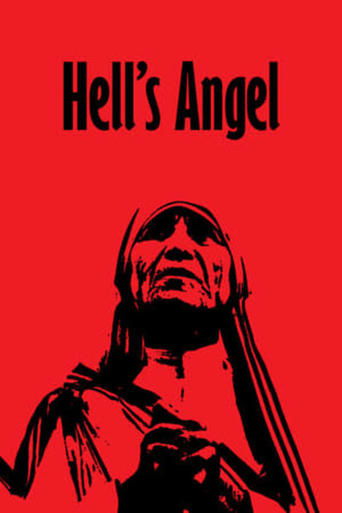
Hell's Angel
1994 · Film · documentary · 25 min
Directed by Jenny Morgan
Christopher Hitchens investigates whether Mother Teresa of Calcutta deserves her saintly image. He probes her campaigns against contraception and abortion and her questionable relationships with right-wing political leaders.
1 positive1 negativefrom 2 commenters
Where to watch
No streaming data for this title.





3 comments on Hacker News
What did Christopher Hitchens get wrong about Mother Teresa?
Sounds like her veneration was a vast overcorrection of a terribly harsh reality, that people who are faith and fairytale based instead of fact and evidence based simply refuse to accept.
Not even the highly but undeservedly venerated Elon Musk is known to have been involved in wrongly defending child sexual abusers, like Mother Teresa absolutely did (although he's certainly well know for accusing innocent people of being child molesters).
And if you're actually against abortion, then it's pretty idiotic and counterproductive to also be against contraception and empowering women, don't you think? That just causes even more abortions and poverty and suffering, which is the height of hypocrisy. Unless causing poverty and suffering is actually your goal, which is exactly Hitchens' spot-on criticism of Mother Teresa.
Hell's Angel (Mother Teresa) - Christopher Hitchens
https://www.youtube.com/watch?v=NJG-lgmPvYA
>Christopher Hitchens investigates whether Mother Teresa of Calcutta deserves her saintly image. He probes her campaigns against contraception and abortion and her questionable relationships with right-wing political leaders.
Is there anything factually incorrect or "vastly overcorrected" in the wikipedia article about her? If you have better facts with supporting evidence, then you should edit the wikipedia pages so they're correct, instead of just posting about it here.
https://en.wikipedia.org/wiki/Mother_Teresa#Criticism
>Criticism
>Main article: Criticism of Mother Teresa
>According to a paper by Canadian academics Serge Larivée, Geneviève Chénard and Carole Sénéchal, Mother Teresa's clinics received millions of dollars in donations but lacked medical care, systematic diagnosis, necessary nutrition and sufficient analgesics for those in pain;[120] in the opinion of the three academics, "Mother Teresa believed the sick must suffer like Christ on the cross".[121] It was said that the additional money might have transformed the health of the city's poor by creating advanced palliative care facilities.[122][123]
>One of Mother Teresa's most outspoken critics was English journalist and antitheist Christopher Hitchens, host of the documentary Hell's Angel (1994) and author of the essay The Missionary Position: Mother Teresa in Theory and Practice (1995) who wrote in a 2003 article: "This returns us to the medieval corruption of the church, which sold indulgences to the rich while preaching hellfire and continence to the poor. [Mother Teresa] was not a friend of the poor. She was a friend of poverty. She said that suffering was a gift from God. She spent her life opposing the only known cure for poverty, which is the empowerment of women and the emancipation of them from a livestock version of compulsory reproduction."[124] He accused her of hypocrisy for choosing advanced treatment for her heart condition.[125][126] Hitchens said that "her intention was not to help people", and that she lied to donors about how their contributions were used. "It was by talking to her that I discovered, and she assured me, that she wasn't working to alleviate poverty", he said, "She was working to expand the number of Catholics. She said, 'I'm not a social worker. I don't do it for this reason. I do it for Christ. I do it for the church'".[127] Although Hitchens thought he was the only witness called by the Holy See, Aroup Chatterjee (author of Mother Teresa: The Untold Story) was also called to present evidence opposing Mother Teresa's beatification and canonisation.[128]
>In 1994, Mother Teresa argued that the sexual abuse allegations against Jesuit priest Donald McGuire were untrue. When he was convicted of sexually molesting multiple children in 2006, Mother Teresa's defense of him was criticised.[129][130]
>Abortion-rights groups have also criticised Mother Teresa's stance against abortion and contraception.[131][132][133]
https://en.wikipedia.org/wiki/Criticism_of_Mother_Teresa
This quote is particularly interesting:
In 2012, William Doino Jr, wrote that "The remarkable thing about Hell's Angel is that it purports to defend the poor against Mother Teresa's supposed exploitation of them, while never actually interviewing any on screen. Not a single person cared for by the Missionaries speaks on camera. Was this because they had a far higher opinion of Blessed Teresa than Hitchens would permit in his film? Avoiding the people at the heart of Teresa's ministry, Hitchens posed for the camera and let roll a series of ad hominem attacks and unsubstantiated accusations, as uninformed as they were cruel."
So true, that "Mother Teresa" is a generic term for the epitome of saintly altruism, but the truth of the matter is that she was a fraudulent self promotor who glorified the suffering of others, claimed poverty and disease were gifts from God that build character, and who Christopher Hitchens described as "a fanatic, a fundamentalist, and a fraud," and called "The Ghoul of Calcutta".
https://en.wikipedia.org/wiki/Criticism_of_Mother_Teresa
>In 2013, in a comprehensive review covering 96% of the literature on Mother Teresa, a group of Université de Montréal academics reinforced the foregoing criticism, detailing, among other issues, the missionary's practice of "caring for the sick by glorifying their suffering instead of relieving it, ... her questionable political contacts, her suspicious management of the enormous sums of money she received, and her overly dogmatic views regarding, in particular, abortion, contraception, and divorce". Questioning the Vatican's motivations for ignoring the mass of criticism, the study concluded that Mother Teresa's "hallowed image – which does not stand up to analysis of the facts – was constructed, and that her beatification was orchestrated by an effective media relations campaign" engineered by the Catholic convert and anti-abortion BBC journalist Malcolm Muggeridge. [...]
>She was sometimes accused by Hindus in her adopted country of trying to convert the poor to Catholicism by "stealth". Christopher Hitchens described Mother Teresa's organisation as a cult that promoted suffering and did not help those in need. He said that Mother Teresa's own words on poverty proved that her intention was not to help people, while he quoted her words at a 1981 press conference in which she was asked: "Do you teach the poor to endure their lot?" She replied: "I think it is very beautiful for the poor to accept their lot, to share it with the passion of Christ. I think the world is being much helped by the suffering of the poor people."
Christopher Hitchens - Mother Teresa: Hell's Angel [1994]
In 1994, three years before her death, journalist Christopher Hitchens made this documentary asking if Mother Teresa's reputation was deserved.
https://www.youtube.com/watch?v=76_qL6fiyDw&ab_channel=CaNANDian
Christopher Hitchens explains why he didn't like Mother Teresa
https://www.youtube.com/watch?v=wckZo3ks1ro&ab_channel=moeman1984
Christopher Hitchens on Mother Teresa (2006)
https://www.youtube.com/watch?v=GZiKAeJ9mAU&ab_channel=Stipoon
Penn And Teller "Bullshit" episode: Christopher Hitchens on Mother Teresa
https://www.youtube.com/watch?v=V4nCaxHN-cY&ab_channel=ChristopherHitchslap