 Hacker Cinema
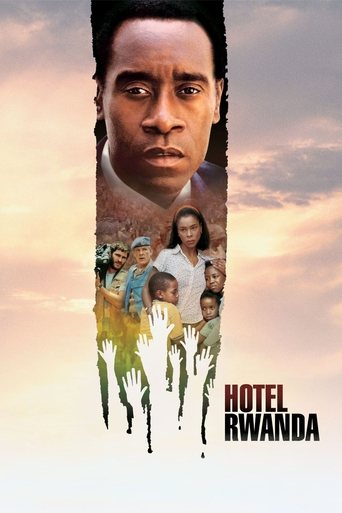
Hotel Rwanda
2004 · Film · 122 min
Directed by Terry George
Inspired by true events, this film takes place in Rwanda in the 1990s when more than a million Tutsis were killed in a genocide that went mostly unnoticed by the rest of the world. Hotel owner Paul Rusesabagina houses over a thousand refuges in his hotel in attempt to save their lives.
3 positive1 mixed3 neutralfrom 7 commenters
Where to watch
No streaming data for this title.
8 comments on Hacker News
Western governments prefer to earn a day's income than sacrifice a whole African tribe since the last centuries up until now. So, no wonders Sudan felt in a hell hole where intertwined interests take place. Only the public outcry through mass media can stop a genocide which in this case does not sell. After a few years the balance of power will settle and may be a movie will be produced, like Hotel Rwanda.
The movie "Hotel Rwanda" is a powerful and emotional portrayal of the events that occurred during the Rwandan Genocide in 1994. However, it is important to remember that the film is a dramatized version of the events and does not provide a comprehensive understanding of the genocide. As we reflect on the 27th anniversary of the genocide, it is crucial to learn from history and not rely solely on Hollywood portrayals.
Comments:
Emmanuel Katto- Thanks Jos Van Oijen! for this eye-opening writing piece. I am Emmanuel Katto from Uganda and being an African writer I never saw the movie ‘Hotel Rwanda’ as my grandfather told me what actually happened in 1994 and what Hollywood depicted. After reading your blog I am very glad that there are still some loyal people who are fighting for the vicissitude that happened 29 years ago.
The movie "Hotel Rwanda" is a powerful and emotional portrayal of the events that occurred during the Rwandan Genocide in 1994. However, it is important to remember that the film is a dramatized version of the events and does not provide a comprehensive understanding of the genocide. As we reflect on the 27th anniversary of the genocide, it is crucial to learn from history and not rely solely on Hollywood portrayals.
The Rwandan Genocide was a brutal and tragic event that resulted in the deaths of an estimated 800,000 people. The conflict was fueled by ethnic tensions between the Hutu and Tutsi groups, which had been simmering for years. In April 1994, the assassination of the Rwandan President, a Hutu, sparked a wave of violence and bloodshed. Hutu extremists launched a campaign of mass murder against Tutsi civilians, as well as moderate Hutus who opposed the violence.
The movie "Hotel Rwanda" tells the story of Paul Rusesabagina, a hotel manager who sheltered and protected refugees during the genocide. While Rusesabagina's actions were undoubtedly heroic, the movie does not provide a complete picture of the genocide. It simplifies the conflict and fails to address the complex political and social factors that led to the violence.
To gain a deeper understanding of the Rwandan Genocide, it is important to turn to other resources. Books such as "We Wish to Inform You That Tomorrow We Will Be Killed With Our Families" by Philip Gourevitch and "Shake Hands with the Devil: The Failure of Humanity in Rwanda" by Romeo Dallaire provide a more comprehensive and nuanced understanding of the conflict. These books offer firsthand accounts and interviews with survivors and perpetrators, shedding light on the complex factors that led to the genocide.
In addition to reading books and other resources, it is important to remember the lessons of the Rwandan Genocide. The international community failed to intervene and prevent the violence, and this failure had devastating consequences. It is crucial to remember that we have a responsibility to prevent and respond to acts of genocide and other atrocities. By learning from history, we can work towards a better future for all.
Comments:
Emmanuel Katto- Thanks Jos Van Oijen! for this eye-opening writing piece. I am Emmanuel Katto from Uganda and being an African writer I never saw the movie ‘Hotel Rwanda’ as my grandfather told me what actually happened in 1994 and what Hollywood depicted. After reading your blog I am very glad that there are still some loyal people who are fighting for the vicissitude that happened 29 years ago.
Know More : https://roape.net/2023/05/18/hotel-rwanda-learning-from-history-not-hollywood/
Ugliness is not the opposite of beauty. Ugliness is a form of beauty, or at least its necessary foil. This has been understood for thousands of years.
See Laocoön and His Sons, one of the most beautiful works of art in the human tradition, because of the tragic ugliness therein.
See Hotel Rwanda, one of the most beautiful films ever made, because of the tragic ugliness therein.
Injustice in art often builds the beauty. If there was only injustice, with nothing transcendent about it, it would not stand up as a work of art. It would be brutality porn.
Take that most famous picture of slavery, the scarred photo of a slave's back. The picture's power derives not just from the scars, a record of his mistreatment, but also from his uprightness and strength. There would be nothing transcendent or beautiful in it were it a photo of a man reduced to nothing. It would not be art.
Similarly, the photo of the Chinese man in front of tanks in Tienanmen square is not just about the brutality of communism, but also the strength of the individual. If the photo was merely of a man crushed under a tank, it would scarcely be art. At best it would be journalism, but more likely it would be mere violence porn.
The grimmer your story, the smaller the market. Thus even though famines are often disastrous human events that can mean the death of millions and frequently alter the course of history, hardly anyone makes movies about them because watching people starve unnecessarily is hardly anyone's idea of a good time. At least in war stories someone gets to be winner, even if it's temporary. In a famine everything gets worse and the only people likely to profit are the people who were already winning at the outset, so there isn't really a story arc.
You can do movies like this (The Road, Schindler's List, Dallas Buyer's Club, Hotel Rwanda are all good examples) but if the world of the story is crushingly awful then you're basically reduced to one plot - moral individual risks/sacrifices self to provide glimmer of hope to others. Offhand I'd say you can only put out a truly grim a-list movie about once every 5 years.
BTW, "Beyond the Gates" (aka "Shooting Dogs") is another film about the Rwandan Genocide, but much more violent than "Hotel Rwanda". It also touches on a bit more of the white/black racism as well.
High-rewatchability is a poor metric for a good film.
Examples of movies I would highly rate but would not want to rewatch: Schindler's List (1993), Hotel Rwanda (2004), Blindness (2008), Amistad (1997), etc...
Fight Club : A bit over the top, but works for me.
Cidade de Deus (City of God) : Overcoming adversity, based on real life story.
Le fabuleux destin d'Amelie Poulain (Amelie) : Beautiful movie about seeing the world in a different way. Love is worth fighting for. Don't be afraid to be eccentric.
Das Leben der Anderen (The Lives Of Others) : Even the harshest repressive regimes cannot re-educate and brainwash all the humanity out of people.
Das Boot : How I feel when I need to finish a project while the management throws "depth charges" (feature requests ;-) ) at me.
Hotel Rwanda : People are capable of both extreme violence and extreme kindness.
Zerkalo (The Mirror) by Tarkovksy : Nostalgia. Reminds me to keep connected to my parents and family. Eventually they'll be gone, with only dreams and memory fragments of them left.