 Hacker Cinema
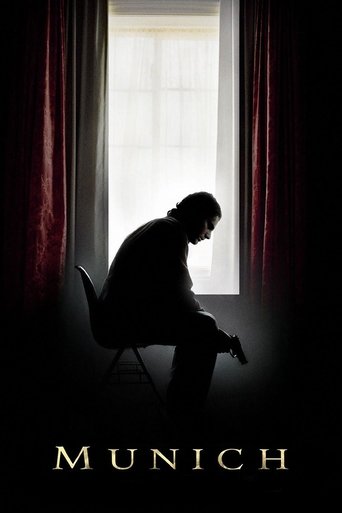
Munich
2005 · Film · 164 min
Directed by Steven Spielberg
During the 1972 Olympic Games in Munich, eleven Israeli athletes are taken hostage and murdered by a Palestinian terrorist group known as Black September. In retaliation, the Israeli government recruits a group of Mossad agents to track down and execute those responsible for the attack.
3 positive9 neutralfrom 12 commenters
Where to watch
No streaming data for this title.


12 comments on Hacker News
> Americans are just very scared of Mossad. Tons of money goes into Holywood to make them appear invincible to the world.
I don't believe I've ever seen Mossad depicted in a Hollywood movie? I guess there was Munich. Are there specific movies/TV shows that you're thinking of?
Americans, by and large, don't even think about Mossad. Certainly not the way they're aware of the CIA and KGB - which no one should be scared of at the moment since it hasn't existed since 1991, though obviously there are modern successors.
That's alluding to Nazi and Palestinian criminals that Israel hunted all over the world for decades. One by one, setting up their meetings with the creator. There was even a movie about one hunt it's called "Munich", directed by Spiellberg - https://www.imdb.com/title/tt0408306/ . Great movie!
Steven Spielberg's Munich (2005) deals with this a bit.
They were Mossad spies who went out to kill people.
And they were useless (this is part of the story)
But they still got a movie about them and they did kill some people. Being useless doesn't mean you can't do interesting things, that bits in your hands.
Along those lines, it's low-key fascinating for me to see unintentional 9/11 imagery in pre-9/11 movies. Look at something like True Lies, which treats a terrorist attack and a plane destroying a building as lighthearted action movie fare.
You never see that kind of imagery treated so flippantly after 9/11. 2000s movies with 9/11 analogues (War of the Worlds, Munich, Cloverfield, etc.) deal with it mostly indirectly and always as deep-set trauma.
https://en.wikipedia.org/wiki/List_of_entertainment_affected_by_the_September_11_attacks
> but for some other parts of the world (esp. east/SE Asia), US special forces are going to be instantly recognizable as foreigners because they generally don't look anything like the locals.
Not everyone in the United States is a blond haired, blue eyed white person.
Also, simply adopting the local dress is often enough in many countries where immigration has been a thing for decades now. You also can adopt local hair styles, this is why you'll see a lot of the special forces community with long hair and beards in Afghanistan and similar countries.
If you dress the part, walk the part, speak the part (the DLIFLC alone teaches 24 languages) you can blend in to a city pretty easily. Will you stand out like a sore thumb in a remote village, almost certainly, can you stroll through a town of tens of thousands of people with very little attention paid to you, usually.
With previous U.S. actions though it is usually go into a country mostly-overtly and just train local fighters (or fly them to the United States for training) but the Special Forces community has many instances of infiltration in advance of regular military units, as well as ongoing humanitarian efforts (which helps build awareness of local cultures and customs and dialects). Green Beret medics for example have been used in multiple African countries to provide medical aid, just doing general health checkups on villages and the like, a buddy of mine that was an 18D (Army - special forces medical sergeant) mentions it in his book Love Me When I'm Gone (by Robert Patrick Lewis) as well as a lot of training with foreign military in their country, in his case Germans.
---
Say the Asian country of Makebeleivia wanted to get special forces in place into a country that was largely caucasian prior to a proper attack to disrupt. How do they do it? You send some people in as tourists on various commercial flights, you can use multi-national companies you control or have some coercion over to bring workers over on work visas (and might actually do work for weeks or months), you get some in on student visas, you can pay coyotes to sneak some in, you can sneak some in yourself if there is a coast by deploying them via submarine and having them slip into tourist towns as tourists or with fake identification. Then you use any number of means to arm them with conventional firearms and if you want to cause mayhem you have your demolitions experts cook up crude explosives. The purpose here would be to create panic and tie up first responders, this also puts the national government agencies on edge thinking there is some sort of terrorist attack and is more likely to distract than make them think "oh hey a military invasion might be underway". You can either go after relatively 'usless' targets like crowded public places or you can go after more strategic targets like damns, ill-protected power plants, substations, key bridges in and out of large cities or bridges that create strategic issues for moving heavy equipment, etc.
---
A somewhat good example of foreign agents operating on foreign soil, although in a different capacity, is Mossad. They've done a lot of kidnappings on foreign soil to bring war criminals back to stand trial, assassinations abroad, kidnapping defectors to stand trial, etc
Find some examples here https://en.wikipedia.org/wiki/Operations_conducted_by_the_Mossad
One of the more high profile things Mossad has done is going after Black September, for the Munich bombings. The 2005 film Munich is about this.
Also, Sayeret Matkal, which is basically Israeli's Delta Force - they've sabotaged airliners, done kidnappings and raids, assassinations, done physical evidence gathering in Syria.
Similar to the bit in "Knocked Up" about how "Munich" is a great movie because the Jewish characters are all bad-asses, not victims.
When it comes to terror, there is no middle ground. If you are against terror in the Britain and the US then you are against terror in Israel.
> "hundreds of civilians, politicians, policemen, and scientists"
Please cite your sources. The British had appointed the head of the Palestinians a terrorist who was responsible for the deaths of 73 Jewish students in Hebron in 1929 including 10 Americans. It was this man who became "The Grand Mufti of Jerusalem" who later spent WW II as a guest of Hitler's in Berlin. This man who was appointed by the British wanted Hitler to bring "The Final Solution" to the Middle East.
It was Israel which bombed the Iraqi Nuclear Reactor which made Operation Desert Storm far easier than it would have been if Iraq would have had nuclear weapons. Israel is committed to fighting terror and not letting terrorists get away with terror. See Steven Spielberg's movie, "Munich" about how the Palestinian terrorists that killed 11 Israeli athletes in the 1972 Munich Olympics were tracked down and killed. Or see how once prevalent airplane hijackings were stopped by the Israeli "Raid on Entebbe" which itself was featured in 3 different movies.
There has to be zero tolerance for terror. The Palestinians, instead of combatting terror embrace it. They honor terrorists and they pay them and their families over $300 million per year of US and British taxpayer money.
http://www.timesofisrael.com/un-chief-pulls-support-for-palestinian-womens-center-named-after-terrorist/
"Palestinian Media Watch, which first brought attention to the naming of the women’s center, recently quoted a local village leader saying that “the center will focus especially on the history of the struggle of Martyr Dalal Mughrabi and on presenting it to the youth groups, and…constitutes the beginning of the launch of enrichment activities regarding the history of the Palestinian struggle.”
In addition to the women’s center in Burqa, the PA has named a number of events and facilities in honor of Mughrabi and the other terrorists who died during the massacre in a firefight with Israeli security forces, with the ruling Fatah party repeatedly hailing them as “martyrs.”
There will never be a Palestinian State until the Palestinians elect leadership that denounce terror instead of embracing it.
That just kicks the problem up one level: now you've got to figure out the distinction between political speech and non-political speech. I'm not familiar with how things work in Belgium, but in the United States Hollywood has released a large number of explicitly political movies in the past fifteen years, such as Lions for Lambs or Bowling for Columbine or Munich, and that doesn't even get into the political subtexts that are often present even in mass-market blockbusters. Would those be forbidden under this policy?
Assuming that you do come up with a plausible way of drawing a line here, you also need to have general trust that this power will not be abused. Given the heavy politicization of regulatory agencies in the United States, a large portion of the population is worried -- not without substantial justification -- that "is this speech opposed to the party in power" will be one of the factors used to draw that line.
A few thoughts and observations:
- Thinking in strict sense is slow by nature. The only way to make it faster is to avoid it, that is to simply know the stuff. The more you know, the faster you think, that is do what looks like thinking.
- Emotions may disrupt any expert; you'll forget what is 3 by 5. There's a comment here already that mentions it, and I second it, because I was that guy. One of best decisions in my life was going to a shrink :)
- There's a structured approach to problem solving; formulate the problem (current state), the goal (the desired state), list alternatives, weigh them, choose. This may sound obvious, but a lot of otherwise smart people do not do this and simply pick the first idea that pops to their minds. Changing to structured problem solving helps immensely; it's actually used as a therapy.
- Some high-level heuristics may help: six thinking hats, TRIZ (although this one doesn't think it's a heuristic), morphological analysis, and so on. Their primary purpose is exactly that: quickly generate many different ideas and views and make sure to cover as many important bases as possible. Each has a special flavor; TRIZ, for example, aims for elegant minimalist solutions.
- Every blessing has a curse. I once read "Vengeance: The True Story of an Israeli Counter-Terrorist Team" (it was made into the "Munich" movie) and there was an episode when a Soviet special agent got killed primarily because he was a trained special agent who is always ready and aware of what's going on. Quick thinking looks very useful, but there will be situations when it isn't.
There's a great movie set in this context, "Munich"
This reminds me about the movie "Munich".
IMDB reports that 2322 movies were released in 1939 alone, is it really surprising that there were a handful of good movies among them?
1980 for comparision, IMDB lists 6007 movies (8000+ if you include TV movies), and contains modern (popular) classics such as Stir Crazy, Superman II, Empire Strikes Back, Airplane!, The Blue Lagoon, Ordinary People, Urban Cowboy. The Shining, Caddyshack, Raging Bull, Friday The 13th, The Fog, The Blues Brothers.
Hmm, looks like 1980 was a much more 'classic' era than the 40s for hollywood, but you wouldn't have heard that from film buffs in the 80s.
Hollywood has always been a great abuser of the 'sling lots of shit at the wall and see what sticks' approach to 'greatness', they're just slinging a lot more shit these days.
Even if we take a really contemporary year and do the same study, we see a pattern of greats no matter what year, take 2005 at random:
Batman Begins, Sin City, V for Vendetta, Revenge of the Sith, King Kong, Brokeback Mountain, Harry Potter/Goblet of Fire, Serenity, Charlie and the Chocolate Factory, Mr & Mrs Smith, Wedding Crashers, Munich, Saw 2, Hostel, Hitchhiker's Guide to the Galaxy, Madagascar, Pride & Prejudice, Land of the Dead.
Ah, but the movie buff will point out that they're not established classics like Gone with the Wind, or Wizard of Oz. Not yet, anyway.
Edit: Btw, for 2005, the number of movies was 28,000+. Is it any wonder that there is a lot of formulaic stuff in there as well?