 Hacker Cinema
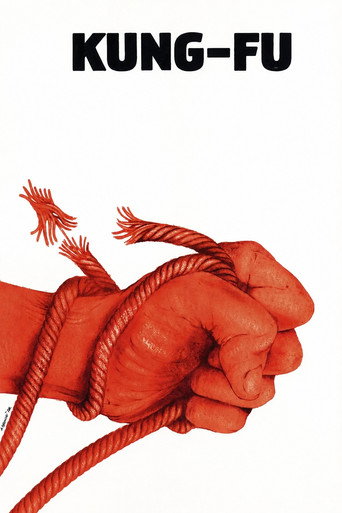
Kung-Fu
1980 · Film · 105 min
Directed by Janusz Kijowski
A well-regarded engineer in a big enterprise is hounded by trumped up attacks on his integrity when he delves too deeply into how bonuses are handled by the management. He gets into an argument with the guard, is arrested and subsequently fired. An old friend, a journalist, tries to sort things out but the victim's stubbornness and past problems with his wife lead to lossess by both.
1 positive1 negative1 neutralfrom 3 commenters
Where to watch
No streaming data for this title.



3 comments on Hacker News
> I think the weight of many opinions across time gives these things a certain solidity.
You think that and actively look for consistency in the reception history of everything you categorize at true art, or you hope that such a hypothesis would pan out if you happen to do that work at some point in the future?
I ask because at least in the domain of music, my (admittedly limited) knowledge of the reception history of various pieces doesn't leave much room for the consistency you'd need to determine whether anything is kitsch or not. More importantly, the historical reception of many well-known cases hinges on what (I believe) you'd consider completely irrelevant factors.
For example, Taruskin has a chapter from his book "On Russian Music" about Tchaikovsky's Sixth Symphony, showing that the reception history of the work teeter-totters based mainly on what the general acceptance was in a given period/area regarding homosexuality. (Note: the commentators didn't say this explicitly, and probably didn't realize they were doing it-- other scholars had to go back and piece together the pattern based on the data available.) In this case, one ascribing to your hypothesis/theory would be forced to reserve judgment on the "kitschiness" of that symphony based essentially on the results of arbitrary biases from a long gone era.
The messiness of reception histories and meaning in art makes me suspicious of a statement like, "Kitsch offers shallow emotional gratification with no investment." I've studied art and music closely enough to realize I almost never have the information necessary to make that judgment.
Then in film there's Quentin Tarantino's eye for composition and story-telling in Blacksploitation and Kung Fu movies. Cases like that are all over the place.
Hell, there are two young goofballs who are purposefully misreading the very reason John Coltrane wrote Giant Steps-- instead of improvising atop the chord progressions to show their musical prowess they turn it into through-composed video-game speed run music:
https://www.youtube.com/watch?v=AWqH4h5CQyQ
Is that kitsch? Are you sure?
> narratives (not facts) are what move people
I actually find this practice really annoying. If I'm on contract cutting together some hack's godawful kung fu action film, the last thing I want to hear is the fiction he tells himself to get to sleep every night. Narrative is what we give to the public when we want to trick them into thinking that buying low-quality shoes will end world poverty. It has no place inside the company. Maybe it's helpful for customers to believe in the fantasy version of your company, but inside, you want people who know what is really going on, and are willing to participate without the use of such tricks.
Right now it's a reality TV show. But, one day, a bright shining star will make it into a Kung Fu movie. And I believe! #JackieChan2024