 Hacker Cinema
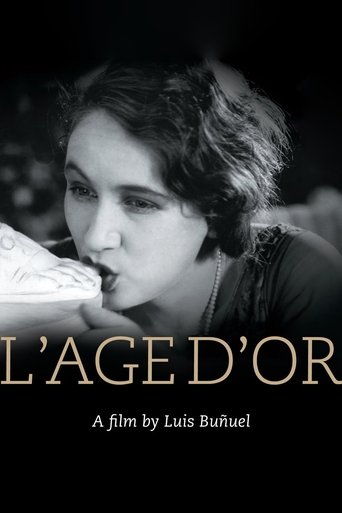
L'Âge d'or
1930 · Film · 63 min
Directed by Luis Buñuel
The film consists of a series of tightly interlinked vignettes, the most sustained of which details the story of a man and a woman who are passionately in love. Their attempts to consummate their passion are constantly thwarted, by their families, by the Church and bourgeois society in general.
2 positive1 neutralfrom 3 commenters
Where to watch
No streaming data for this title.


3 comments on Hacker News
We're getting into the 1930s now - the sound era and the start of the Golden Age. Here's some recommendations.
The Divorcee - Norma Shearer won best actress for this performance of a sophisticated woman. She evens the score after her husband has a brief affair, and as this is pre-Hays code, she isn't punished for it.
Hell's Angels - produced by Howard Hughes, is worth watching for the dogfighting stunts alone. 4 people died filming them.
Holiday - Inferior to the later Hepburn/Grant remake, but still a solid rendition of the play.
L'age d'Or - Luis Buñuel's surrealist showcase
Animal Crackers - the Marx brothers, it's still funny
Anyone looking to get into silent film, I'd strongly recommend comedies (including, and perhaps especially, Chaplin and Keaton) as a good starting point. I've gotten to the point that I can truly enjoy a lot of silent dramas, but IMO the comedies are far more approachable for a modern audience. Good gateway drug.
Just off the more famous films (The Great Dictator and Modern Times and maybe City Lights for Chaplin, or The General for Keaton, say) I'd recommend The Kid for Chaplin, and Sherlock, Jr. for Keaton. And of course both made numerous short films, in addition to their features. Though the very-famous ones are all great, too—I especially love City Lights, personally.
Been meaning to check out Harold Lloyd (responsible for one of the most enduring and imitated images in Hollowood, the guy hanging on the clock on the side of a building, featured in Safety Last) but haven't made it to him yet. I bet he "reads" pretty well to a modern viewer, too.
[EDIT] Some beginner drama recommendations, for those who feel ready:
Metropolis (duh... though it's a bit on the long side, maybe skip if you can't tolerate longer movies, and it's maybe a bit belabored for modern sensibilities)
The Passion of Joan of Arc (just... damn. This is a perfect movie.)
L'Âge D'or (The Golden Age—but, uh, maybe just if you appreciate things a bit more art house)
Le Voyage dans la Lune (A Trip to the Moon—it's short, and, if one plays with various accompanying soundtrack options, including some more modern ones, one may find it transcendently good)
M (yes Fritz Lang made this very short list twice, because fuck you this movie is amazing, this is maybe the most modern-feeling of this whole bunch)
"she inspired a generation of film makers and artists that reality is not one that needs to be reproduced exactly as it is filmed or photographed"
I'm not sure what you mean by that, but there were plenty of films before the 1943 Meshes of the Afternoon which showed reality in fantastic, even dreamlike ways.
From the 1902 A Trip to the Moon to the 1920's The Cabinet of Dr Caligari to 1922's Nosferatu to 1927's Metropolis, and other German Expressionist films, to name just a few.
For me the new thing that Meshes of the Afternoon brought to the cinema was an explicit interest in dream symbolism.. though even that may not be that new, if you count Bunel's 1930 film L'Age d'Or and other films of the surrealist era.
Deren has often been described as being in the surrealist tradition, and I think that's accurate in as much as she was interested in artistic use of dreams and dream symbolism, and the borderline between dream and waking life.