 Hacker Cinema
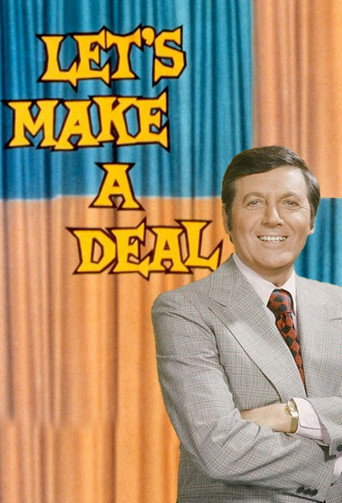
Let's Make a Deal
1963 · TV series · 30 min episodes · 19 seasons
Created by Monty Hall
Let's Make a Deal is a television game show which originated in the United States and has since been produced in many countries throughout the world. The show is based around deals offered to members of the audience by the host. The traders usually have to weigh the possibility of an offer being for a valuable prize, or an undesirable item, referred to as a "Zonk". Let's Make a Deal is also known for the various unusual and crazy costumes worn by audience members, who dressed up that way in order to increase their chances of being selected as a trader. The show was hosted for many years by Monty Hall, who co-created and co-produced the show with Stefan Hatos. The current version is hosted by Wayne Brady, with Jonathan Mangum, Tiffany Coyne, and Cat Gray assisting.
2 neutralfrom 2 commenters
Where to watch
No streaming data for this title.

2 comments on Hacker News
No, he wouldn't always open a door -- sometimes he'd offer a trade; like "you can take $1,000 cash from me now, or have your door".
I wonder if anyone has gone through every episode of "Let's Make a Deal" where this scenario occurs and look at the empirical distribution of switch/not-switch.
> Why would you think the host has the option of not opening a door?
Because the actual TV show of Let's Make A Deal worked that way. Here is Monty's own take on it (click to page 2.) http://www.nytimes.com/1991/07/21/us/behind-monty-hall-s-doors-puzzle-debate-and-answer.html
This is the source of all the confusion from vos Savant's original column. vos Savant got the math right for her version of the problem where the host always opens a door, but that isn't how the show worked. She presented a simplified "spherical frictionless cows" version of the problem.
The actual show did not compel Monty with any rules on opening doors. He had free rein to do whatever he wanted. He could reveal an incorrect guess right away with no opportunity to switch. He could and would offer the contestant cash to switch or not switch. Monty could try anything to trick or bluff or deceive the contestant, all for the sake of producing entertaining television.
Of course, there is no correct mathematical answer at all to a game of bluffing and outwitting. At best you might find a Nash equilibrium in game theory, but even that is hard to pin down. You need to know Monty's tendencies precisely, but even that is hard when his goal isn't to maximize expected value but to produce entertainment.