 Hacker Cinema
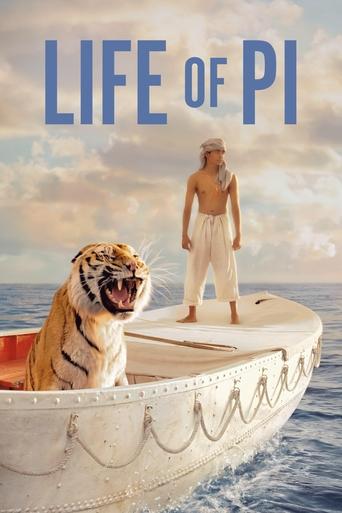
Life of Pi
2012 · Film · 127 min
Directed by Ang Lee
The story of an Indian boy named Pi, a zookeeper's son who finds himself in the company of a hyena, zebra, orangutan, and a Bengal tiger after a shipwreck sets them adrift in the Pacific Ocean.
10 positive2 negative21 neutralfrom 33 commenters
Where to watch
No streaming data for this title.

35 comments on Hacker News
From the movie, The Life of Pi: Animals don't think like we do! People who forget that get themselves killed. When you look into an animal's eyes, you are seeing your own emotions reflected back at you, and nothing else.
VFX powerhouse MPC, renowned for its work on The Lion King (2019), 1917, and Life of Pi, faces possible closure as parent company Technicolor grapples with severe financial struggles. Despite delivering groundbreaking visual effects and winning an Academy Award for Life of Pi, MPC now confronts an uncertain future. The company has played a key role in shaping modern visual effects, contributing to some of the most visually stunning films of the past decade. However, ongoing financial difficulties at Technicolor put the studio’s legacy and hundreds of jobs at risk, raising concerns about the future of high-end VFX production.
If you have a 3D capable setup Gravity is a must! Avatar and Life of Pi are also some favorites.
There’s also a few gems and lesser known films that were released on 3D Blu-Ray like Hitchcock’s Dial M for Murder, which was shot in 3D but wasn’t originally released in the format because the 3D fad died by the time the it came out.
They’re hard to watch because 3D TVs were so unsuccessful. You often need a special Blu-Ray player, and I don’t know of any streaming service that supports 3D.
3D TVs were too far ahead of their time. 3D works far better on 4K than on 1080 since each eye only gets half the image, (though the 4K 3D format doesn’t exist) so it would be nice to see it make a comeback on VR. While 4K and HDR are much better I still miss the occasional 3D film.
I was 7 years at Rhythm & Hues, leaving the industry during the production of Life of PI. It gets this bad for several reasons, including: each VFX studio has between 3-5 feature films moving through it, at different stages of production, at a time, and often a few commercials as well; that equals between 1200 and 2800 digital artists and their support staff all working on the same corporate campus; by necessity, these technical artists have a range of experience, so there is also an education department, a constant flow of new software, and software freezes for a given production that may last 18+ months; so by necessity the staff is managed en mass with cafeteria food, around the clock render completions and hence 3-5 "dailies" per 24 hour period. One production's compute going over expectations, or production changes, or staff changes easily ripple in impact through the entire studio - all productions.
The movie "PI" was fun. There is another called life of pi but PI is nerdier though the premise of the film is kind of silly.
this one is interesting
https://www.youtube.com/watch?v=ibuiUXOTE4M
It is called "startup" about a dotcom or should I say, dotbomb company.
It's hard not to be cynical or entertain thoughts of Hollywood planning these things in case the show sucks. Because they can clearly do entertainment with diverse casting, non-white people, female leads and succeed:
- Tom Holland Spider-Man does not have a red-head MJ, Flash is Indian and the made up best friend is Filipino. - Domino in the Dead Pool movies is black. NTW doesn't seem to have the same powers and is gay. But I'm not sure what the current character status is. - Everything Everywhere All at Once - Black Panther - Shang Chi - Jordan Peele does good work: Nope, Us, Candy Man, Get Out - The Expanse - Life of Pi - Sandman swaps a bunch of stuff
Appetite for completely foreign media is much slower in English speaking countries but once in a while you get a major break through: Crouching Tiger Hidden Dragon, Parasite.
For iconic female leads: Terminator has Sarah Connor, Ripley from Aliens, The Bride from Kill Bill, Charlize Therons character in the last Mad Max movie. Buffy. I apologize for how narrow the genres are here.
I don't think the popular media for anything I just mentioned was too negative (maybe Black Panther?). Is it really just the fans? I bet the overlap of Rings of Power watchers and watchers of the stuff I listed is pretty big ...
edit: formatting
As a complete aside, Wren was also the name of the in-house renderer at Rhythm and Hues. Used in award winning films like Life of Pi before they went bankrupt.
Anyway not really related, but it’s the first thing that popped into my mind since it was my first gig.
In case someone doesn’t know, the title refers to the movie, Life of PI
https://en.m.wikipedia.org/wiki/Life_of_Pi_(film)
PI is a tiger that has a journey with a boy.
Working in feature film visual effects for several years, when an obvious flop goes through the studio it casts a dark depressing cloud over the entire 2000 person operation, despite the film being only one of 4-6 productions in the studio at that time. Regardless, the work requires painful attention to detail and long hours - which seem to double in length when the film content is stupid, poorly executed, and we (the VFX team) have an irrational hope from the filmmakers that the VFX will somehow polish their turd. It really hurts the entire studio, dragging on all productions.
Yet, worst than working on a flop is working on what everyone recognizes will be a Best Picture Oscar candidate, and the filmmakers are hell bent on driving your studio out of business with their extreme demands. It was extremely painful to be at Rhythm & Hues during the making of "Life Of Pi" - we knew it was gonna win Best Picture and we knew it was bankrupting our company and ending our jobs.
I think some entire themes just don't translate well. Explosions lose a lot of oomph if they aren't backed by powerful subwoofers. It's hard to pass environmental detail on an iPhone. Things like the scene with the bioluminescent creatures in Life of Pi lose a lot when you're on a small form factor screen. They also lose a lot if you have any glare on the screen.
> adjust your aesthetic to create a great experience on everything from a silver screen to an iPhone and let us give you our money without denigrating us for not placing our butts in theater seats.
This seems like the equivalent of saying "just write a single app that looks native everywhere". You're not going to get a bespoke C++ app back, you're going to get an Electron app that doesn't make anyone excited, but is easy to write.
Movies are the same. If you're designing for the lowest common denominator, you don't get a movie that looks great everywhere. You get a movie that looks great on an iPhone, and it's pointless to watch anywhere else because it's going to look the same. I don't see how you can make a single movie that both utilizes the high-end equipment in a theater to it's fullest, but also doesn't lose anything when you watch it on an iPhone using the built-in speakers.
They could do some "remastering" to release different versions for different platforms, but film buffs are always going to hold that some format is the "superior" one.
Reminds me of the life of pi movie where they mistake the main characters precocity for genius,among other mistakes from adapting the book.
Not so much math. Life of Pi was a 2001 novel about the son of a zoo manager and his life after being shipwrecked with a Tiger.
It was made into a 2011 movie, that had a home release in 2012, which no doubt also had a anti-piracy campaign by the studio around the same time as the movie and home release.
The movie Life of Pi also comes to mind in regards to being stuck on a boat and retelling the story but Mohammed’s experience would make a great survival movie no doubt. Maybe Netflix will make a deal with him
Prime and Crunchyroll have the same problem as Netflix: they don't own (much) of the content they offer. And are entirely at the mercy of the content hoarders like Disney and Warner Brothers.
Just checked. In Sweden the featured videos in Amazon Prime are: Shrek (2001), Red (2010), Twilight (2008), Top Gun (1986), Life of Pi (2012) etc. with a hodgepodge of Amazon's own content and recent-ish movies ranging from Madea's Farewell Tour to Amazon's Chemical Hearts to SCOOB!
Yeah, nah. I get the same crap with Netflix.
I agree that the article doesn't seem to be on a very firm foundation. But it's reasonable enough that I also don't really hold that against it.
Good points:
> “If you always eat popcorn when you watch your favourite TV show, your cravings will for popcorn will increase when you watch it,” he says.
I'm pretty sure this is true. Habit will go a long way.
> Even in languages that do contain a word for craving, there is still is a lack of consensus around what a craving actually is. This, Konova argues, is a barrier to understanding how to overcome cravings, since we may be labelling several different processes as cravings.
I'm pretty sure this ["we may be labelling several different processes as cravings"] is true too.
They give more attention to "chocolate cravings" than I think that phenomenon really warrants, but here are a couple of points I thought were well made:
> Chocolate is one of the most common food cravings in the West – which supports the argument that cravings don’t stem from nutritional deficiencies, since chocolate doesn’t really contain high levels of anything we could be deficient in.
> [Female "craving" for chocolate], [uncredited researchers] say, is because Western culture has a “thin ideal” of female beauty that creates the perception that craving chocolate must be justified with a good excuse.
I would tend to lean toward the theory that people are expressing a "craving" for chocolate mostly because it contains a lot of sugar, and those people would find unsweetened chocolate unsatisfying. And I find it plausible that a lot of people feel they need a special excuse, like an especially strong word, to indulge themselves.
On the other hand, I am certain that food cravings based on nutritional issues do exist. You can read the story of the guy they consulted for Life of Pi who was lost at sea, and how he started to crave raw fish eyes. When you're starving, the eyes taste fantastic, and you daydream about them -- and not coincidentally, they are a rich source of certain nutrients that aren't so easy to get by eating the rest of the fish.
I am a very picky eater, and when I first went to China I had a hard time getting food. When I visited home, several months later, my dad met me at the airport and the first thing he said was "you look like a skeleton -- where do you want to eat?"
And I had an answer ready immediately, because I'd spent a lot of time those past months thinking about pizza.
But modern life generally satisfies everyone's basic nutritional needs, so again it seems plausible that the majority of food cravings that actually occur (however we end up defining cravings) are based on something else.
I've often wondered if optimization of content for higher ranking or worse yet, engineering content based on what's trending, defeats the very purpose of a search engine: to provide relevant, high quality content. It's like everyone in Hollywood making superhero movies because they make money. We'd never have movies like Walk the line, Shawshank Redemption, life of pi
Isn’t that an example of what the GP is taking about? I keep hearing the VFX business is terrible, with horrific overwork and low pay, for exactly that reason. See this article http://www.guardian.co.uk/film/2013/feb/25/oscars-protest-life-of-pi and this accompanying comment when it was posted to Reddit: http://reddit.com/r/movies/comments/1969o6/more_than_400_vfx_artists_protest_at_the_oscars/c8l8eg8
Gravity was spectacular in 3D, but I have a much larger list of films (many of which aren't great) that have immersive and not distracting 3D. Off the top of my head:
Life of Pi
Pretty much every Marvel movie
The new Star Trek films
Star Wars: Episode VII
The Martian
The Hobbit films
How to Train Your Dragon and sequel
Finding Dory
The LEGO Movie
IIRC, Elliot at one point acknowledges that the viewer already knew what was coming. But the twist is Season 2 is much, much harder to spot. Reminded me of Life of Pi.
The author might be mistaken. I think there's a pretty chance this is simply a demographical difference between the sites' visitors, and I'm pretty disappointed this wasn't brought up early on.
Rotten Tomatoes is a hipstometer (if you don't believe me, look at the artsy film festival movies that rank highest there, or read some of the pedantic reviews). Fandango is what a lot of the RT fans would call a "low brow" venue. More Hollywood-ish (huge budget, unrealistic, etc.) movies (transformers, 2012, The Fast & The Furious, etc.) rank well on fandango, but not on Rotten Tomatoes. The really great movies rank well on both (e.g., Captain Philips, Life of Pi, etc.).
It's always been this way. I use a specific formula of Fandango, iTunes and Rotten Tomatoes scores to decide on a movie. If Fandango ranks it 4-5 stars and Rotten Tomatoes ranks it 50-70%, it's usually really good. If the rank is lower on Fandango and higher on Rotten Tomatoes, it's usually a bit too artsy and pretentious for me (I go watch a movie to be entertained, not to stoke my ego).
It's about getting bare minimum talent and paying them less than the American counterpart.
If this become like the film VFX industry we as programmers are doom. Life of Pi, made millions and the VFX company behind it bankrupt.
If they keep on pushing for the immigration HB Visa stuff. We should all form a Union.
VFX is screwed cause they didn't have a union from the beginning and now it's much harder.
That does seem like it has a lot of potential to tackle this, though it would probably make game development less attractive (the illusion of a steady job is better than 'well in 9 months you'll be looking for work'). Game dev is hugely attractive of course, so it could conceivably take the hit.
One possible problem with this is what's already been happening with contract CG people in the movie industry. Their work is becoming increasingly devalued so there's a race to the bottom in terms of charging, such that situations like Ang Lee's Life of Pi, where he said something to the effect that he felt he paid too much for CG (I can't remember offhand the exact quote) and the CG people were barely making ends meet. They also aren't being acknowledged at awards, which for some can be a disincentive.
The controversy already started when we heard that Spike Lee (!), the amateur who doesn't even know the simpliest technical film skills got the rights.
A similar controversy arose when M. Night Shyamalan sat on the rights for "Life of Pi" for a few years, but was ultimately replaced by Ang Lee. The only one who could master such a job.
With the Oldboy remake it was clear from the beginning that it would lead to a desaster, but apparently the studio owed Spike Lee a big favor.
It's an interesting perspective on the man in light of all the ruckus about his film and the bankruptcy of Rhythm & Hues (who did the Oscar-winning effects for the film and ultimately fired 250 people in the past month):
http://www.guardian.co.uk/film/2013/feb/26/ang-lee-visual-effects-life-of-pi
He's got talent, that's for sure. I suspect much of the flak should be thrown at the industry rather than at the filmmakers.
There is no guild for the companies that produce VFX work.
VFX studios do the work as work-for-hire, so if a film does poorly they don't loose money, but they never ever get any of the profits if a movies does do well. At the most simplified level - it's a loosing business model.
There's a very small set of "consumers" and there are more producers (vfx shops).
The bid amount for work that is awarded is a tightly guarded secret (this hurts transparency). Regardless, at a coarse level if tax subsidies (in Canada or the UK for example) allow your competition to under bid you by 20 million on a 60 million dollar set of work where your normal bid is for profit margin of 3% you are screwed.
VFX today is labor intensive. There is still a great deal of creative specialty skills involved, but outside of vfx they don't even quite realize how easy or hard an effect is to create and thus they view outsourcing of all work as a "sure and natural thing"
This year Life of Pi won the vfx oscar, and the work was done by a company in LA that just went bankrupt (Sigh, it hurts to think about Rhythm and Hues). If you watched the award show, just as the people accepting the award were about to mention R&H they were played off the stage. Film producers do _not_ want to even acknowledge how the industry works :).
As a long term career choice you do _not_ want to work in vfx. The people who work in VFX are the funniest, most passionate, and creative sorts I've ever worked with, but it's an industry that is going through "change" (as in, disappearing).
I'd like to get to the point where frame rate is a creative choice and not a technical limitation. Perhaps some kinds of films/scenes/shots are better suited to different frame rates, for the impression and feeling they impart on the viewer. It was great to see Ang Lee start doing this a bit (but with aspect ratio) in Life of Pi, using it as another tool in the tool box, not an absolute right or wrong way to do things.
Zen and the art of motorcycle maintenance - A book on philosophy, can go as deep as you like. Was written over 25 years ago, but feels very fresh. My key take away from this book was that you should be humble enough to appreciate various models of the world - e.g. Science or Religion. Favorite quote: "When you have a Chatuahaha in your head, you can't resist inflicting it on innocent people". Still makes me smile :-)
Life of Pi - Bought it following the buzz of the movie. Read the book first, then saw the movie. A good simple read. Sort of reinforces, the 'various models' idea of the 'Zen...' book. Found the movie slightly better than the book, which was a surprise. Ang Lee has made subtle changes, which makes the story more peppy.
Perfect Rigor - Captures the story (and math) behind, the turning down of a million dollar prize by Gregory Perelman. The genius Russian mathematician, who solved a 100 year old standing problem, of the missing proof of the Poincare Conjecture. It was perhaps my best technical read of the year.
I am feeling Lucky (by Doug Edwards): Google's emplpyee number 59, writes about his experience at Google. I found it the best book on Google. Better than some of the others, which seem a bit like officially authorized versions.
Below ones I read it in 2011. But haven't posted here, so here goes:
Born to Run (By Chris Mcdougall): A health book. Has really helped my running. Highly recommended to all.
A guide to a good life: The ancient art of Stoic Joy (By Joseph Irvine): A very good book on philosophy. Read it on the reco (http://sivers.org/book) of Derek Sivers.
American Reunion is good fan service if you grew up with the series.
The Hobbit is a technical marvel in HFR (everyone who says otherwise is wrong).
Life Of Pi is another technical marvel—possibly the best visuals I have ever seen.
Side by Side is an informative documentary about the rise of digital filmmaking and its cultural and technical effects (positive and negative), with polarizing opinions from tons of Hollywood folks big and small.
To Rome With Love was this year's Woody Allen entry, if that's your thing.
The Master is a shallow and empty script, but has two great performances and looks great projected in 70mm.
Salmon Fishing in the Yemen is a downright pleasant movie that no one saw, wherein Ewan McGregor shows that he can do a convincing Scottish accent.
Lockout was a no-holds-barred "dumb action flick" that was surprisingly fun, mostly because of Guy Pearce's performance.
My favorite movies of the year:
1. Moonrise Kingdom
2. Beasts of the Southern Wild
3. Argo
4. Life of Pi
5. Amour (Only NY and LA for now)
6. Monsieur Lazhar
The two you need to watch:
- Get the Gringo
- Grabbers
The rest:
- Cloud Atlas was...interesting.
- Pitch Perfect was the absolute worst, but hilarious. In a similar vein: For a Good Time, Call.
- Argo and Beast of the Southern Wild are overhyped in my opinion.
- Life of Pi was great (make sure to read the book at some point).
- End of Watch was better than advertised.
- Dark Knight Rises was a solid conclusion to the series.
- Ted was funny, but doesn't work so well on repeat views.
- Other movies you should watch: The new Total Recall. Safety Not Guaranteed. Lawless. The Amazing Spiderman (awesome series reboot)
Life of Pi. No contest the best movie of 2012. I saw pretty much every release, and this is one of the few that left a significant impact on me.
These are some of the movies that I watched and liked in 2012:
The Grey
Prometheus
The Avengers
The Dark Knight Rises
Skyfall
The Hobbit
And these are some of the good ones I would like to watch:
Argo
Lincoln
Looper
Life of Pi
Zero Dark Thirty
Yes; Life of Pi is one of the most beautiful 3D movies I've seen, and a good story (based on an award winning book). I'm having trouble convincing people to go see it though...
What's interesting to me (for background, before I ended up programming I trained in traditional film/animation) is that a lot of the 24/48fps discussion on HN tends to be around technical concerns, whereas a lot of film developments come out of artistic needs.
HFR is really interesting when contextualized in the history of cinema: frame rate was never a problem until directors started changing how they shot action scenes in the 1980s. It was realised that if you made the action fast and blurry you could get away with a lot more: what from a wide shot would look like a slow moving car chase could become a very dramatic action scene.
I think this is being reflected in a lot of the reviews coming out for The Hobbit (I haven't seen it yet): it seems a lot of people don't mind it during action sequences, but it becomes distracting during dialog and less frenetic moments. And this makes sense: why should dialog scenes be in 48fps? There's no technical or artistic reason for them to be.
I'd be really interested in watching a cut of The Hobbit which moves between 24 and 48 fps for dialog/action: people are happy to accept aspect ratio shifts (like moving from full-frame IMAX to CinemaScope in the Dark Knight, etc, and more artistically moving to Academy for a particular scene in Life of Pi), perhaps they'd be willing to accept frame rate shifts too?
waiting for the "Life of Pi" as a movie. Night supposedly (rumor ??) has the rights to make a movie, would be an awesome one...