 Hacker Cinema
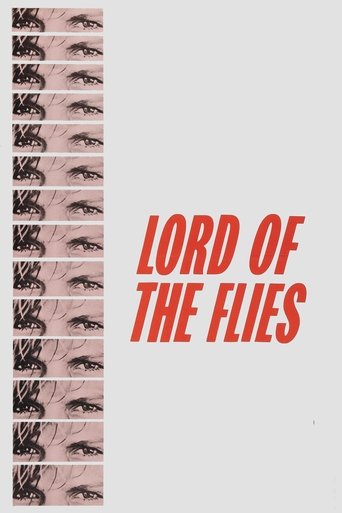
Lord of the Flies
1963 · Film · 92 min
Directed by Peter Brook
Following a plane crash a group of schoolboys find themselves on a deserted island. They appoint a leader and attempt to create an organized society for the sake of their survival. Democracy and order soon begin to crumble when a breakaway faction regresses to savagery with horrifying consequences.
2 positive2 negative8 neutralfrom 12 commenters
Where to watch
No streaming data for this title.



13 comments on Hacker News
I first read this book when I was about the same age as the main characters. I saw the movie not long after that. I was deeply moved (disturbed) by the drama and the outcome of the fictional story. Even though the story did not arrive at a happy ending where a hero emerges both victorious and virtuous, even though the negative outcomes (for characters I cared about) were personally distressing to me, my main takeaway was a new sense of a harsh reality, a terrible truth that was being presented to me, which accurately reflected my actual contemporaneous experiences in the real world, in my life.
True story: when I was nine years old, I was sent, for the first time in my life, to a place known in the midwest US as "summer camp". Most of the other kids there were older than me. I learned that canoes are very hard to get into. I learned that ponds had horseflies and mosquitoes and leeches. I learned that once I'd climbed the tower of the high-dive my legs would turn to jelly and I would struggle to make it to the end and jump off anyway.
In a weird twist from home, someone had stashed into my suitcase a large can of spray deodorant. I was only nine; did I stink already? I had no idea why I had it, but it was a great toy that I put to use immediately. Run up to a boy, spray some deodorant into their face, run away, cackling.
I delighted in this trick often enough that I soon had an angry mob chasing me-- up and down the trails of the camp, many older boys clamoring for my scalp, revenge. Eventually, I ran out of road and was cornered, as a significant crowd formed an intimidating semi-circle around me, closing in.
Kids were still cursing me as they rubbed sting from their eyes. The atmosphere was ugly. It got quiet. I'd really messed up. I felt fear, real like the highdive.
Just when I thought I'd had it, one boy stepped forward and turned and faced the crowd: he actually held out a hand like a traffic cop. To this day, I don't know what compelled him to put himself between me and all those older, bigger boys. He wasn't that much older than me. But he talked them down, got them to let go of their justified displeasure with me. One of the older boys snatched the can of deodorant out of my hand. A lot of fingers were wagged in my face. But nobody hurt me. Nobody stuck me with a stick like a pig.
I never saw the hero again. I've never used deodorant since.
We are exposed to a lot of fairy tales when we are young. Some of them are Grimm, but many are illusory misrepresentations of a fantasy world that the adults in our lives wish they could provide for us.
Buried beneath the surface is the always unspoken reality, which often entails a trail through a wilderness to a gingerbread house on a gumdrop mountain where a witch is waiting to boil us alive.
Lord Of The Flies is grim but true. On the playground, in small groups, when the adults are absent, children become a hierarchy of peer pressure and social eruptions, like spots on the face of a Head Boy at whatever English prep school. The savagery is there, the power struggles, the bully and the rebel, the shrinking violets and the blooming idiots, they're all real, and they often have a life-long after-affect on the lives of those who came together, on that day, when that happened.
> Lord of the Flies is "philosophical fiction" that is trying to make a point about human nature. That point has been shown to be overly pessimistic.
I don't know who you cite as an authority here-- has been shown to be? By whom? 'Overly pessimistic' in situ, I await illumination...
I don't see Lord Of The Flies as overly pessimistic. I think it is a masterpiece of literature, providing insightful and frightful expressive splashes of sound, fury and color; allegorical visions of what childhood really is like for modern and post-modern Western civilization. Highly recommended.
As an anger repressor, I believed anger was a problem that should be set aside at all costs. Now that I'm a lot more in contact with anger, it's clear that that was counterproductive.
Anger has a legitimate biological purpose - that is to set boundaries. Look at any animal [1], if you push their boundaries they will bite, scratch or bark at you. But they will also very quickly let it go once the boundary has been set.
We humans tend to be taught to let our boundaries be pushed, weakened or outright crossed in order to do what others think is right. We are taught to repress our very biological instinct because we are bad, because we believe our primal instincts are just violent. But the body knows that our boundaries are being violated, millions of years of evolution aren't irrelevant. To me, this explains why we hold onto anger so much today and see outbursts of it online.
What we think of as primal instincts to harm people is actually our own repression of our primal instincts. Lord of the Flies is a propaganda film - perhaps even the secularization of original sin. Research has shown time and again that humans left alone in a group tend to work together, not kill each other [2].
When I see people deeply angry at society, at politicians, or at me, I see somebody who has had their boundaries crossed, again and again, and has been taught that they are not allowed to set them. This energy has to go somewhere.
Personally, the more I've allowed my own anger and set personal boundaries, the less angry I am at the world. The less my anger seems to manifest in harmful outbursts. Anger comes, and if expressed, it passes very quickly in a way that may be assertive but that doesn't harm others.
[1] https://www.youtube.com/watch?v=99tkJbKFa4k
[2] https://en.wikipedia.org/wiki/Acali
> The idea that humans are natural-born predators was not just a scientific claim; it also found expression in the broader culture. In the 1954 novel “Lord of the Flies,” a group of school-age boys stranded on an island descend into savage violence, revealing their true nature. The 1968 movie “2001: A Space Odyssey” begins with a tribe of prehistoric apes — our ancestors — discovering how to use a leg bone as a weapon to assault one another. Today, self-help gurus argue that we should reconnect with our “ancestral lifestyle” of eating raw meat and organs.
However, more cognitively advanced organisms, like primates and others mammals, exhibit pro-social behaviors. It doesn’t make sense for humans to indulge primal behaviors given a human’s relatively advanced cognition.
I feel like we all have a “I saw it in middle of the night on PBS and it really screwed with my head” movie.
For me it was being maybe 13 and tuning in to the last half of Lord of the Flies at about 1am. Those kids abandoned on a lonely island, followed by the rescuer showing up, followed by credits, followed by the national anthem and test colour bars will forever be burned into my brain.
That's a bit rich, seeing that Middle-Earth Enterprises came along long after the film and book: 'Lord of the Flies'.
I'd guess you haven't been in a role to teach kids. They need to be taught. If not a doctrine you believe in, then it will be something horrific that they come up with themselves. The Lord of the Flies was a documentary.
> Why should the children accept the student-teacher hierarchy? Are they old enough to question it?
This is an anti-intellectual anti-parenting garbage take. These are 8 year olds.
Regardless of whether its outlook was positive or negative, I thought Lord of the Flies was too plot-driven and heavy handed with ridiculous character motivations (or lack thereof).
Anyway, would be really cool to see a film of this story; I'm disappointed it hasn't been made yet!
As kids grow up they look to their peers, and a 'pecking order' (wiki it)among them appears. It is a 'hierarchical system of social organisation' - Found in mice and men.... The less mature brain lacks the judgement to deal with this, so they end up in a crude social ranking - some on top, and a descending array towards the bottom = packed to the max. Girls have an earlier brain maturity to go with an earlier body maturity (puberty = ready to mate)and have their own pecking order. Boys and girls (usually) do not peck each other. High pecking order boys gravitate to the higher girls, and each group tries to attract the highest one in the other group. Since the girls are 2-3 years ahead of the boys in reaching sexual maturity(puberty). Prior to puberty the boys and girls do not mix very much and form their pecking orders in isolation, after puberty = the fun begins. They both begin the initial aspects of sexual maturity and each seeks to attract the other. They both learn from peers and by trial an error what works - some get fast cars, some wear short dresses as needed to gain the opposite sex. These days intercourse starts early, with most girls getting started from 12-14, boys a few years later. This is all due to the large similar aged cohorts our kids are schooled in. All in one grade are usually within 1-2 years of each other = no mature people of their sex to learn from. There is a benefit in tribal societies = it takes a village to raise a child, where elders guide and protect children and spread wisdom down from the top. The same age cohorts spread laterally. The old school house with one room and many students of large age differences has a superior mechanism, and with modern tech holds the key to reforming education. I can envision an educational system where each student has a private internet connected small room with 2-4 screens with an human supervised AI teaching whereby topics can be explained to students who have already been taught read/write literacy. Each student can progress as capably as they are able. The education also has a mix of topics as well as tests and even computer games that can act as play/rewards (in addition to external athletic play). This Covid epidemice has laid the ground work for this and one hopes it will grow from here. This will be a 'global/regional/local village' to raise a child. It is not true that computers can not teach - they can, they just need to be complex in their programming so they can go over work, repeat, rephrase etc, as needed. True kids vary, some are smart and some are not, the AI will need to surround the topic at all levels. We are fortunate as capable AIs can deal with people at all levels. We are just at the beginning of this revolution. Read 'Lord of the Flies' a fictional novel along these lines, but male only. There is also a movie. Not to be confused with Hillary Clinton's book 'it takes a village'
I particularly like the irony of:
-- the claim that "Steve Bannon used the Facebook platform to call for the execution and public display of the corpses of two public officials" and "This is unambiguously true, Steve Bannon's Facebook page reiterated the claims the same day..."
...combined with...
-- "...for it is their adversary who is obliged to use words responsibly, since he believes in words. The anti-Semites have the right to play."
...when what Bannon wrote on Facebook was a direct quotation of what was said about him, here:
https://populist.press/steve-bannons-twitter-account-suspended-after-calling-for-execution-of-dr-fauci-and-fbi-director-wray/
He even linked to the site where it was said.
I'm not supporting what Bannon has said here by any means, but it boggles my mind why there seems to be this recurring pattern over the last several years where rather than simply using the actual, already more than bad enough words of Trump and his gang to criticize him, instead people seem to need to hyperbole-it-up for added effect. Claiming that Bannon was unambiguously not using a provocative/hyperbolic figure of speech, but rather was literally calling for someone's execution...seems a bit like cutting off your nose to spite your face (note: I am using that expression figuratively - I do not mean that people here or elsewhere are literally cutting their noses off).
To me, much of Western civilization seems like the Movie Lord of the Flies [1].
Lord of the Flies is a 1954 novel by Nobel Prize-winning British author William Golding. The book focuses on a group of British boys stranded on an uninhabited island and their disastrous attempt to govern themselves. Themes include the tension between groupthink and individuality, between rational and emotional reactions, and between morality and immorality.
Except in our case, I don't think there are going to be any adults showing up on the scene to stop us from killing each other. Sadly, real life is often not rescued at the last moment as it often is in the movies, as anyone who has read history would well know.
[1] https://en.wikipedia.org/wiki/Lord_of_the_Flies
Lovely story! That said, lord of the flies had at least 20-30 boys involved, whereas this group was six boys who were already friends. More is different.
(Not arguing reality would go the way of lord of the flies, merely that the example above is not definitive. But boy would I like to see the movie they made!)
> I have this constant feeling that life on Planet Earth circa year 2000 or so onwards is playing out kind of like a bizarre imitation of the old movie Lord of the Flies. To me, it feels like everyone is absolutely batshit insane. Everyone (well, mostly) is so sure of themselves, so sure of what is right and wrong. As if life is so simple.
Apart from scientific progress, what has changed? Humans gonna human.
I have this constant feeling that life on Planet Earth circa year 2000 or so onwards is playing out kind of like a bizarre imitation of the old movie Lord of the Flies. To me, it feels like everyone is absolutely batshit insane. Everyone (well, mostly) is so sure of themselves, so sure of what is right and wrong. As if life is so simple.
It seems to me that the rate of scientific progress has vastly outpaced that of the humanities (or, whatever is the appropriate "balancing" field to science) for so long that humans have become a danger to ourselves, for a very long time now, on several different fronts. We are simply not mature and responsible enough to be wielding this much power, yet here we are. And there's very little reason to feel very optimistic, that I see anyways.
https://en.wikipedia.org/wiki/Lord_of_the_Flies
Like the way the original Terminator wasn't about cyborgs from the future because you never (seldom?) see the future? Or Lord of the Flies wasn't about how civilisation readily devolves, it was just about a group of kids?
Are you trying to tell me you don't think it is saying 'people are mistaken and Jesus was just a man'? (Or perhaps 'a very naughty boy'!)
To me it seemed carefully written to maintain deniability and skirt blasphemy regulations.
FWIW it's a film I've enjoyed watching both as an agnostic and as a Christian.