 Hacker Cinema
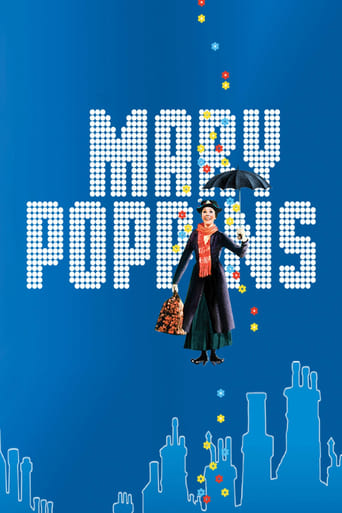
Mary Poppins
1964 · Film · 139 min
Directed by Robert Stevenson
In turn of the century London, a magical nanny employs music and adventure to help two neglected children become closer to their father.
5 positive1 negative16 neutralfrom 22 commenters
Where to watch
No streaming data for this title.
Videos commenters linked
From YouTube links in the comments below. Most are clips and trailers; “Full” means the uploader says so.



22 comments on Hacker News
Would be be worse off as a society without Snow White, Pinocchio, Bambi, Jungle Book, Mary Poppins, the Herbie series, and any of the many more recent films?
If anything these films are a great example of why copyright terms should be long, because those films are still culturally relevant today, 60-80 years after they're made, and that people are still willing to pay for them over newer films shows that the creators and their families still deserve to continue to get royalties from them.
Sure, film companies often make a quick buck from sequels, but it's interesting that copyright on characters is distinct from copyright on works.
If anything it's surprising that you're arguing something other than the usual issue that's brought up around Disney, which is that their older works frequently took stories that were specifically out of copyright, and then they vigourously pursued copyright on the films they made from those stories.
My understanding is that he was alarmingly drunk when they went to film his dance sequence with the chimney sweeps in Mary Poppins.
Alarming in a "Mad Men" era of drinking...
He sang probably the greatest song in musical film — Hushabye Mountain in Chitty Chitty Bang Bang:
https://www.youtube.com/watch?v=YfdRr7MWax4
https://www.youtube.com/watch?v=eeCBVerpYj8
If you have never seen this film, I don't care how old you are, you should watch it. It is overshadowed by Mary Poppins but it is a work of art — a funny, charming, astonishing visual feast of a film and he is magnificent in it. His performance as the jack-in-a-box alone is worth an Oscar:
https://www.youtube.com/watch?v=L_l2ii_25tc
A nice tribute at https://www.theguardian.com/film/2025/dec/13/dick-van-dyke-centenarian-100-mary-poppins-chitty-chitty-bang-bang
There are many metrics that can be sampled, many challenges to normalization.
eg: https://ext.to/browse/?sort=seeds&order=desc&cat=1&q=2019
is a listing of 2019 movie torrents ranked by seeds (number of clients holding full copies of a torrent version).
A normalization challenge is to group torrent variations (1080p rips and 720p rips and WEB-DL's and BluRay and etc.) and tally up and rank interest in various films over time.
Clearly Ne Zha (2019), a Chinese Animation, Fantasy, Adventure movie was a global pirate star of that year .. should it be "normalized" by population of country of origin to smooth out the home team having a billion+ in population "bias" ?
One advantage of ranking films by year and pirate copies is it provides a pragmatic measure of "staying power"
https://ext.to/browse/?sort=seeds&order=desc&cat=1&q=1964
My Fair Lady, Dr Strangelove, Rudolph the Red-Nosed Reindeer, Mary Poppins, A Fistful of Dollars, and Goldfinger are still being hoarded 60 years after their release.
* https://www.themoviedb.org/movie/615453
* https://www.rottentomatoes.com/m/ne_zha
This hasn’t been my experience. My kids have loved Star Wars, Harry Potter, Space Jam, Looney Toons, Muppets, Uncle Buck, Top Gun, Ghostbusters, My Neighbor Tuturo, all the classic Disney movies, Mary Poppins, Get Smart, and others I’m sure I’m missing. They even like some of the light westerns thier grandparents put on. It’s not everything, but it’s most of what I’ve tried.
They currently love playing classic arcade games on a cabinet I built.
It depends on the kid, but I don’t think it’s just a generational thing. The limits tend to be very old movies with sound issues, which was my limit as well.
Yes, extremely impressive. "Mary Poppins" rightfully received an Oscar for best visual effects.
I am continuously amazed at the level of innovation done at the Disney studios back when Walt Disney was still alive. Rewatching Snow White with my daughter a few months ago, I was flabbergasted by the animation quality, even when compared to animation movies made decades later. Just look at these water scenes:
https://youtu.be/54QeNL5ih6A?si=dOdrRrISu8f4I96G&t=95
https://youtu.be/khmrr7-W6BA?si=whn5mvuL9x95JP1l&t=70
This was in 1937! Compare these scenes to this Paramount animation clip (also featuring Snow White), which was finished just 4 years earlier: https://www.youtube.com/watch?v=cKOSJ5AAwfc
The multiplane camera [0] is also ingenious and is imho the single biggest reason why Disney could produce animation movies that looked "cinematic". I read somewhere that they re-used it for "The Little Mermaid" in the 80ies, and nobody really remembered how it worked anymore.
Disney also developed Xerox animation [1], which is cheaper than traditional animation, but which gave 101 Dalmatians a very nice "sketchy", artsy look .
[0] https://en.wikipedia.org/wiki/Multiplane_camera
[1] https://www.smithsonianmag.com/innovation/how-one-hundred-and-one-dalmatians-saved-disney-180977869/
As I understand it (not an expert but interested amateur) the sodium vapor method of a matte was a cheaper version of mattes movies used to use. To make a matte they'd film the actors over a black background with normal lighting for the actors. The black was velvet or batting that didn't reflect any of the foreground lights. They'd take that film and do a bunch of exposures that would eventually create a white silhouette that would preserve a decent amount of fine detail from the foreground. That matte would be used in an optical printer to double expose the film, once with the background plate then with the foreground plate. While effective this was really expensive and time consuming.
The sodium vapor light technique allowed for a very easily generated matte with a high level of detail. It however required specific lights and a lot of control over spillage from the background lighting into the foreground. It was also difficult to film from multiple angles since the lighting would need to be adjusted when the camera was repositioned. With those limitations in mind it was much cheaper and less time consuming than making mattes with multiple exposures and such. Cheaper effect shots meant more effect shots for the same size budget. With a movie like Mary Poppins that wanted a ton of effects shots the traditional method of making mattes would have been cost prohibitive.
Chroma keys came about because they were much cheaper than the multiple exposure method of doing mattes. The back and foreground could be lit together and the matte could be knocked out relatively easily by applying a chroma filter when making the work print. The mattes weren't as exact and had their own limitations but they were relatively inexpensive. For video (as opposed to film) chroma keys could be done electrically by filtering and mixing the video signal.
Digital mattes have a lot of flexibility. As shown in the video digital editing software has lots of toggles to help make chroma mattes look good. It's a very manual process and hard to really get right. Also as shown in the video there's some things that just do not work really well with chroma keying like translucent materials and anything with high index of refraction. They're typically a good balance of cheap and effective with a lot of known techniques to make look good.
It lost because there were only 3 prisms made. It also required a lot more lot as running thru an optical splitter means at least half of your light was lost, it's not a big issue today. Modern cameras are insanely more sensitive than film was at the time. Alfred Hitchcock used this on "The Birds". In the YouTube video they got a great result even with a smaller studio than would have been used on Mary Poppins. The trick needed the screen as far back as you could get it to minimize the chance of spill, that used to be normal on blue screen before the software improved.
There are multi-million dollar projects churned out and abandoned multiple times per day. Very common.
I just left a company where I was contracting with a few other people for about a year. About $1.2MM down the drain. There is no hope of spinning that product up. The owners "suspended" the project and the entire brain trust evaporated. Imagine the bank owners from the movie Mary Poppins interfacing with technologists and startup founders. Whoosh...
Has the British Board of Film Classification changed the rating for other media? If not, then why did they choose Mary Poppins? Was it because it was the only example?
I think that arguably Mary Poppins was so popular because she was incredibly mean and acerbic in the books (if memory serves from reading them as a kid.)
The movie Disnified the character just like so many Grimms tales.
I think Spielberg and all of us might be surprised if we knew just how much of our cultural lexicon has been rewritten over the years.
There is a large portion of children’s literature that has been changed multiple times over the decades due to the extreme and blatant and replete racism - including Dr Doolittle, Peter Pan, and Mary Poppins to name only a few.
This isn’t censorship though so we need to mark the difference between capitalism and censorship. You can still go read the original versions of these. No one is deleting them. They just aren’t publishing them.
The same has not happened to film yet, as much, probably due to technology. But it might as these IPs age. But again will that be censorship or capitalism?
Peter Parker for one. > Hey guys, you ever see that really old movie, The Empire Strikes Back
As a kid I watched many films from my parent's generation. Mary Poppins (1964) or Great Escape (1963) come to mind as being staples every christmas -- Great Escape on boxing day especially
A generation before that people watched "It's a Wonderful Life" (1946) for much the same reason.
I've subjected my kids to a few old films from well before they were born, but they were films from my youth -- Bill and Ted, Back to the Future, Men in Black, Muppet Christmas Carol etc. And yes they've seen Star Wars, which was from before I was born (just), but that's an ongoing franchise.
I don't see them watching films from the 1960s like I did though, and I doubt they'll make their kids sit through films from the 90s.
"The Sixth Station" always gives me instant goose bumps. Probably stating the obvious but soundtracks can make or destroy a potentially good movie. The scary trailer recuts of Mary Poppins [1] or Diff'rent Strokes [2] come to mind for example of how influential a soundtrack can be.
[1] https://www.youtube.com/watch?v=2T5_0AGdFic
[2] https://www.youtube.com/watch?v=dwxLekENDw0
I recall something Stanley Kubrick said about Bambi being traumatizing:
I saw Mary Poppins three times, because of my children, and I like Julie Andrews so much that I enjoyed seeing it three times. I thought it was a charming film. I wouldn’t want to make it, but … Children’s films are an area that should not just be left to the Disney Studios, who I don’t think really make very good children’s films. I’m talking about his cartoon features, which always seemed to me to have shocking and brutal elements in them that really upset children. I could never understand why they were thought to be so suitable. When Bambi’s mother dies this has got to be one of the most traumatic experiences a five-year-old could encounter. I think that there should be censorship for children on films of violence. I mean, if I didn’t know what Psycho was, and my children went to see it when they were six or seven, thinking they were going to see a mystery story, I would have been very angry, and I think they’d have been terribly upset. I don’t see how this would interfere with freedom of artistic expression. If films are overly violent or shocking, children under twelve should not be allowed to see them. I think that would be a very useful form of censorship.
Say what you will about the Hays Code, but I would hardly consider Gone With the Wind, The Great Dictator, Casablanca, It's a Wonderful Life, Sunset Boulevard, The Ten Commandments, The Bridge on the River Kwai, Ben-Hur, Spartacus, Psycho, West Side Story, Lawrence of Arabia, To Kill a Mockingbird, Paths of Glory, It's a Mad, Mad, Mad, Mad World, Mary Poppins, The Sound of Music, or, you know, Citizen Kane to be especially "crappy" movies.
Mary Poppins is certainly JA's other great film.
Roberta Flack:
https://www.youtube.com/watch?v=d8_fLu2yrP4
Enjoy! It just doesn't get any better than that. Just perfection.
> Banks go insolvent if they lend too much money out,
Banks don't go insolvent because they lend "too much" money out. They go insolvent because the collateral on those loans is less valuable than they estimated. E.g. the assets are lower than the liabilities. That is the only possible way that any business can go insolvent.
So when you take a loan on a house, the house is the asset the money lent is the liability. Housing prices drop enough, people walk away from the loan, the bank goes insolvent. That is true if it has a big balance sheet or a small balance sheet as these numbers just scale out.
> and then all customers demand their money back at once.
That is applicable to the era portrayed in the Mary Poppins movie, but not in a modern banking system. Even in the early twentieth century "bank runs" was something people would talk about when what was really going on was asset deterioration and breakdowns in the capital market.
But Hollywood preferred the more intuitive story and also the story in which the survival of the bank was in the hands of common people's choices rather than in the hands of the capital markets, where it truly lives. Thus you get It's a wonderful life where a stirring speech to not withdraw money can actually effect the P&L margin of a bank rather than the less exciting story of whether the bank's cost of funding exceeds its cost of borrowing.
Today banks borrow at a low rate and lend at a higher rate.
This includes borrowing whatever cash they need to meet outflows. In fact some banks don't even accept deposits at all, they just borrow from capital markets and don't even deal with depositors. Most big banks are depository institutions and tap both depositors and short term funding markets.
All that matters is that the interest received from inflows is less than the interest paid on borrowing to satisfy outflows. It is all about making money on that spread. When banks can no longer make money on the spread, they go insolvent even if no one makes a withdrawal. If banks are making money on the spread, then withdrawals are not a concern to the bank.
I was extremely interested in the _why situation when I first started my professional career (and started learning Ruby), which was shortly after he left. Maybe once a year I would search online if there was any news on him, and when there was that strange thing with his website having a brief printer feed, I looked into it more deeply than in retrospect seems reasonable.
And I think I finally get why this all was. I think we all liked _why and his whimsy and his disappearance for the same reason we liked Willie Wonka and Mary Poppins as children. Because they had an air of mystery about them, because they were serious yet whimsical, lighthearted yet deeply profound, creative and imaginative while still being practical.
My interest in his situation, and those movie characters, and similar real people or fictional characters, went down to zero after I finally learned that those things were guiding me to Jesus all along. He has all these qualities and more, and gives meaning to our everyday life. I know that religion is frowned upon here as being for the delusional and uneducated (ironically), and that what I'm saying will be taken as the cliche saying of a born-again Bible-thumper rather than as any kind of profound philosophical statement. But so many of you have such philosophical minds, and they go to such waste finding fancier ways to convert bytes into other bytes, because when it comes to daily lives, you think of yourselves as scientists and not philosophers. I understand the frustration St. Paul had as he stood on Mars Hill unable to reach the hearts of the learned and educated elite of his time. I understand why he went afterwards to Corinth resolving not to use words of eloquence or plausible earthly wisdom to proclaim what he had personally witnessed, but rather "to know nothing but Christ and Him Crucified."
Wait, important question.. there are multiple Mary Poppins films?
"Bankers, for example, used to have a code that made them a bit stodgy and which held them up for ridicule in movies like “Mary Poppins.” But the banker’s code has eroded, and the result was not liberation but self-destruction."
Or, perhaps, to reconsider anew forgotten ideas and examine their applicability to modern life.
The idea that "the old rules don't apply" had a lot to do with the decision process that obliterated Wall Street.