 Hacker Cinema
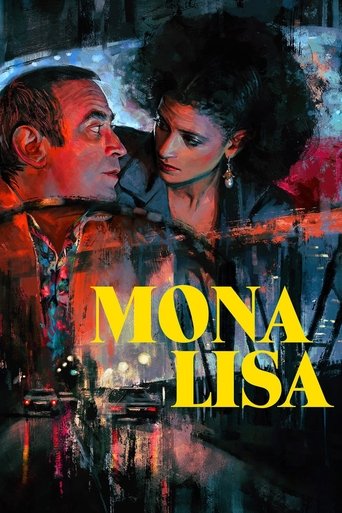
Mona Lisa
1986 · Film · 105 min
Directed by Neil Jordan
George is a small-time crook just out of prison who discovers his tough-guy image is out of date. Reduced to working as a minder/driver for high class call girl Simone, he has to agree when she asks him to find a young colleague from her King's Cross days. That's when George's troubles just start.
2 neutralfrom 2 commenters
Where to watch
No streaming data for this title.

2 comments on Hacker News
One of the problems is that by definition, digital assets can be replicated at a virtual zero-cost. There is no "original" copy to be owned, since a digital asset that is uploaded is already a copy of a copy of a copy of some bits. If it happens to be an image or movie, and you open it in your browser, you're already looking at a copy. A baseball card that was produced in the 60's cannot be reproduced atom-for-atom. And there is an original mona lisa. Sure you can have a copy or picture of the mona lisa on your wall, but that will remain just that: a copy. But in the digital world, EVERYTHING is a copy. So what exactly is it that you own with an NFT?
Ownership is based on the ability to have something tangible of a limited supply, but as I established before, digital assets can be freely copied. What are you trying to do? Artificially limiting this? Trying to push through a completely new idea of 'ownership'?
The only thing owning an NFT gives you is bragging rights of a perceived ownership. But if I say "I don't recognize this NFT proving anything", copy your asset, reproduce it and sell it somehow, you can't stop me. You claim to own some bits and claim to be able to prove that, but I can just ignore that completely, since there is zero legal grounds for this.
This is why it is absolutely moronic in my mind to have an 'ownership' idea on digital assets. It's already bad enough in online games to have in-game assets, which is in a walled-garden, under control of the company making the game, so yeah, there they can do this, it adds some perceived value. But to actively introduce this concept in an open digital world sounds absolutely crazy, counter-productive and conceptually against everything my ideal version of the internet would be: open and free as in beer.
Half Life is the equivalent to The Seven Samurai.
I have Half Life. Yes, I have The Seven Samurai, in its black and white goodness. They both helped define in their respective areas the future. Half Life was that game for me. I still remember the feeling of finally seeing the soldiers, and then coming to a firm realization in horror that they were trying to kill me as well. The entire pulled me in at the time.
Art is, at it's core, something someone creates to experience. A painting is art because you experience it with your eyes. A song is art because you experience it with your ears. Both were creations intended to be experienced.
Architecture is art, not just because you can see it, but because you can actually feel it, move through it, use it. Beautiful architecture can be functional, and usually is. It solves a problem while being beautiful.
So, why does a game not become art? Winning, as described by Ebert? Architecture's goal isn't being art, it's to be a structure. The purpose of the art doesn't dictate whether it's art. The Mona Lisa isn't less art because it was commissioned. The goal of the Mona Lisa was in celebration of a birth, but does this diminish it's artistic value? The 'players' here used the painting for another purpose.
So, it can't be the goal. Winning isn't why I played Half Life. The story was why I played, the emotions it pulled on.
You make the argument that great films are driven by a single vision. But The Seven Samurai was not driven by a single person. So, if a game is designed by a single vision, can it become art?
The argument against games as an art is not new. Movies weren't art. Pictures weren't art. So many things weren't art before their time, and had to become art, evolve to art.
No. Discounting games as art diminishes all other forms of art.