 Hacker Cinema
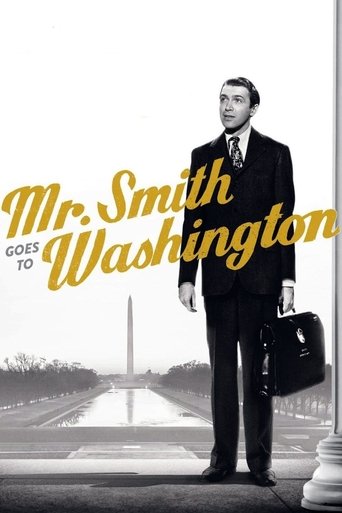
Mr. Smith Goes to Washington
1939 · Film · 130 min
Directed by Frank Capra
After the death of a United States Senator, the idealistic Jefferson Smith is appointed as his replacement in Washington. The naive and earnest new senator soon finds himself battling political corruption.
4 positive10 neutralfrom 14 commenters
Where to watch
No streaming data for this title.

14 comments on Hacker News
Which Golden Age? Yes, the preservation for pre-1927 films is very very poor, 3/4's was lost, with most of that loss being things make before 1925.
Much more of the post-1927 content was preserved (more of it was preserved with sound once we switched to sound on film) - I'd note however that Silent Movies are virtually unrecognizable by modern viewers as being even the same art form as sound pictures - and sound movies didnt reach the same... production values? as the silents until 1936-37.
The period between 1927-and 1937 was a period of reinvention and learning of a new medium, which is why - my general take is the golden age of Hollywood was 1939 to 1959.
Consider what films came out in 1939 -
* Gone with the Wind
* Wizard of Oz
* Mr. Smith goes to Washington
These are films that still find audiences today, now - 80 years or so on.
Most Americans might have seen one movie produced between 1927 and 1938 - but most people who are above 30 have seen at least two those three movies at least once.
And that trend continues from there on - where 1940 to 1959, most americans have seen one movie released in each of those years.
So while I dont disagree that we are losing heritage in these things - I take issue with their definition of Golden Age and the idea that there is value in saving everything ever written or filmed.
Much of it wasnt meant to be relevant for decades, it was meant to be ephemeral topical entertainment, and functionally intended to be disposable. Most of the production of Poverty Row, and B pictures by the majors are like this, they were intended for Block Booking, and largely just as a way to fill the content needs of the theaters and as a way to provide steady revenue in the event an A picture flopped.
I thumbed to 1939 in the "1001 Films to See Before You Die" and got these (three I believe are "foreign" films however):
Stagecoach, Zangiku Monogatari, Babes In Arms, Mr. Smith Goes to Washington, The Wizard of Oz, Destry Rides Again, Only Angels Have Wings, Gone with The Wind, Le Jour Se Lève, Gunga Din, Ninotchka, La Règle Du Jeu, Wuthering Heights
Graeber's books reprogrammed my brain. But I'm still struggling to connect the dots:
What does Iroquois style participatory democracy actually look like?
We need movies and soap operas. To tell the stories.
Like West Wing, House of Cards, Mr Smith Goes To Washington, The Wire. Show the human drama and machinations. Events, issues, and people. Conflicts and resolutions.
Participatory democracy is not all puppies and ice cream. The advocates would be well served to show that it's just another decision making strategy. Hopefully superior to what we have today.
Like how Approval Voting is better than Winner Takes All. We'd still run elections. Just more robust with better outcomes, so therefore less drama.
Mr Smith Goes To Washington was a hit film because it described an ideal nobody believed existed.
The situation you described is as old as the republic, and probably for all of human history. The American revolution itself succeeded through bribery in Whitehall.
While I get your point about tension, I actually don't think these are hard issues, it's just that our current attitudes have shifted so much. Just watch the movie "Mr. Smith Goes to Washington." A different era, to put it mildly. Public servants should be expected to put personal considerations (and the considerations of their buddies, colleagues, industry) aside, and focus on the good of the society that elected them. That is clearly no longer a universally held attitude. Instead, we've suffered a whole generation of capitalist inculcation that holds as its core value that "enlightened self interest" is all that is necessary to drive society forward (and to be honest, the enlightened part has been pretty much dropped these days). Nothing matters if representatives are endless "positive-summers" who feel that their own good benefits society's good, no matter what they do. They'll believe (all the way to the bank) that they are doing honest good. They are that deluded. I blame the shift towards this on Ayn Rand and her ilk.
> People are complicated and these are hard issues. In my experience few people show up intending to be completely selfish about their activities.
Intentions don't matter as much as actions. The norm in Washington is self-serving, and the watchdogs and anti-corruption mechanisms have corroded and are breaking down. Corruption has taken over, and the system is rotting. The only thing that can fix it is going back to the rules, not the intentions. Consequences change behavior, and those require a functioning system that fights corruption and a dedication to keeping that system functioning. Instead, neither rules nor attitudes seem to matter these days.
>We've been in this "post truth" world for a long time already for every form of media other than video
The film "Mr. Smith Goes to Washington" came out in 1939. It should be mandatory viewing.
> Where are this generation's "Mr Smith goes to Washington"? "Gone with the Wind"? "Apocalypse Now"?
Films like this stood out as original or thought provoking when released, but now films that emulate those classics are everywhere. They have become commercialised to the point of formula. The courtroom drama movie, the period drama set against the backdrop of conflict, the war is hell story. There's one out every other week. It's because they've become so commonplace that they're no longer thought provoking.
> When did people lose sight of the fact that the primary purpose of film on the silver screen is entertainment?
Where did people get the idea that the primary purpose of film on the silver screen is entertainment?
Film has always been art: the purpose of art is to provoke thought, hold up a mirror to society and, of course, entertainment (among others): the ratio of ingredients can change, but it's never been solely about entertainment.
These days, the studios are pumping out motion renderings of comics, as if some ML algorithm that decides on what to work on is in some sort of a feedback loop.
Where are this generation's "Mr Smith goes to Washington"? "Gone with the Wind"? "Apocalypse Now"? (not to imply that these 3 are the best movies out there, just some names off the top of my head, and I'm no cinephile, so let's not get into a movie-naming contest).
My pick for year is 1878. I'd love to see your examples.
But really, how do you quantify good? Taste is subjective. The original Transformers move is a great example. I didn't like it. but i believe 14 year old me would have absolutely loved it.
It's similar to the statistics about Word users only use 5% of the functionality of Word. But everybody uses a different 5%.
I guess if you want to go by money, i'm going to pick 1939. I'd guess about $18,000,000 in production expenses, and about $240,000,000 in box. [1] (arbitrarily assigning 1,000,000 to the unlisted numbers, but keeping the box at $0 for unlisted numbers) Seems like a pretty good ROI. (although i think of, Gone with the wind, Mr Smith goes to washington, and the Wizard of Oz as subjectively good. 25% is a pretty good percentage)
Kind of a fun exercise poking through the years. 1997 was a standout, but everything i looked at had memorable and fun movies. I don't think any year would hit that 25% mark though.
[1] http://www.the-numbers.com/movies/year/1939
The ruling ends with
When word concerning the plot of the movie Mr. Smith Goes to Washington reached the circles of Government, some officials sought, by persuasion, to discourage its distribution. ... Under Austin [(the basis for the campaign finance restriction discussed)], though, officials could havedone more than discourage its distribution — they could have banned the film. After all, it, like [the movie] _Hillary_, was speech funded by a corporation that was critical of Members of Congress. Mr. Smith Goes to Washington may befiction and caricature; but fiction and caricature can be a powerful force. Modern day movies, television comedies, or skits on Youtube.com might portray public officials or public policies in unflattering ways. Yet if a covered transmission during the blackout period creates the background for candidate endorsement or opposition, a felony occurs solely because a corporation, other than an exempt media corporation, has made the “purchase, payment, distribution, loan, advance, deposit, or gift of money or anything of value” in order to engage in political speech. ... Speech would be suppressed in the realm where its necessity is most evident: in the public dialogue preceding a real election. Governments are often hostile to speech, but under our law and our tradition it seems stranger than fiction for our Government to make this political speech a crime. Yet this is the statute’s purpose and design.
Some members of the public might consider _Hillary_ to be insightful and instructive; some might find it to beneither high art nor a fair discussion on how to set the Nation’s course; still others simply might suspend judgment on these points but decide to think more about issues and candidates. Those choices and assessments, however, are not for the Government to make. “The First Amend-ment underwrites the freedom to experiment and to create in the realm of thought and speech. Citizens must be free to use new forms, and new forums, for the expression ofideas. The civic discourse belongs to the people, and the Government may not prescribe the means used to conduct it.”
"Mr. Smith Goes to Washington is just a fantasy."
Actually its just a movie.
You can't "fix the local government by putting <insert person> into office." You need a 25 year plan to 'fix' your local government if it is that out of whack. There is a reason the US Constitution doesn't start with "Me, the smart guy in the room, in order to form a more perfect Union ..."
This: "It took something like 10 years from start to finish to legislate meters in the taxis."
Yes, it takes commitment, time, and consistent effort. It takes leaders and it takes workers. It takes years of educating people to the need and getting their support. But it can be done.
Watch the movie Mr. Smith goes to Washington for an example of a filibuster in action (and to see a great movie, too). James Stewart as a freshman senator holds the floor to try to stop a political machine's crooked scheme. It's a Frank Capra movie, so take it with a grain of salt.
http://www.imdb.com/title/tt0031679/
> In this case we have two extremely popular classics from the 1930s, generally regarded as among the best films ever made.
Just to beat a dead horse, the two films you reference were from the same year; 1939, the best year Hollywood ever had. Ever.
Other films of that year included Mr. Smith Goes to Washington, The Wizard of Oz, Ninotchka, Dark Victory, Goodbye Mr. Chips, Gunga Din, The Hunchback of Notre Dame, Stagecoach, Of Mice and Men, and Young Mr. Lincoln. It was the peak of the "studio system" and Hollywood never again came close to it in terms of the sheer quantity of quality that was produced that year.
These days, the commonly accepted wisdom is that movies were always as bad as they are now, and anyone who says otherwise is just idealizing the past. I offer the following evidence that the quality of movies is not constant over time:
1939: Mr. Smith Goes To Washington, Gone With The Wind, The Wizard Of Oz, Stagecoach, Ninotchka, Wuthering Heights
1940: Rebecca, Fantasia, His Girl Friday, The Grapes of Wrath, The Philadelphia Story, The Great Dictator
1941: Citizen Kane, The Maltese Falcon, The Lady Eve, Sullivan's Travels
Rather than relying on personal taste, I took these from various 'top 100' lists. I haven't seen all of them myself, but the ones I have seen are a mile apart from anything released this year, or any recent year.