 Hacker Cinema
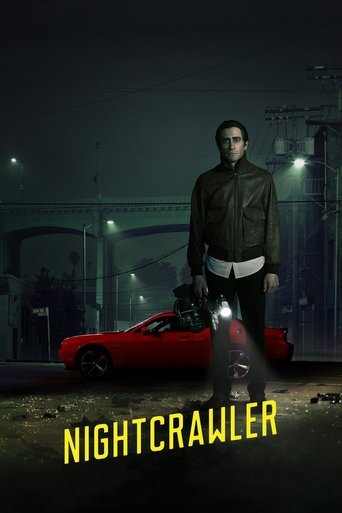
Nightcrawler
2014 · Film · 118 min
Directed by Dan Gilroy
When Lou Bloom, desperate for work, muscles into the world of L.A. crime journalism, he blurs the line between observer and participant to become the star of his own story. Aiding him in his effort is Nina, a TV-news veteran.
12 positive1 negative1 mixed10 neutralfrom 24 commenters
Where to watch
No streaming data for this title.
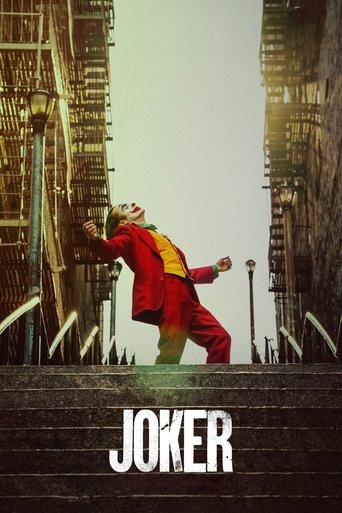
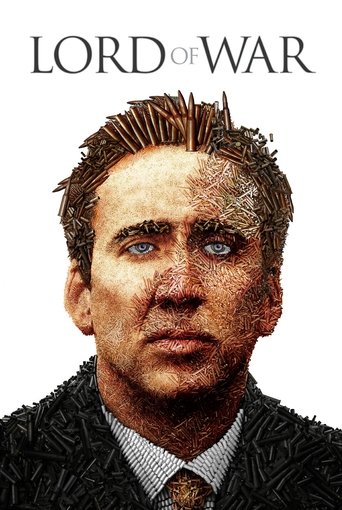

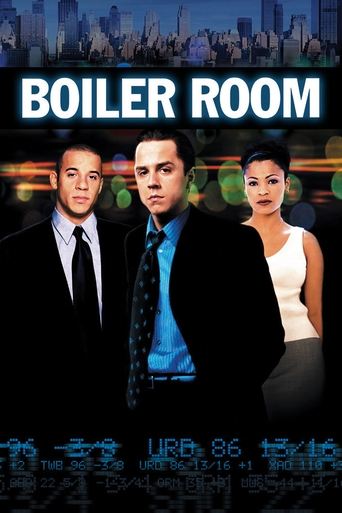
25 comments on Hacker News
The best exploration of this that I have seen in media is one of my favorite movies: Nightcrawler (2014), starring Jake Gyllenhaal. The movie doesn't touch on the government/democracy aspect of the article, but it very much captures the notion that desparate people can be pressured to do horrible things when their job is at stake.
In Nightcrawler, some characters are trying to get ahead, and others are desperate not to fall behind, but their opportunism (driven by the necessity to make money in order to survive in our capitalist society) makes all of them vulnerable to exploitation by an ambitious psychopath. In that case, he is profit-motivated, whereas the article here is about dictators retaining power, but the same principles apply. The movie does an amazing job of exploring how these individuals can wield power irresponsibly, poison everyone who gives them an inch, and sound almost reasonable while they do it. It is a masterful portrayal of how much some people can be willing to compromise on their morals for their job.
If you haven't seen it, you should watch it. If you have seen it, but don't remember it being deeply critical of capitalist society, you should re-watch it. (It's easy to get so engrossed by the truly suspenseful and thrilling moment-to-moment action that you miss the big picture.) The deterioration of American news media is a more overt theme in the movie, but in my opinion, that serves as a complementary backdrop to the anticapitalist message, which is the engine that drives the movie inexorably onward. Also the acting, directing, and writing are great.
Don't spoil it by reading the plot summary, just watch it.
https://en.wikipedia.org/wiki/Nightcrawler_(film)
"""I have an idea for a movie club, where two movies with a tenuously connected theme are watched (separately) and then discussed. If you've seen the movies "XXX", and "YYY", tell me what is similar about them, what's different, what are some possible "connected themes" and who tackled the topic better?"""
...time passes...
"""Now that you understand the idea behind these pairings, recommend five more pairings, but don't give any hints as to their connections, just five bullet points with "A vs B" movie titles. Bonus points if there is at least a 10-year gap between them, and they are both not box-office blockbusters (but make sure they are slightly more popular or recognizable movies, not exclusively low-distribution non-critically-acclaimed indie movies)."""
* Children of Men vs Snowpiercer * Lost in Translation vs Frances Ha * No Country for Old Men vs Hell or High Water * The Prestige vs The Illusionist * Drive vs Nightcrawler
...I know guidance is "don't just post AI output", but this is specifically a human-to-human discussion around novel(?) ways to interact with AI/LLM's. I've found they're _really_ good at conceptual-venn-diagrams.
There's a book "Algorithms to Live By" (ie: look for matching socks via BFS/DFS or whatever). Asking the AI: "you know a bunch of algorithms, what are the top three that should have been in the book?" => "what are the weakest that could have been removed?"
Recently during performance reviews, we had to write our self-assessment and had guidance from on high like: "make sure you talk about people skills, technical skills, customer impact, etc." ...so yada yada: "I'm so amazing, I'm so great" => "Dear AI, I've been given this guidance `...`, please compare my handcrafted storytelling against the guidance `...` and tell me where I have missed covering a requirement" => "...now please give help w.r.t. simplifying or cleaning up the section on $INCREDIBLE_TECHNICAL_ACHIEVEMENT b/c I was focusing on describing my personal impact, but need help making it more digestible for others".
The combination of instant, tailored feedback and the fact that they've read the whole internet, "watched" every movie (read the script, read critics reviews, reddit, forum discussions, etc), read most published books, and that they're 80%+ plumbers, doctors, lawyers, car mechanics, etc. make them an unstoppable research assistant, especially when crossing connections that would normally be "expensive" to do so.
Example: ask a [doctor+lawyer+plumber] about the health and legal impacts of lead solder in pipes or whatever. Instead of needing to schedule 3 people's times, wait for them, pay them, etc, you can get instant "free" feedback, educate yourself, and then have a more solid foundation to branch out from there. Such incredibly useful tools!
It's disturbing to think of Tony Gilroy's film Nightcrawler as prophetic, but as I read this article, it was the first thing that came to mind.
What you're describing is literally Netflix. I can go on Netflix and watch unlimited shows with completely unknown actors from across the globe.
When I was 19, I decided to make my way through the entirety of the imdb top 250 (which actually meant something at the time) as well as a few other big movie lists. To this day, I can remember many of those films and they influence how I see the world. I'm not convinced the Netflix shows I've watched carry such clout.
The cult of personality emerges when the rare talent warrants it. The face may be the same but the character transformation sure isn't. If they haven't got it then the cult soon flounders with all but the Kool-Aid drinkers which seems to be what we're witnessing with the current crop of actors. Try telling me Christian Bale's Batman is the same as his Machinist performance or Jake Gyllenhaal's Nightcrawler is the same as his Jarhead. These two are literally next level at their craft, and watching a top performer in any craft is immensely satisfying. If we lose that to CGI it will be a massive shame.
I believe it is more "give the people what they want." This story is getting clicks because the numbers are so big it has everybody daydreaming about having lived through this from the inside. People want details to fill in the cracks of their fantasies.
This is like Nightcrawler, and the press is satisfying the bloodlust of its readers who like The Social Network like drama and Big Shortesque scandals.
We arent living in the right reality if Adam McKay/Charles Randolph/Michael Lewis and Aaron Sorkin/David Fincher/Ben Mezrich dont have dueling FTX movies coming out on opposite streaming services the same week. (Probably Apple and Disney, who then happen to announce a merger, because of course thats how the world works now.)
I'm not American but I've been making a conscience effort to reduce the amount of news I read (at least general news). I found the constant negativity, not from any one place, just utterly anxiety inducing and depressing. At the same time it also feels semi addictive, perhaps FOMO, I don't know.
The constant 24hr mantra just has to be a recipe for psychological disaster. That isn't too say a victim of crime shouldn't have a voice. There is just too much for any one person to process, makes us feel more helpless. I can't help but think at times of the film nightcrawler. I'm sure media is staffed by well meaning people but underneath it feels like in part like this baying for blood, for more chaos.
I still keep up to date with the basics, outside of very major stories I try to avoid the whole "follow this story" side.
This reminds me of the film Nightcrawler.
How about this: MCU movies begin production with the VFX work for the major action scenes. This happens before they have a script or even a director. Have you ever noticed how MCU movies feel like a completely different movie once the CGI action sequences start? It’s because they are. These are not serious works of craft: they are marketing exercises meant to keep a money tree well watered.
I was never the target audience for this stuff but I was willing to be dragged along to Iron Man and Captain America because at that time “October Movies” still existed. That is mid budget Hollywood dramas and thrillers targeted towards adults, typically with an edgier tone, released in October after the summer tent pole season has run down but before Oscar candidate season has fully started. Basically everything David Fincher directed prior to being scooped up by Netflix fell into this category. Nightcrawler, All is Lost, and Captain Philips, are other “recent” examples, but of course they’re from the first half of the 2010s because Hollywood no longer green lights projects like these in the cinematic universe era. When MCU critics talk about crowding out better films, this is the sort of thing they’re referring to.
Look I apologize for not containing my scorn, but the fact is that the typical 9 year old can understand everything there is to understand in an MCU film modulo the punchline of a couple jokes. These are thematically simple films with no point of view and nothing to say for fear of shrinking the size of the big tent. The sad thing is that films targeted at children don’t have to be dumb; Bambi for example is a shockingly grownup film that sensitively deals with the passage of time and seasons, death and grief, coming of age, the hardness of life, and the cycle of generations, all within a runtime of under 70 minutes. There’s a lot going on there for the story of a fawn who does stuff in the woods. Yet that kind of depth does not exist in the children’s cinema of our times, ie the MCU, and the popular audience doesn’t even know to ask for it anymore.
We’re a stupid people and we get served correspondingly stupid culture. Sorry to rant and be rude, but in my view the MCU’s popularity is one of the leading indicators of our cultural decline, right up there with Trumpism and social media.
So, Uber-for-Nightcrawlers?
Reference: https://en.m.wikipedia.org/wiki/Nightcrawler_(film)
This plot seems ripped straight from Nightcrawler: https://en.wikipedia.org/wiki/Nightcrawler_(film)
Nightcrawler is also about this. Both excellent movies and observations of what drives content that gets attention.
Both were about TV, with the internet, this is even more of a competition since it is worldwide so they push to the extremes because the extremes sell.
Everyone is now competing with the world.
Wow, all of them, you must watch a ton of movies too. So you know my difficulty in finding new ones, maybe! Ides of March I haven't seen, that looks great! And I actually agree with your ranking perfectly. I only feel bad that nightcrawler and prisoners are side by side, when there's a pretty wide gulf between them in terms of how memorable they are.
I assume you've seen Place Beyond the Pines since it has Ryan Gosling, and Requiem for a Dream I think everyone's seen, and idk if you'd like Irréversible; I didn't because its story doesn't quite keep up with its violence, but it is quite a jarring film.
Frankly, excluding movies that are only exhibitions of violence and don't have a story to match, there are precious few movies in this vein! Precious few films have the power to truly shock the audience, at least in this way. OH! Cloverfield Lane is pretty solid. Very tense.
Note that I'm only mentioning movies that are striking for their tension or sudden spikes of violence, since that was the original topic. Just remembered Fatal Attraction, too!
Ooh, and Ex Machina in its own way.
Oh I would definitely love to have any recommendations you'll give me, I feel like I've seen so many movies that it's hard to find good ones now.
In the emotional vein of the movies discussed above:
Nightcrawler is very very good and very unusual. Prisoners is very good though more ordinary in its plot and characters and I found that I forgot about it after a while and didn't realize I'd seen it until I was rewatching it... It's not especially tense but it's well written. Drive is an incredible noir thriller. Goodfellas is another one that has unforgettable moments that will force you to just clench your fists, even if in the end the story left me feeling a bit empty. I should probably throw out American History X too, which is a different sort of movie but still has that feeling of "oh my God did that just happen?"
It feels to me that Mr. Neuman is a kind of person like Louis Bloom in the movie Nightcrawler.
Doesn't it seem likely at least some of these drones are operated by the same people chasing accidents/violent crime scenes with cameras to then sell the footage to TV/news?
It's not uncommon for them to break rules to get the shot. Arguably it defines a big part of their profession, and if it's paying their bills they're going to keep doing it.
The film Nightcrawler provides an interesting lens to view this situation through.
This. I mean the term Marx would've used here is reification, we are so terrified to confront our actual practices with one another that we'd rather make out the sum of those practices to appear to be an individual pathology, separate and irresolvable from the domain of how I actually raise my children, their emotional cultivation, or treat others, or even how I relate to myself (which tends to loop back to childhood...).
For those who haven't seen it, I'd highly recommend the film Nightcrawler, which is essentially about the enablement of what we call narcissism/sociopathy in our media-driven society.
>A movie designed to do well on a RT score needs to please everyone. The end result is something that tries to be bland, uninteresting, and inoffensive.
This is demonstrably untrue. Here is a link (along the left column) of the top RT movies for each year from 2014-2016:
https://www.rottentomatoes.com/top/
Sure there are some blockbusters, but there are also many excellent, interesting, engaging, even daring films like Moonlight, Hell or Highwater, Manchester by the Sea, Brooklyn, Mad Max: Fury Road, It Follows, Boyhood, Nightcrawler, and Birdman. And those are just among the top 10 scores for each year; if you expanded to movies in the 90% range of each year you'd have a large number of excellent choices.
I couldn't find a list of the top-rated RT movies for 2017, but (I think) currently the highest-rated among them is Get Out, a film specifically made to be the precise opposite of "bland, uninteresting, and inoffensive".
I submit that you simply choose to watch bad movies.
I think the movie Nightcrawler(2014) really nailed that creepy feeling I get from TV News. There's an aura of desperation, of lowest-common-denominator, hits-you-in-the-amygdala kinds of coverage. "
Nina: We find our viewers are more interested in urban crime creeping into the suburbs. What that means is a victim, or victims, preferably well off and white, injured at the hands of the poor or minority.
Lou Bloom(Jake Gyllenhaal): Just crime?
Nina: No, accidents play, cars, busses, trains, planes, fires
Lou Bloom: But bloody
Nina: Well, graphic, the best and clearest way that I can phrase it to you, Lou, to capture the spirit of what we air is think of our newscast as a screaming woman, running down the street with her throat cut.
Lou Bloom: I understand. "
Have you seen the movie Nightcrawler?
Yeah, that's a popular view. I don't think it's the whole story though.
Have you seen the film "Nightcrawler"? It has an incredible scene where the protagonist manages to come off as creepy toward another man who's bigger and more confident than him, while asking him for a job. That scene made me realize that creepiness isn't always about attractiveness.
Imagine that you’re sitting down to dinner with your family, and while everyone else gets a serving of the meal, you don’t get any. So you say “I should get my fair share.” And as a direct response to this, your dad corrects you, saying, “everyone should get their fair share.” Now, that’s a wonderful sentiment — indeed, everyone should, and that was kinda your point in the first place: that you should be a part of everyone, and you should get your fair share also. However, dad’s smart-ass comment just dismissed you and didn’t solve the problem that you still haven’t gotten any!
The problem is that the statement “I should get my fair share” had an implicit “too” at the end: “I should get my fair share, too, just like everyone else.” But your dad’s response treated your statement as though you meant “only I should get my fair share”, which clearly was not your intention. As a result, his statement that “everyone should get their fair share,” while true, only served to ignore the problem you were trying to point out.
That’s the situation of the “black lives matter” movement. Culture, laws, the arts, religion, and everyone else repeatedly suggest that all lives should matter. Clearly, that message already abounds in our society.
The problem is that, in practice, the world doesn’t work that way. You see the film Nightcrawler? You know the part where Renee Russo tells Jake Gyllenhal that she doesn’t want footage of a black or latino person dying, she wants news stories about affluent white people being killed? That’s not made up out of whole cloth — there is a news bias toward stories that the majority of the audience (who are white) can identify with. So when a young black man gets killed (prior to the recent police shootings), it’s generally not considered “news”, while a middle-aged white woman being killed is treated as news. And to a large degree, that is accurate — young black men are killed in significantly disproportionate numbers, which is why we don’t treat it as anything new. But the result is that, societally, we don’t pay as much attention to certain people’s deaths as we do to others. So, currently, we don’t treat all lives as though they matter equally.
Just like asking dad for your fair share, the phrase “black lives matter” also has an implicit “too” at the end: it’s saying that black lives should also matter. But responding to this by saying “all lives matter” is willfully going back to ignoring the problem. It’s a way of dismissing the statement by falsely suggesting that it means “only black lives matter,” when that is obviously not the case. And so saying “all lives matter” as a direct response to “black lives matter” is essentially saying that we should just go back to ignoring the problem.
From https://np.reddit.com/r/explainlikeimfive/comments/3du1qm/eli5_why_is_it_so_controversial_when_someone_says/ct8pei1
The recent (excellent) film Nightcrawler[0] seems rather relevant.
[0] http://www.imdb.com/title/tt2872718/
The US has an outsized culture of fear that's far in disproportion to other countries. The reasons are complex but I'd posit one major factor is that the US has, by far, the most commercial and competitive media market of any country. This leads to the normalization of sensationalism in the chase for ratings and a systematic distortion of reality.
Watch the movie Nightcrawler for an example of the type of culture that pervades newsrooms around the country and understand the effect that has on people's decisions regarding safety.
Surprisingly, the most thought-provoking film I saw last year may have been Nightcrawler. I knew the outlines of the film's subject going in: the sensationalization of the news, the woeful deterioration of local news standards, not to mention the unannounced insertion of pre-packaged or paid segments (not really covered in the film).
The content was undoubtedly exaggerated for dramatic effect to some extent, though I suspect the news production scenes were among the more documentary aspects of the film. Amazingly, they cast real Los Angeles local news anchors in the film (who happily consented to be in it!)
I'm also a consumer of what I would call serious, non-mainstream news sources: NPR, New York Times, Hacker News. But next time I was at the gym and caught the local news on one of the hanging big screen tvs, I saw it in a completely different light. Just as the film depicted.
It's not propaganda in the way described here. But I found it pretty shocking and unsettling.
15 dollars to stream Nightcrawler, when a movie ticket might cost half that. What am I paying for exactly?