 Hacker Cinema
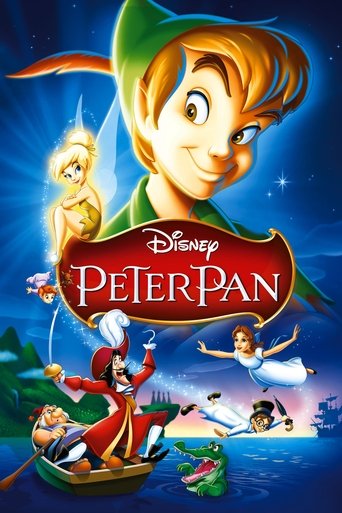
Peter Pan
1953 · Film · 77 min
Directed by Clyde Geronimi, Wilfred Jackson, Hamilton Luske
AnimationFamilyAdventureFantasy
Leaving the safety of their nursery behind, Wendy, Michael and John follow Peter Pan to a magical world where childhood lasts forever. But while in Neverland, the kids must face Captain Hook and foil his attempts to get rid of Peter for good.
1 positive2 negative19 neutralfrom 22 commenters
Where to watch
No streaming data for this title.



24 comments on Hacker News
> Disney did not create Snow White, Bambi, Robin Hood, or Peter Pan.
I believe I stated above that I support reducing copyright periods (to the lifetime of the original author would be appropriate IMO, if the copyright is held by an individual, and I would be open to a more aggressive schedule for corporate copyrights). AFAIK all of Disney's adaptations of these stories would be allowed under that rule; some of these original stories are centuries old. But no, I don't think Disney should be able to immediately adapt a book I've written and not give me a cent out of the billions they will make off the adaptation. I would sell more books that way, sure---except I actually wouldn't, because in that world I have also lost the ability to monetize my work. So it's more accurate to say that somebody else would sell more of my books, or that I would give away more of my books.
And yes, it's more appropriate to call these adaptations. Fan fiction is more in the vein of original stories using (somebody else's) established characters and settings.
> To a large degree individual artists do not hold copyright for their work, they often sign it away (especially musicians and authors) in exchange for signing, advances, and distribution.
"To a large degree" is obviously meaningless, but a good author's agent will retain your core copyright and other rights (e.g. film adaptation, publishing/distribution in other countries, etc.).
> I think they will still be financed. Take books, I don't think bookstores will want to vertically integrate from book discovery through printing and retail stores. Consumers will still need ways to identify reputable book publishers to limit what they purchase next.
You are conflating production and distribution. If there is no copyright, the second a single copy of a work becomes available it will be scraped and offered by every distribution platform in the business, who are all free to curate their "storefronts" however they please. The difference is that they don't have to pay a cent for production, royalties, or anything else.
As an example, say I publish a new short story on my Patreon, which I use to support my writing---the idea being that if people want to read my shorts they have to pay for access. In this new regime, that newly posted story is going to appear on Amazon and every other big platform within hours, for cheaper than my Patreon membership or even free. And if I am an established name, there is no reason Amazon can't put my book front and center in their KDP feeds, etc.
The same goes for any other publishing model. The author and publisher (if applicable) immediately lose all ability to get a return on their investment, except to the extent that they can organically attract people to the correct listing on the correct distribution platform, which will have to be price-competitive with other listings.
It's the same story for paper books, too. B&N can just print copies of my book and display it front and center in their stores, without even asking me, and certainly without paying me anything.
And the same goes for other types of media. Why wouldn't it? This is why I say the commodity slop is all that will be left---that kind of IP synergizes best with the massive marketing efforts and platform consolidation that will be required to recoup your investments in content. Not much might even change in that world.
> The 0.00001$ per stream for musicians? Or the 1$ residual checks for reruns?
There is always going to be a long tail, and there are always going to be great artists who go unrecognized and unrewarded. It's also true that monolithic modern platforms like Spotify are going to leverage their position as gatekeepers to squeeze artists as far as possible. But it's ignorant (or possibly disingenuous, and anyway categorically incorrect) to claim that the above means nobody is getting paid substantial amounts for their work via these mechanisms. I suggest you seek out the authors of some of your favorite recent novels (if you read) and ask them whether losing royalties would have a substantial impact on their finances and ability to keep writing.
> You can just go write your own fiction, right now. You can invent your own original characters and setting and plot and go write it. You will automatically own the copyright to your own work; there is no other party who must "bless" your efforts.
I keep going back to the old-school Disney example because it's easiest to see: Disney did not create Snow White, Bambi, Robin Hood, or Peter Pan. All of those movies are highly influential and core to Disney and the culture of people growing up with them. And they're all fan fiction, or would be considered as such, and be impossible to produce and monetize if Disney had to live with the same copyright restrictions they impose on the rest of us.
If I want to now go and recreate my own movie based on one of the original texts, I think it would be next to impossible since the threat of lawsuit (even if I use none of their IP and would eventually win) would make financing impossible.
Fan fiction has been turned into an edge case by the current copyright system. Putting your own spin on the stories you grew up with used to be the norm.
> my specific concern is for individual artists who hold the rights to their work
To a large degree individual artists do not hold copyright for their work, they often sign it away (especially musicians and authors) in exchange for signing, advances, and distribution.
> what effect do you think abolishment of copyright will have on the production of films that are actually good? Who will finance them when it's impossible to directly monetize them?
I think they will still be financed. Take books, I don't think bookstores will want to vertically integrate from book discovery through printing and retail stores. Consumers will still need ways to identify reputable book publishers to limit what they purchase next.
> I think commodity slop will be the only thing that gets funded anymore
One could argue that this is what has always dominated funding. Most revenue and shows have been for artistically devoid pieces of media (especially in movies).
> No artists are relying on royalties and similar payments for their work.
The 0.00001$ per stream for musicians? Or the 1$ residual checks for reruns?
> Wait a sec... People can't fly." That took the wind out of my sails, so to speak, and I couldn't fly again in the dream
There is a Peter Pan tendency, at least to my dreams. You know you can’t fly. But then you remember you have, and believing it’s true makes it happens.
That’s what I was getting at with the film-script effect. I’ll be in a bind and then realize that there “must” be a solution in a particular form, otherwise the dream wouldn’t make sense, and that sort of conjures that thing into existence.
Maybe fortunately, maybe sadly, the one thing I’ve not been able to do is conjure up lost loved ones. I’ll get a bunch of puppies who know my dog, but he just couldn’t show up, or I’ll get strangers or living loved ones who know my grandmother or best friend; they’re just constantly indisposed.
You're right on the innovation speech, mea culpa.
You surprise me with a proposal for shorter copyright terms. Interesting!
For fun, here's an interesting discussion countering my own earlier statements - Once a work is in the public domain, it seems there's very little to do with an idea except drag it through the mud. Audacity is what drives commerce i suppose. For example as soon as Mickey Mouse entered public domain all the news could talk about was horror films and "adult" films capitalizing on the "what're you gonna do about it" of the moment.
Similarly when Peter Pan entered the public domain there was a short glut of "now he's a nightmare / villain" representations before becoming irrelevant again.
Imagine creating something like Sesame Street or Mr Roger Neighborhood then a mere 30 years later everyone has more fun making "Mr Grouch Goes On A Murder Rampage" bloodbath and "Mr Rogers + Freddie Kruger Teamup" art / film / trite youtube videos.
It'd be pretty soul crushing.
"Tragedy of the commons", as it were.
With this in mind, perhaps... your idea could deal with that via tiered pricing of "official / approved / canon" works are charged the standard fee whilst "unofficial / unapproved" works tithe a larger proportion of the proceeds to the original author...
The biggest annoyance here is the discussion always focuses on protecting individual creators whilst the laws and benefits seem to go to large corporations. e.g. Disney would have no problem using Peter Pan without consequence, while the rest of us wouldn't dare use Steamboat Willie.
Peter Pan is a 70-year old movie. Little Mermaid is 25 years old.
There have also been many, many original movies released in that time: https://en.m.wikipedia.org/wiki/List_of_Walt_Disney_Pictures_films
The vast majority of recent Disney content is original.
Tangled (Repunzel), Moana (uses and remixes actual Polynesian myths), Frozen (based on the snow queen), Peter Pan, Little Mermaid - a stack of recent Disney movies have been based on existing IP. You just don't notice because they culturally steamroll the originals.
The most recent movie Wish - is just callbacks to other Disney movies, so does it count as original IP?
And this excludes their reboots - but also excludes Pixar which has done some original albeit lacklustre stuff recently.
Very few of Disney's were "smaller and less astute."
Disney bought the rights to Peter Pan from Paramount Pictures in 1938. At the time, Disney was a small fraction of the size of Paramount Pictures.
The original author of Bambi sold the motion picture rights to his film in 1936 for $1000 USD to a film producer...Disney was not the purchaser. Disney bought those rights from the producer for an undisclosed amount.
Disney bought the rights to Dumbo for $1000 plus royalties on the book sales. (At the time Dumbo was a very simple, very short story intended as promotional content for a new type of book called a "roll-a-book". It sold very few copies, and would have been a historical footnote if not for the unexpected success of the film.)
Disney bought the rights to Winnie the Pooh and paid royalties to the Milne family for decades, before shelling out $350 million to buy the entire rights in 2001. (Disney originally paid $1000 for the merchandising rights to the merchandising rights holder, it's not clear how much they paid for the film rights but given that the Pooh books were a huge commercial success, estimates are somewhere between $100k and $1million in 195x dollars.)
That's only in the UK where the children's hospital has perpetual copyright to the first peter pan book/play (I'm not sure about the other works in the series). Outside of the UK it is no longer under copyright. Performances/etc. of it in the UK require royalty payments to the children's hospital. Presumably performances/etc. of derivative works (such as the Disney film) require the same.
The same applies to the King James Bible where the UK Crown (and Cambridge Press) hold the copyright to it, where you can't publish that text without permission.
Agreed. My 4 year old went through a phase where she loved the original Disney Peter Pan. Disney themselves have included a disclaimer at the beginning of the film now, but for my daughter I made sure to discuss with her that the portrayal of the Indians wasn't particularly nice.
The copyright around Peter Pan is super interesting with an amendment in UK law to extend it to provide income to the very good cause of Great Ormond Street Hospital: https://www.gosh.org/about-us/peter-pan/copyright/
> J M Barrie’s gift of the rights to Peter Pan has provided a significant source of income to Great Ormond Street Hospital
> The copyright first expired in the UK (and the rest of Europe) in 1987, 50 years after Barrie’s death.
> However, former Prime Minister Lord Callaghan successfully proposed an amendment to the Copyright Designs and Patents Act (CDPA) of 1988, giving Great Ormond Street Hospital the unique right to royalties from stage performances of Peter Pan (and any adaptation of the play) as well as from publications, audio books, ebooks,radio broadcasts and films of the story of Peter Pan, in perpetuity.
I think this means that the adaptions you are referring to haven't been published in the UK.
For those outside the UK and unaware GOSH if the most famous and most highly regarded children hospital in the UK. The NHS here get much criticism at times but the prevision for children is world class with a network of incredible children's hospitals. Having been in the situation where my child has been under the care of one of the children's hospitals, they are incredible.
Different how? Like Lolita (1962) ? All the President's Men (1976)? Miss Saigon (1989, a play I admit, but a controversial one): https://en.wikipedia.org/wiki/Miss_Saigon_controversy
??
I don't even know what decade you're referring to. Movies, plays, and other forms of entertainment always had politics. Some of them (like Lolita) explicitly tried to court controversy.
Or do you mean like Disney movies, like how Peter Pan (1953 Disney cartoon) has great, "non political" songs like "What makes the red man red" ??
Like, you can't escape politics. Even when you're trying to be politically neutral (like a Disney cartoon aimed at children in the 1950s), these sorts of political issues just come up... because our base assumptions of life are in fact political.
Whether we court politics on purpose (Dr. Strangelove, Lolita), or accidentally (Peter Pan 1953, "What Makes the Red Man Red?"), these sorts of things have been going on since the dawn of movies and cartoons.
Lemme leave things off with this 1940s comic by Dr. Seuss: https://library.ucsd.edu/dc/object/bb3618599q/_2.jpg
I think it's important to keep an archive of unaltered content. But, given that much of this content is for entertainment, curation is important.
For example, when Disney Plus was new, I decided to watch Peter Pan with my kids. One was 4, and one wasn't even two. Curiously, I couldn't find Peter Pan in the "kids" mode, so I switched back to the adult mode and put it on. There was a very subtle warning about "outdated cultural references," but I didn't think much of it as I've seen Peter Pan a few times.
The Disney Plus version reintroduced "What Made the Red Man Red?", an extremely racist musical bit. (https://en.wikipedia.org/wiki/What_Made_the_Red_Man_Red%3F) In the past, this song was cut from the VHS and DVD version. (And I have vague memories of wondering why the lost boys returned to their tree dressed as Indians.) I had no idea that this was put back in the movie. My jaw dropped when the song came on. I was in so much shock that I didn't think to skip the scene.
Now, I have no problem preserving the uncut film, and making it generally available! But I also would prefer to show my young children the cut version of the film, and only show them racist material when they're old enough to understand why it's wrong. (After all, those who forget history are doomed to repeat the mistakes of history.)
Your examples of public domain movies take a rather flexible view of the source material.
Frozen is a long way from The Snow Queen. A queen had powers over ice there where trolls and someone was saved by a kiss, but in the Snow Queen it was a guy saved by the kiss and the trolls where evil etc. I wouldn’t be surprised if someone at Disney read it, but I wouldn’t count on it.
Peter Pan, Little Mermaid, etc adaptations at least share some basic elements of the story though their at most fanfics and really that’s all I am advocating.
Nobody is going to pay for the rights to the Hitman video game franchise and create The Professional. Because if you mutate the story that much you’re legally in the clear.
Licensing isn't the thing that prevents big budget productions from happening. If they wanted to make a bunch of big budget Marvel movies in 1992, nothing was stopping them. They'd have just paid for the rights back then, the same as they do now.
What copyright expiration would get you that you don't have now is tons and tons and tons of fan fiction and small budget productions. A few of which would have been good and most of which would have been both terrible and ignored. Like every school play being Shakespeare, but now it's Spider Man.
And heretical crossovers. Deadpool vs. the Joker and things like that.
But Tangled, Frozen, Little Mermaid, Alice in Wonderland, Beauty and the Beast, all the Peter Pan movies, they're based on public domain stories and they're still making major films out of them on a regular basis. The Snow Queen is one public domain fairy tale, Frozen is three movies.
Children getting whisked away by a handsome protagonist and his magical sidekick to fight against "cool things" like pirates and mermaids in a world unlike our own?
Its an Isekai.
---------
Isekai is this modern trend in anime (and US movies sometimes!! Like Ready Player One), where characters are sent to another world. Sometimes due to death explicitly ("Reincarnated in a New World" plotline: like "I'm a Spider So What"), sometimes just "temporarily" transported (Sword Art Online / Ready Player One, they are "just" playing a video game).
From an "Isekai" perspective: people want two things.
1. A world very different from our own. Completely different "physics" or rules. So magic systems, history, culture, etc. etc. that's nothing like our world. Neverland easily qualifies.
2. A character who explores the new world from our perspective. The main character is always someone "like the audience", who can be ignorant about the new world. (The various characters the protagonist meets are therefore given an opportunity to explain the world to the newcomer, allowing the audience to learn about the world in a natural manner). In Peter Pan, Wendy is the Isekai protagonist.
------
Alice in Wonderland, Connecticut Yankee in King Arthur's Court, Wizard of Oz, A Lion, A Witch, and the Wardrobe. The concept happens again and again as a pattern, because its a good framing device. I'm not sure if Peter Pan can be seen as an allegory of death necessarily, any more than "I'm a Spider, so What?" (2021 Anime) could be.
The children are... children... because the main character often should match the profile of the target audience. Not always, but its a good rule of thumb to keep. Children stories will therefore have child-protagonists more often than not (Polar Express, Lion Witch Wardrobe, Harry Potter). There are exceptions (Peanuts has child protagonists but is largely written for an adult audience), but its just the rule of thumb authors seem to use.
"Disney+ has removed several movies, including “Dumbo,” “Peter Pan,” “The Aristocats” and “Swiss Family Robinson” from children’s profiles on its service over negative depictions and stereotypes."
Edit: further reading of the article gives details for each film. For Dumbo, it is the scene with the crows doing a minstrel show (with the leader's name being "Jim Crow"). Peter Pan has simplified/stereotypical (inaccurate) portrayal of Native people. The Siamese Cat is the issue in The Aristocats.
So they made the decision to not edit the films, but have the warning screen and remove the shows from the 7 & under profiles.
"All of this has happened before, and it will all happen again." - Peter Pan movie, Battlestar Galactica, and should be every security incident report ever.
Not saying they shouldn't have issued their analysis, of course they should have, it mostly looks on target. But...it will all happen again.
If you think about it this came about through laziness and to lower budgets, same deal with great programmers, programmers shouldn't want to do repetitive lazy work but innovate it away. Tedious work becomes a pain on time and budgets, so you innovate to do it faster/better.
Animators didn't want to draw all the backgrounds slightly moving and this allowed re-use and new innovations to make movies faster. This allowed animators to focus on the character cels and making characters look better, the main focus.
The multiplane camera with movable layers for parallaxing directly led to some of the best early Disney movies (Snow White and the Seven Dwarfs, Pinocchio, Fantasia, Bambi, The Adventures of Ichabod and Mr. Toad, Cinderella, Alice in Wonderland, Peter Pan, Sleeping Beauty and The Jungle Book) and helped their budget as well as made them look better. Plus at the time, it was actually an improvement that animators welcomed to speed up their tedious work.
That was the predecessor not the multiplane aspect of it with moving layers, definitely inspired it. Lotte mostly just used it to swap out colored backgrounds on her silhouette cel style to adjust placement and color.
A predecessor to the multiplane camera was used by Lotte Reiniger for her animated feature The Adventures of Prince Achmed (1926). Berthold Bartosch, who worked with Reiniger, used a similar setup in his film L'Idee (1932).
Ub Iwerks invented the multiplane camera with movable layers to create parallax and zooming [1] which created immersive depth. It also saved on budgets, tedious background animation and allowed animators to focus more on the character cels, the star of the show.
The first multiplane camera, using movable layers of flat artwork before a horizontal camera, was invented by former Walt Disney Studios animator/director Ub Iwerks in 1933, using parts from an old Chevrolet automobile. His multiplane camera was used in a number of the Iwerks Studio's Willie Whopper and Comicolor cartoons of the mid-1930s.
Fleischer Studios (Popeye/Betty Boop) also made one or copied in 1934 [1]
The technicians at Fleischer Studios created a distantly related device, called the Stereoptical Camera or Setback, in 1934. Their apparatus used three-dimensional miniature sets built to the scale of the animation artwork. The animation cels were placed within the setup so that various objects could pass in front of and behind them, and the entire scene was shot using a horizontal camera. The Tabletop process was used to create distinctive results in Fleischer's Betty Boop, Popeye the Sailor, and Color Classics cartoons.
William Garrity took Ub Iwerks invention further and that iteration was used in many large successful movies they made [1]
The most famous multiplane camera was invented by William Garity for the Walt Disney Studios to be used in the production of Snow White and the Seven Dwarfs. The camera was completed in early 1937 and tested in a Silly Symphony called The Old Mill, which won the 1937 Academy Award for Animated Short Film. Disney's multiplane camera, which used up to seven layers of artwork (painted in oils on glass) shot under a vertical and moveable camera, allowed for more sophisticated uses than the Iwerks or Fleischer versions, and was used prominently in Disney films such as Pinocchio, Fantasia, Bambi, The Adventures of Ichabod and Mr. Toad, Cinderella, Alice in Wonderland, Peter Pan, Sleeping Beauty and The Jungle Book
[1] https://en.wikipedia.org/wiki/Multiplane_camera
> I don't know what you think a Disney story is, but all of Disney's major works are based on existing folk stories and other works already in the public domain.
False. Here's some of their animated features based on copyrighted works (as best as I can tell):
Dumbo
Bambi
Peter Pan
Lady and the Tramp
One Hundred and One Dalmatians
The Sword in the Stone
The Many Adventures of Winnie the Pooh
The Rescuers
The Fox and the Hound
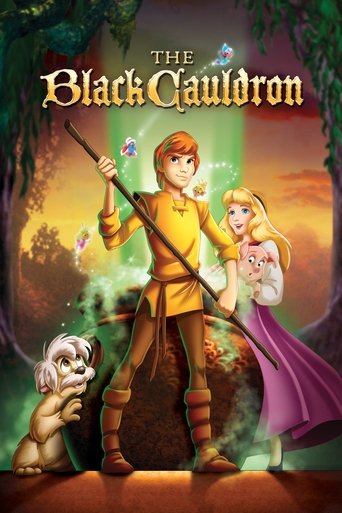
The Black Cauldron
The Great Mouse Detective
Treasure Planet (partially based on the 1987 TV miniseries Treasure Island in Outer Space)
Meet the Robinsons
The Princess and the Frog
Big Hero 6
(I'm using the list in https://en.wikipedia.org/wiki/List_of_Walt_Disney_Animation_Studios_films, and picking out the “based on” or ”inspired by” credits that look recent enough.)
Wow, I didn't think about its origins that way at all, but it makes sense given the timing/context of how it began.
For the unenlightened (like me), Google Translate renders this as:
"In a dense African jungle savage negroes without Di 'have already solved the linguistic problem, by so-called'" [1]
Yeah, not sure if I'd say "ominous", but it's definitely a double-take.
It reminds me a bit of the Indian scene from Disney's Peter Pan (1953) [2]. When it was made, I guess it was supposed to evoke a sense of wonder about the fantasy/dreamlike-nature of their adventure. But in the modern day, it just comes off as "wow, that's incredibly offensive."
What's funny is the cultural/time context. I saw the Peter Pan film as a child (in the 1980s) and I do not remember thinking it was patently offensive. In fact, iirc in US in the 80's it was not considered politically incorrect to use phrases like "Indian giver" or play games like "Cowboys and Indians" with your friends, etc. I think Esperanto's early history might also suffer from this sort of cultural baggage.
[1] https://translate.google.com/#auto/en/En%20densa%20Afrika%20%C4%9Dangalo%20sova%C4%9Daj%20nigruloj%20sen%20Di'%20jam%20solvis%20la%20lingvan%20problemon%2C%20per%20tam-tam'%20disi%C4%9Das%20la%20kri'
[2] https://en.wikipedia.org/wiki/Peter_Pan_(1953_film)#Controversy
I'm...not certain this is false.
When I was a kid, I watched Disney movies. I had this whole alternate "Disney" universe constructed in my head. Cinderalla, Aladdin, Peter Pan, Sleeping Beauty, etc.
But importantly, they only existed in my head---and of course, on the screen.
Then I got to visit Disneyland. Suddenly Sleeping Beauty's castle is a real place, and I've been there. I've taken a pull on the Sword in the Stone.
----------
A couple years ago, long on knowledge about monads and short on portfolio, I found myself in need of a job in the Bay Area. I started working for Zirx, an on-demand valet company. Basically my job was to run around SoMa and pick up people's cars, and later return them to them. The rest of the time, I wandered the streets, waiting for my company-issued phone to summon me.
Imagine my surprise one day when, running from parking a car near 2nd Street, I saw Github.
"Oh," I thought. "I guess that's where that is."
Or Hipmunk, which was recessed behind a grate. Or that building right by the freeway on the east side of 2nd, that has five floors and about ten startups.
So, I don't know. To me---to an extent---San Francisco really is where the Internet is.
You are confusing trademarks and copyrights.
As an iconic trademarked character, Disney is the only company able to produce new entertainment or durable consumer products featuring Mickey Mouse.
By use of copyrights, Disney can also prevent the legitimate purchaser of a 1928 film reel from turning it into a digital video file.
The difference can be seen more clearly in the character of Peter Pan. The copyright on the original publications have expired in most of the world. But GOS Hospital and Disney can still claim trademark over some elements, inasmuch as they continue to be used in their business. You can write a new novel or play about Peter Pan, but woe to you if you make a new animated film, or use it to promote your children's hospital, or even try to use it to sell peanut butter.
Trademarks do not expire, as long as they are defended. But trademarks are more narrowly defined, and restricted to a particular purpose.
>I know that Disney stops people from taking Walt's original concepts. But is that a bad thing? What concepts did Disney steal? None: he made his own. Other people can do that too.
This is completely wrong. Nearly every famous early work of Disney's was "stolen" from others. Among the more famous are Snow White (1937), Fantasia (1940), Pinocchio (1940), Dumbo (1941), Bambi (1942), /Song of the South (1946), Cinderella (1950), Alice in Wonderland (1951), /Robin Hood (1952), Peter Pan (1953), Lady and the Tramp (1955), Mulan (1998), Sleeping Beauty (1959), 101 Dalmatians (1961), The Sword in the Stone (1963), and The Jungle Book (1967).
The first iteration of Mickey Mouse, called "Steamboat Willie", was copied directly from Buster Keaton's "Steamboat Bill."
This is an excerpt from one of Lawrence Lessig's speeches about the topic: "It was a parody, a take-off; it was built upon Steamboat Bill. Steamboat Bill was produced in 1928, no [waiting] 14 years--just take it, rip, mix, and burn, as he did [laughter] to produce the Disney empire. This was his character. Walt always parroted feature-length mainstream films to produce the Disney empire, and we see the product of this. This is the Disney Corporation: taking works in the public domain, and not even in the public domain, and turning them into vastly greater, new creativity. They took the works of this guy, these guys, the Brothers Grimm, who you think are probably great authors on their own. They produce these horrible stories, these fairy tales, which anybody should keep their children far from because they're utterly bloody and moralistic stories, and are not the sort of thing that children should see, but they were retold for us by the Disney Corporation. Now the Disney Corporation could do this because that culture lived in a commons, an intellectual commons, a cultural commons, where people could freely take and build. It was a lawyer-free zone."
To address your second point, "the idea of capitalism" does not necessarily require giving anyone permanent, state-enforced monopolies of anything, no matter how well written it is. Any justification for copyright has to stem from a benefit to society. Strong arguments can be made for giving creators temporary monopolies of a limited scope, but permanent monopolies are bad for both innovation and the public.