 Hacker Cinema
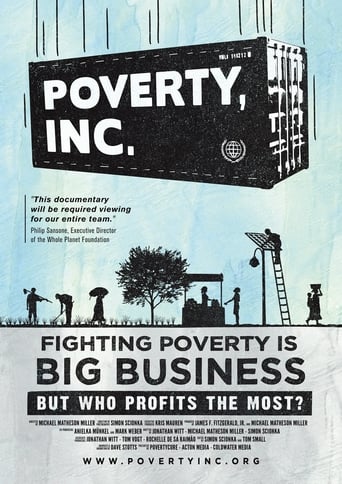
Poverty, Inc.
2015 · Film · documentary · 94 min
Directed by Michael Matheson Miller
Poverty, Inc. explores the hidden side of doing good. From disaster relief to TOMs Shoes, from adoptions to agricultural subsidies, Poverty, Inc. follows the butterfly effect of our most well-intentioned efforts and pulls back the curtain on the poverty industrial complex - the multi-billion dollar market of NGOs, multilateral agencies, and for-profit aid contractors. Are we catalyzing development or are we propagating a system in which the poor stay poor while the rich get hipper?
7 positive1 mixedfrom 8 commenters
Where to watch
No streaming data for this title.




9 comments on Hacker News
Check out the documentary Poverty Inc. It breaks it all down.
https://g.co/kgs/Bb2HafB
The movie Poverty Inc richly illustrates this concept.
https://g.co/kgs/Bb2HafB
Saw a documentary yesterday called Poverty, Inc[1] and it dives into the rice imports to Haiti. While it's agreed that international aid was a good thing in the immediate aftermath of the earthquake, they argued that continued aid to the country has largely destroyed native rice farming by the simple fact that it's hard to compete with something that's free.
Highly recommend a watch if you haven't seen it already. Saw it yesterday and really gave a new perspective to international aid.
[1]: https://www.povertyinc.org/
You should watch Poverty Inc.. It's a 2014 documentary about the big business of... fighting poverty; which ironically would go out of business if poverty ceased. I don't agree with all the statements or conclusions but it's still eye-opening and dystopian.
I haven't watched it yet, but Poverty Inc is a documentary that makes the case that aid does more harm than good:
https://www.povertyinc.org
There is a good documentary by the name Poverty, Inc that explores the west's approach to foreign aid. It is currently on USA Netflix if you have that. It convinces me that our current approach to foreign aid is flawed. In most cases it hurts more than it helps.
I do wonder if not having anything on the line contributes to our blind spots in this area. If something doesn't affect us, it takes much longer to realize when things have gone very wrong.
Sure, someone who says "Do as I say, not as I do" can have good advice, but at the end of a day, a doctor who wont take his own medicine is suspect in my mind.
Recently fascinated by the thought of piping donations directly to poor populations and allowing them to use it as they wish. I watched the documentary Poverty, Inc. [0] regarding the "poverty industry" and how endless foreign aid in these countries is killing the economy. If Toms shoes dumps 1,000 pairs of shoes in the city center every week, how the hell would a cobbler stay in business. Or if the U.S. pumps an endless supply of rice into Haiti, how could Haitian rice farmers sell their inventory?
Instead, give these people the cash to purchase locally sourced goods or open a business of their own. Economies don't spring up out of a pile of free rice.
[0] http://www.povertyinc.org/
I heard about Poverty, Inc. from the EconTalk podcast episode[1]. It seems particularly relevant to discussion of charities on HackerNews, but may not necessarily be relevant to any specific charity.
[1] http://www.econtalk.org/archives/2015/11/michael_matheso.html
On this topic, the recent doc "Poverty, Inc" is probably worth a watch. Giving well is more than getting a good buck for the dollar - it's also thinking about the second order effects of your donation.
(Note that there are two films with the same name launched around the same time. This is the one by Michael Miller, not the one by Gary Null.)
[1] http://www.povertyinc.org/about/