 Hacker Cinema
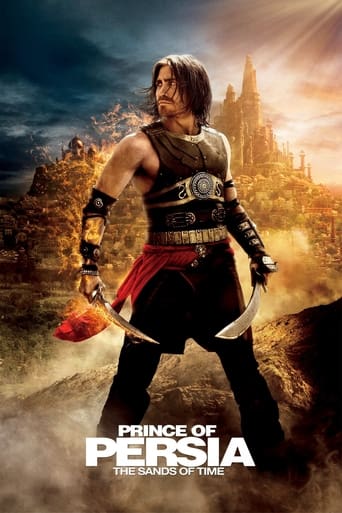
Prince of Persia: The Sands of Time
2010 · Film · 116 min
Directed by Mike Newell
A rogue prince reluctantly joins forces with a mysterious princess and together, they race against dark forces to safeguard an ancient dagger capable of releasing the Sands of Time – gift from the gods that can reverse time and allow its possessor to rule the world.
1 positive1 neutralfrom 2 commenters
Where to watch
No streaming data for this title.




2 comments on Hacker News
> but I suppose the situation here is similar as with "abandonware"
I don't know if this would hold up. Prince of Persia IP is far from dead or abandoned. I know it's not exhaustive, but a quick search on IMDB [0] shows a movie in 2010, and a video game as recently as 2008. Just because this particular game is old, doesn't mean the IP/Trademark is dead. Personally, I'd be wary of a legal battle, even though I think the project is pretty interesting.
[0] https://www.imdb.com/find?q=prince+of+persia&ref_=nv_sr_sm
One obvious difference between art and games is that you can win a game. It has rules, points, objectives, and an outcome. Santiago might cite a immersive game without points or rules, but I would say then it ceases to be a game and becomes a representation of a story, a novel, a play, dance, a film. Those are things you cannot win; you can only experience them.
Ebert tries to set up definitions in a way such that games and art are mutually exclusive. That is, that the difference between art and games in the interactivity, the ability to affect the art itself. I disagree. Much like a tree falling in the woods, can a piece of art that is not seen, or not heard, or not read, or not watched, be considered an art? Therefore, it is necessary to concede at least the minimal level of interaction, between that of the person and the art. Then, why does further interaction, that of the participant being able to effect the world presented by the game, remove a game's ability to be art?
Second, the point has been made that the participant's interaction with the game is not that of one who wants to interact with it as 'art'. Well, if I were to use any famous painting, say, the Mona Lisa, as toilet paper, does that make it not art? (Well, maybe after I've made use of it...)
To conclude, here are some games that I consider to be art. There are the various art games that indie producers have made. Jason Rohrer has made many such games - in particular Passage and Gravitation. (I also saw Sleep is Death on the front page of HN a few days ago). No points, no rules, maybe an objective, so perhaps Ebert wouldn't consider those to be games. 'The Path' is another such art game, though again perhaps Ebert might not consider it to be a game. There are various RPGs that are particularly story intensive. In fact, a common complaint seems to be that there's too much cinematics and story and not enough gameplay. Finally, I consider the game 'Prince of Persia: The Sands of Time' to be art. Maybe not its sequels though.