 Hacker Cinema
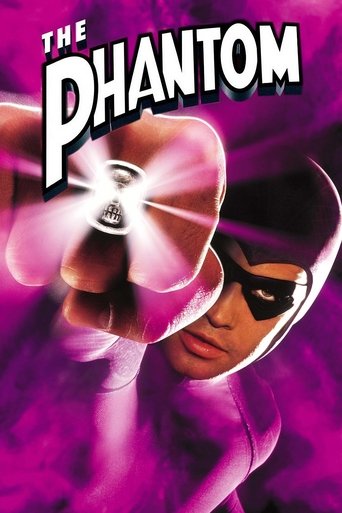
The Phantom
1996 · Film · 100 min
Directed by Simon Wincer
The 21st successor to the role of Bengalla's resident superhero must travel to New York to prevent a rich madman from obtaining three magic skulls that would give him the secret to ultimate power.
1 positive2 neutralfrom 3 commenters
Where to watch
No streaming data for this title.

3 comments on Hacker News
This Wiki seems to have all the details; here's Jax specifically:
https://mortalkombat.fandom.com/wiki/John_Parrish
Also, ChatGPT (sorry, but I was curious) says:
One example is Cary-Hiroyuki Tagawa, who played Shang Tsung in the 1995 Mortal Kombat movie and its 1997 sequel, Mortal Kombat: Annihilation. Tagawa has had a long and varied career in film, television, and stage, appearing in a number of popular movies and TV shows such as The Phantom, Pearl Harbor, and Hawaii Five-O.
Another actor who appeared in the Mortal Kombat movies and has had a successful career is Robin Shou, who played Liu Kang in both films. Shou has appeared in a number of action movies and TV shows over the years, including Street Fighter: The Legend of Chun-Li, DOA: Dead or Alive, and NCIS: Los Angeles.
Other actors who appeared in the Mortal Kombat movies and have gone on to have successful careers include Bridgette Wilson (Sonya Blade), Talisa Soto (Kitana), and Linden Ashby (Johnny Cage).
I actually found one from memory and verified it on netflix:
X-Files Season 05 Episode 11 - Kill Switch (14:20) (when the laser blows up the shipping container)
I'm pretty sure they also used it in "The Phantom (1996 film)" when a rocket launcher blows up a building.
I didn't actually read Watchmen until after seeing the movie, despite very well remembering seeing it in my local stores when I was a kid, and remembering what a splash it made. At the time, it did not appeal to me for exactly the reasons it is great and stands out: It gave superheros a grown up treatment.
Reading it now, it stands out to me first and foremost as a symbol of typical British deadpan satire, applied to superhero stories, just as the "normal" superhero stories themselves were more out there than ever.
While the shops were full of series with superheros in costumes trying to beat each other in most ridiculous abuse of colour and spandex (incidentally, I think the moment it became truly clear how ridiculous many of these costumes were, was as Hollywood started trying to give them bigger budget treatments, only to find out how incredibly hard it is to put them on a movie screen without making it comical), saving the world with more and more ridiculous deus-ex-machina and bizarre powers, there was a series about a bunch of semi-retiree "superheros" without powers, full of moral issues and drenched in cold war seriousness. (Sure, the cold war was everywhere in comics, up to and including playing central roles in origin stories, but rarely given a grown up treatment).
While X-Men, for example, issue after issue had characters whine about how they could not justify killing without ever getting into the meat of the issue (despite the occasional fantastic story line like Days of Future Past), here was a series where someone who had been presented as one of the heroes was prepared to go to that kind of length to re-make the world in a way he thought better. Where one of the "heroes" dies in the first issue, only to have his image ripped to pieces bit by bit. Where all of the heroes are deeply human and flawed, and not necessarily in ways that made you like them more for it. And the eventual-antagonist wasn't stopped at the last minute, with the countdown on a doomsday device at 1, and there was no great save.
It also different in presentation: Readers were treated as grown ups with more than 5 minute attention spans, while if you read X-Men from there period, the amount of unnecessary exposition is tedious to the extreme. I'm actually re-reading those issues now, and it is fascinating to see how much I've "supressed" from my childhood. E.g. the amount of times the saw it as necessary to explain the powers of every single member of the team, or have characters carry out de-facto silent soliloquys rather than trust that the reader would be able to figure things out for themselves, is just bizarre seen with modern eyes.
Note that Watchmen was not the only series to do better there, by far. Phantom for example, amongst many, did not have nearly the amount of exposition, to name another "superhero" without special powers. And more serious literary treatment was also not new (including Alan Moore's fantastic run on Swamp Thing), but it stands out for its combination.
It was "superheroes" in the real world given a serious literary treatment against a dark and serious backdrop, handling moral issues seriously. And it was a clever caricature and satire over a genre that itself largely is a caricature, but that very often is not very clever caricature.