 Hacker Cinema
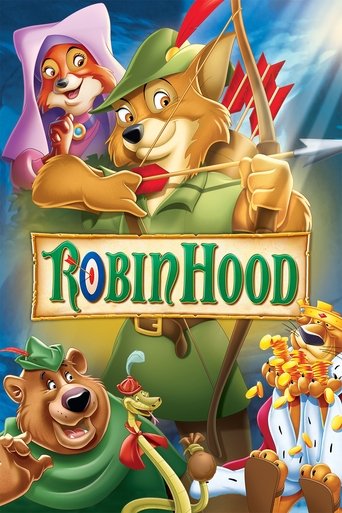
Robin Hood
1973 · Film · 83 min
Directed by Wolfgang Reitherman
With King Richard off to the Crusades, Prince John and his slithering minion, Sir Hiss, set about taxing Nottingham's citizens with support from the corrupt sheriff - and staunch opposition by the wily Robin Hood and his band of merry men.
3 positive1 negative2 neutralfrom 6 commenters
Where to watch
No streaming data for this title.

7 comments on Hacker News
Walt Disney died in 1966. There were less but still many notable traditionally animated films (or films which blended some modern technology with hand drawn cels) since then.
The Jungle Book - 1967
Little Mermaid - 1989
Beauty and the Beast - 1991
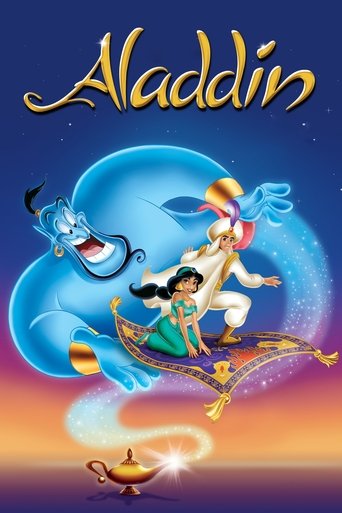
Aladdin - 1992
Lion King - 1994
It's likely more a question of what you grew up with. When I was a kid I remember heavily disliking many of the earliest Disney animated movies like Pinocchio/Dumbo/Bambi but I absolutely adored the animated Robin Hood, Sword in the Stone, etc.
- The Sting - The quintessential con movie.
- Amadeus - "Too many notes, Mozart!" A heavily romanticized retelling of the somewhat apocryphal rivalry between Antonio Salieri and Wolfgang Amadeus Mozart.
- Disney's Robin Hood - Get the dope on your horoscope~
- The NeverEnding Story - Because who didn't want to soar through the air on a luck dragon?
- Iron Monkey (少年黃飛鴻之鐵馬騮) - A retelling of the Chinese folk hero Wong Fei-hung, with classic wire-fu and excellent fight choreography.
>Grinding mechanics are way, way easier to create. You can even reuse sprites and just change names - a lv10 tree, a lv50 tree, a lv100 tree. Real content is hard to do, requires imagination, development, testing.
Reuse of content in new context doesn’t have to be a boring clone.
Disney would regularly reuse animations of characters between animated films to save money. It did not necessarily take away from the wrapping content’s best moments or overall entertainment value.
For example dancing reveries and other sequences in Robin Hood used rotoscoping heavily. [1]
There’s no doubt the reuse was cheap but in some ways that allowed the designers to focus on new characters and scenes.
[1] https://www.businessinsider.com/disney-reuses-animation-2015-5
I watched it last night with my kids as it happens, and thought it was pretty bad. The story is basically just a single long chase sequence which doesn't really reward adult viewers. I much prefer the one millionth rewatch of Robin Hood, which definitely has a lot of flaws (really blatant reuse of animations) but is a lot more fun with a lot of different action sequences and jokes. Basically the only easter egg for adults in 101 Dalmatians is the What's My Crime TV show.
Even if you're a staunch ally of safe, conservative family entertainment for its own sake, Disney was pretty damn crappy for a while. Look at their animated stuff in particular for plenty of mediocre storylines and bland animation (e.g. The Aristocats, The Fox and the Hound, Robin Hood). Children deserved better!
Eventually some meaningful competition from the likes of Don Bluth started to push them in the right direction (Secret of NIMH, Land before Time, All Dogs Go to Heaven, etc.) and not too long afterward they were doing things like Little Mermaid, Beauty and the Beast, Aladdin. Quite an improvement, though I dare say the storylines have never quite caught up. (Of course, all of Bluth's stuff would later be undermined as it was sequel-ized to Hell and back, like The Land Before Time XXIV: Teach Your Kids Roman Numerals Edition...)
Right now, though, after seeing Pixar's homages to Ghibli, I'm anticipating the impact of recent works like Puella Magi Madoka Magica, which really pushed some boundaries in Japan. (If you're not familiar with it, I'll just say... imagine if Pan's Labyrinth had been actively marketed to little children as a happy family film and an homage to Alice in Wonderland... and then translate that willful deception and the profound darkness onto Sailor Moon.) If it does make a splash in the youth entertainment industry at large, that will be quite interesting indeed.
I like the old Disney cartoons better, and they obviously weren't written using those rules. I feel that nowadays movie get more and more similar. Could we still get something as atypical as the Robin Hood cartoon or Snow White by following those rules?
>I know that Disney stops people from taking Walt's original concepts. But is that a bad thing? What concepts did Disney steal? None: he made his own. Other people can do that too.
This is completely wrong. Nearly every famous early work of Disney's was "stolen" from others. Among the more famous are Snow White (1937), Fantasia (1940), Pinocchio (1940), Dumbo (1941), Bambi (1942), /Song of the South (1946), Cinderella (1950), Alice in Wonderland (1951), /Robin Hood (1952), Peter Pan (1953), Lady and the Tramp (1955), Mulan (1998), Sleeping Beauty (1959), 101 Dalmatians (1961), The Sword in the Stone (1963), and The Jungle Book (1967).
The first iteration of Mickey Mouse, called "Steamboat Willie", was copied directly from Buster Keaton's "Steamboat Bill."
This is an excerpt from one of Lawrence Lessig's speeches about the topic: "It was a parody, a take-off; it was built upon Steamboat Bill. Steamboat Bill was produced in 1928, no [waiting] 14 years--just take it, rip, mix, and burn, as he did [laughter] to produce the Disney empire. This was his character. Walt always parroted feature-length mainstream films to produce the Disney empire, and we see the product of this. This is the Disney Corporation: taking works in the public domain, and not even in the public domain, and turning them into vastly greater, new creativity. They took the works of this guy, these guys, the Brothers Grimm, who you think are probably great authors on their own. They produce these horrible stories, these fairy tales, which anybody should keep their children far from because they're utterly bloody and moralistic stories, and are not the sort of thing that children should see, but they were retold for us by the Disney Corporation. Now the Disney Corporation could do this because that culture lived in a commons, an intellectual commons, a cultural commons, where people could freely take and build. It was a lawyer-free zone."
To address your second point, "the idea of capitalism" does not necessarily require giving anyone permanent, state-enforced monopolies of anything, no matter how well written it is. Any justification for copyright has to stem from a benefit to society. Strong arguments can be made for giving creators temporary monopolies of a limited scope, but permanent monopolies are bad for both innovation and the public.