It's been a long time since I heard this, but I believe there is recording here [0] of his colleagues forcing themselves into his apartment to have him committed.
I punched in 1972 and there were some fantastic movies that year (The Godfather, Deliverance, Cabaret, Solaris, Jeremiah Johnson, Aguirre - the Wrath of God, The Last House on the Left, Silent Running, The Heartbreak Kid, Fat City, etc.).
Also tried 1973 — same (The Day of the Jackal, Soylent Green, Westworld, The Wicker Man, Papillon, American Graffiti, The Sting, Serpico, Mean Streets, High Plains Drifter, Don't Look Now, Badlands, The Long Goodbye, Jesus Christ Superstar, The Three Musketeers, Fantastic Planet, etc.).
I think they simply made better movies decades ago.
You're correct that Dirty Harry was an explicitly right wing, and borderline fascist, movie. It was originally offered to Paul Newman who passed because it wasn't a good fit for him, but he suggested his friend Eastwood (a Republican) would be better for the role. The bad guy is a "dirty hippie" type, who's played very effeminate as a contrast to Eastwood's hyper masculine Harry.
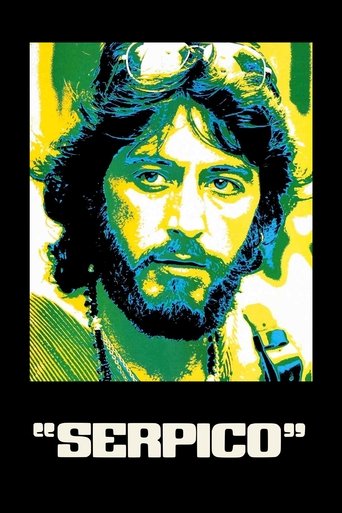
I don't think that Serpico fits in that tradition at all. It's a story about a whistleblower fighting corruption within the police, and is directed by Sidney Lumet (not exactly a right wing director, thematically). The institution is corrupt, but Serpico is trying to uphold the law not take it into his own hands.
I think RoboCop is taking aim at techno-enabled state power and the military-industrial complex, not celebrating it.
I feel this article misses a lot of the historical context when RoboCop was created, it's themes and why it fit this time. I don't see how you can talk about RoboCop without mentioning the cultural climate at the time.
Rewinding to the 1980s.
Reagan was president for two terms, Giuliani was cleaning up the mob using RICO during these time periods. The War on Drugs was raging. Communism was still enemy #1 (See: Rocky IV). It was truly a very right-wing time. For whatever, themes around individuals taking power into their own hands to "Reform" corrupt systems (cities). Like Frank Miller's Sin City, these are absolutely right-wing themes. "Cleaning Corruption" is one of the most conservative motivations from a psychological standpoint.
Others here have mentioned the slate of 80's action movies but it felt like 100% of the culture was heading this direction. Frank Miller's Batman approaches at the time, for example, were strongly echoing similar themes: Vigilante justice in the backdrop of political deterioration. Rambo, Predator, Commando, Total Recall, Scarface.
I think it all started with movies like Dirty Harry and Serpico and then just got more and more extreme leading into the 1980s.
You also cannot leave out Judge Dredd comics. There are similarities between Judge Dredd and RoboCop, I have a hard time believing there was no influence. Judge Dredd also had this magic gun that could do different tricks like shoot through walls etc, lived in a corrupt mega city of the future.
I feel in some ways RoboCop was almost like "Serpico + Dirty Harry if you turn everything up to 1,000." Serpico also had this theme of the good cop who is nearly killed and sent to the hospital due to corrupt system etc.
Agree with a lot of your points, but I think you're asking for an unrealistic amount of self-sacrifice. Not to equate film to rl, but we're all familiar with Serpico, right? You think these power-hungry bullies are just going to let you infiltrate their gang and make changes for the greater good?
Maybe you're talking about leadership/management positions? But, even then, you're talking about one of the stronger unions in country and a group of employees who will fight your attempts at progress.
Again, I agree with just about everything else, and there isn't an easy solution, but I think your criticism is either unclear or misplaced.
Serpico the movie is based on real life corruption. I don't think this is a solvable problem without changing humanity it the role entirely. There's a saying, power corrupts, absolute power corrupts absolutely. While there are most likely some officers who are above and beyond the best of humanity, most are likely average or below average due to the selection process and the type of people who would go into the field.
On the other end, they detained their first suspect with next to no evidence, then locked him up in a mental ward for over 6 months despite new bombings happenings while he was in there.
Remember Serpico (not just the movie, but what the real guy uncovered): the New York police used to be hugely corrupt, until his testimony brought about changes.
One interesting thing I saw in toy models is that a small number of incorruptible people (5% or less) can make it very dangerous to be corrupt. As corruption falls there's then a feedback spiral, because most people will report corruption if they're not corrupt themselves.
You definitely need a few people who are weird and unreasonable to start it off though. Have you seen the movie Serpico? I thought that gave a good portrayal of how odd and antisocial the people who cause that kind of change often are (and the real story was more so e.g. his marriage collapsed as part of the process). If we're going to be really speculative, maybe it takes an individualistic culture to even have that kind of personality?
There is a great book that you might want to read, which gets at the thought process at the individual level. It's about a cop who stood up to corruption in his precinct. The movie is good too:
I thought it absolutely enjoyable in an entirely non-zombie way. I loved the movie as it was great fun, exciting action, and gore abounds, but, I do not consider it the type of super-personal 'zombie film' that I love so much.
In fact, for two excellent types of such super-personal films that predate the modern zombie film (1968,) look at Hitchcock's Lifeboat (1944) and Sidney Lumet's 12 Angry Men (1957, though he's best known for Serpico). Both include small groups of people completely reliant upon each other to make it (to a verdict, or to just survive.)
That said, I also absolutely love Robert Rodriguez and his style of "grab the camera, we're about to make a movie!"-filmmaking. I think he's able to relate his energy in a way that usually takes AAA directing (I'd categorize his style as one of 'potential' over 'polish,' but he's also capable of selling what he's doing to the viewer, two characteristics that work amazingly in tandem, at least for me.)
So, what did I think? In short, I absolutely loved it, but I didn't mention it because I don't think it fits in with what I love about zombies.
 Hacker Cinema
10 comments on Hacker News
It's been a long time since I heard this, but I believe there is recording here [0] of his colleagues forcing themselves into his apartment to have him committed.
[0]https://www.thisamericanlife.org/414/right-to-remain-silent/act-two-0
Also, watch Serpico. https://m.imdb.com/title/tt0070666/
I punched in 1972 and there were some fantastic movies that year (The Godfather, Deliverance, Cabaret, Solaris, Jeremiah Johnson, Aguirre - the Wrath of God, The Last House on the Left, Silent Running, The Heartbreak Kid, Fat City, etc.).
Also tried 1973 — same (The Day of the Jackal, Soylent Green, Westworld, The Wicker Man, Papillon, American Graffiti, The Sting, Serpico, Mean Streets, High Plains Drifter, Don't Look Now, Badlands, The Long Goodbye, Jesus Christ Superstar, The Three Musketeers, Fantastic Planet, etc.).
I think they simply made better movies decades ago.
You're correct that Dirty Harry was an explicitly right wing, and borderline fascist, movie. It was originally offered to Paul Newman who passed because it wasn't a good fit for him, but he suggested his friend Eastwood (a Republican) would be better for the role. The bad guy is a "dirty hippie" type, who's played very effeminate as a contrast to Eastwood's hyper masculine Harry.
I don't think that Serpico fits in that tradition at all. It's a story about a whistleblower fighting corruption within the police, and is directed by Sidney Lumet (not exactly a right wing director, thematically). The institution is corrupt, but Serpico is trying to uphold the law not take it into his own hands.
I think RoboCop is taking aim at techno-enabled state power and the military-industrial complex, not celebrating it.
I feel this article misses a lot of the historical context when RoboCop was created, it's themes and why it fit this time. I don't see how you can talk about RoboCop without mentioning the cultural climate at the time.
Rewinding to the 1980s.
Reagan was president for two terms, Giuliani was cleaning up the mob using RICO during these time periods. The War on Drugs was raging. Communism was still enemy #1 (See: Rocky IV). It was truly a very right-wing time. For whatever, themes around individuals taking power into their own hands to "Reform" corrupt systems (cities). Like Frank Miller's Sin City, these are absolutely right-wing themes. "Cleaning Corruption" is one of the most conservative motivations from a psychological standpoint.
Others here have mentioned the slate of 80's action movies but it felt like 100% of the culture was heading this direction. Frank Miller's Batman approaches at the time, for example, were strongly echoing similar themes: Vigilante justice in the backdrop of political deterioration. Rambo, Predator, Commando, Total Recall, Scarface.
I think it all started with movies like Dirty Harry and Serpico and then just got more and more extreme leading into the 1980s.
You also cannot leave out Judge Dredd comics. There are similarities between Judge Dredd and RoboCop, I have a hard time believing there was no influence. Judge Dredd also had this magic gun that could do different tricks like shoot through walls etc, lived in a corrupt mega city of the future.
I feel in some ways RoboCop was almost like "Serpico + Dirty Harry if you turn everything up to 1,000." Serpico also had this theme of the good cop who is nearly killed and sent to the hospital due to corrupt system etc.
Agree with a lot of your points, but I think you're asking for an unrealistic amount of self-sacrifice. Not to equate film to rl, but we're all familiar with Serpico, right? You think these power-hungry bullies are just going to let you infiltrate their gang and make changes for the greater good?
Maybe you're talking about leadership/management positions? But, even then, you're talking about one of the stronger unions in country and a group of employees who will fight your attempts at progress.
Again, I agree with just about everything else, and there isn't an easy solution, but I think your criticism is either unclear or misplaced.
Serpico the movie is based on real life corruption. I don't think this is a solvable problem without changing humanity it the role entirely. There's a saying, power corrupts, absolute power corrupts absolutely. While there are most likely some officers who are above and beyond the best of humanity, most are likely average or below average due to the selection process and the type of people who would go into the field.
On the other end, they detained their first suspect with next to no evidence, then locked him up in a mental ward for over 6 months despite new bombings happenings while he was in there.
Remember Serpico (not just the movie, but what the real guy uncovered): the New York police used to be hugely corrupt, until his testimony brought about changes.
One interesting thing I saw in toy models is that a small number of incorruptible people (5% or less) can make it very dangerous to be corrupt. As corruption falls there's then a feedback spiral, because most people will report corruption if they're not corrupt themselves.
You definitely need a few people who are weird and unreasonable to start it off though. Have you seen the movie Serpico? I thought that gave a good portrayal of how odd and antisocial the people who cause that kind of change often are (and the real story was more so e.g. his marriage collapsed as part of the process). If we're going to be really speculative, maybe it takes an individualistic culture to even have that kind of personality?
There is a great book that you might want to read, which gets at the thought process at the individual level. It's about a cop who stood up to corruption in his precinct. The movie is good too:
http://en.wikipedia.org/wiki/Serpico
I'm sure there are lots of reasons, but idealistic people like this must be one of the factors.
I thought it absolutely enjoyable in an entirely non-zombie way. I loved the movie as it was great fun, exciting action, and gore abounds, but, I do not consider it the type of super-personal 'zombie film' that I love so much.
In fact, for two excellent types of such super-personal films that predate the modern zombie film (1968,) look at Hitchcock's Lifeboat (1944) and Sidney Lumet's 12 Angry Men (1957, though he's best known for Serpico). Both include small groups of people completely reliant upon each other to make it (to a verdict, or to just survive.)
That said, I also absolutely love Robert Rodriguez and his style of "grab the camera, we're about to make a movie!"-filmmaking. I think he's able to relate his energy in a way that usually takes AAA directing (I'd categorize his style as one of 'potential' over 'polish,' but he's also capable of selling what he's doing to the viewer, two characteristics that work amazingly in tandem, at least for me.)
So, what did I think? In short, I absolutely loved it, but I didn't mention it because I don't think it fits in with what I love about zombies.