 Hacker Cinema
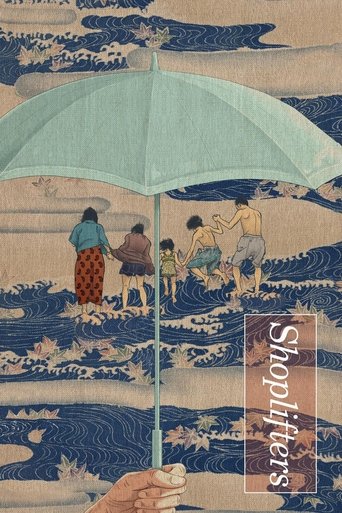
Shoplifters
万引き家族
2018 · Film · 120 min
Directed by Hirokazu Kore-eda
In the outskirts of Tokyo, a poor but close-knit group living on the fringes of society survives through shoplifting and odd jobs. When Osamu and his son take in a neglected young girl, their already fragile existence begins to unravel. As the family grows attached to her, buried secrets surface, forcing them to confront the true meaning of love, belonging, and what makes a family.
3 positive1 mixed1 neutralfrom 5 commenters
Where to watch
No streaming data for this title.

6 comments on Hacker News
Japanese films are notoriously bad. You found a few gems. They are rare. This topic comes up often in Japanese learning groups.
There's also just personal takes. I had to shut off Memories of Matsuko. Maybe the end saves it but it was way too over the top and not in a good way.
Some good older Japanese though
Kurasawa: Ikiru (1955)
Teshigahara: Woman in the Dunes (1964)
These are 2 movies you won't forget.
Conversely, even though I enjoyed Shoplifters I remember nothing about it except the guy celebrating he had sex and the girl burping. Similarly with After Life. I just watched it 2 months ago and had to go look it up to remember what it was about. It was interesting because of the premise but not because of the movie itself.
Watch japanese films. Or just generally don't watch american films
Kore-eda Hirokazu: Still Walking (2008), Monster (2023), Shoplifters (2018)
Hamaguchi Ryusuke: Drive My Car (2021), Evil Does Not Exist (2023)
A Story of Yonosuke (2013) from Okita Shuichi
Memories of Matsuko (2006) from Nakashima Tetsuya
Departures (2008) from Takita Yojiro
Perfect Days (2023) from Wim Wenders. Even though he is not japanese it's a very japanese film
but there are lot more
So personally I like films that makes me feel something without that feeling being explicitly forced upon me. This is an incredible thing to achieve that only a select few directors can do. Not “baiting” the viewers into emotions but also not being cold at the same time. Just by showing and how do they show it. Like the case of “a picture is worth a thousand words”. It’s a razor thin line but that makes these films I enjoy special and sincere.
(I'll only mentions stuff from the 21st century because otherwise I'd sit here for days)
I love japanese cinema so I'm very biased towards films from there.
- The Taste of Tea (2004) from Katsuhito Ishii
- Nobody Knows (2004) from Hirokazu Kore-eda
- Tony Takitani (2004) from Jun Ichikawa
- Memories of Matsuko (2006) from Tetsuya Nakashima
- Departures (2008) from Yojiro Takita
- Still Walking (2008) from Hirokazu Kore-eda
- Tokyo Sonata (2008) from Kiyoshi Kurosawa
- One Million Yen Girl (2008) from Yuki Tanada
- Haru’s Journey (2010) from Masahiro Kobayashi
- Story of Yonosuke (2013) from Shuichi Okita
- Shoplifters (2018) from Hirokazu Kore-eda
- Drive My Car (2021) from Ryūsuke Hamaguchi
Two korean film I've really liked
- The Handmaiden (2016) from Park Chan-wook
- Pieta (2012) from Kim Ki-duk
A chinese film I've seen recently and it was pretty good
- Black Coal, Thin Ice (2014) from Diao Yi-nan
Iranian films are incredibly good and crazy what they could make despite the situation there
- A Separation (2011) from Asghar Farhadi
- Taxi (2015) from Jafar Panahi
- The Salesman (2016) from Asghar Farhadi
- There Is No Evil (2020) from Mohammad Rasoulof
- My Favourite Cake (2024) from Maryam Moghaddam and Behtash Sanaeeha
Some european films I've enjoyed
- Enter the Void (2009) from Gaspar Noé
- Leviathan (2014) from Andrey Zvyagintsev
- Alcarràs (2022) from Carla Simón
- Fallen Leaves (2023) from Aki Kaurismäki
And last but not least some actual Hollywood films that I think are pretty good
- The Tree of Life (2011) from Terrence Malick
- Cloud Atlas (2012) from Lilly Wachowski and Lana Wachowski
- First Reformed (2017) from Paul Schrader
- Nickel Boys (2024) from RaMell Ross
Shoplifters was a recent international success and is maybe the most accessible. My favorites of his are After the Storm and Maboroshi, though. All of them feature wonderful characters and quiet adult moments.
On the arthouse circuit, I think he's best known for After Life, which is a bit more challenging (honestly: I found it a bit dull) but worth biting into.
Do you know that pang of melancholic joy-and-regret you feel after you've had a wonderful day and you know no matter how much you and the others involved try, you can probably never quite recreate that magic a second time? Grateful for the memory you'll always have, yet at the same time sad? That's how his movies feel to me, where I'm often both happy and sad I've seen them. It's pretty damn great when a movie can do that.
> “Many of those who reach us say they have no place to go when they’re told to stay home,” said Jun Tachibana of the Bond Project. “Many are having problems with their family, friends or boyfriends. I worry they may be feeling more lonely.”
Unfortunately, this article's diagnosing of the problem as loneliness misses the mark entirely. I don't think loneliness alone should account for this 80% increase in female suicides – there is an insidious assumption here, that women are somehow less able to "deal" with being alone, to such a severe extent that they are driven to suicide. Additionally, in the same sentence, Jun Tachibana mentioned that the women are "having problems with their family, friends, or boyfriends" – not that they don't have these interactions, but that these interactions are the source of problems.
What the article was woefully remiss in addressing at all is the increased rates of domestic abuse and child abuse that has happened in Japan in the last few years [1]. Domestic abuse in Japan has increased year to year for 16 consecutive years. (I am not sure why, but I do know it's a taboo topic in Japan. See Kore-ada's film Shoplifters about the government response to this situation, and its myopic insistence that the nuclear family solves all). Additionally (in the US, for instance), we have seen domestic abuse rates soar during the pandemic [2]. As per the source: "Disturbingly, the data suggested that the pandemic has produced many new offenders: reports coming from city blocks with no previous record of domestic violence were the main drivers of the increase."
These two factors together with Japan's complicated history with suicide and shame actually provide a much clearer (and sad) picture of the possible cause of an increase in suicide for women.
[1] – https://english.kyodonews.net/news/2020/03/e788d95b8fc7-domestic-violence-cases-in-japan-reach-new-all-time-high-in-2019.html [2] – https://phys.org/news/2020-08-domestic-violence-pandemic.html
I really hated Roma. I don't say that lightly. I'm in violent agreement with Richard Brody's review:
> That effacement of Cleo’s character, her reduction to a bland and blank trope that burnishes the director’s conscience while smothering her consciousness and his own, is the essential and crucial failure of “Roma.” It sets the tone for the movie’s aesthetic and hollows it out, reducing Cuarón’s worthwhile intentions and evident passions to vain gestures.
https://www.newyorker.com/culture/the-front-row/theres-a-voice-missing-in-alfonso-cuarons-roma
It's this way with all the characters. They're all shallow, one-dimensional tropes you're never given any reason to care about. Except for the domestic servants, they're all unlikeable.
Worse, I found the film outright boring (I say this as someone who loves Barry Lyndon).
The scene shown on the movie poster that I gather is supposed to have a big emotional impact, just left me feeling manipulated. It's telegraphed to you from a mile away, and then the family claiming they love the maid, it just isn't believable given how they've ignored her and mostly treated her like crap.
Speaking of crap, the dog shit. Why the hell was that so important to Cuarón that he features it, what, a dozen times?
Finally, I really didn't care for the B&W combined with digital. The overall effect just looked contrived to me. (I watched it on 100" screen with a calibrated JVC D-ILA projector, so I think I viewed it pretty close to how the director intended.)
If you want to see a brilliant 2018 film about the human condition and a family dealing with trying circumstances, watch Shoplifters instead. I viewed Roma and Shoplifters the same evening. I'm so glad I watched the latter and wish I could have my two hours back from the former.
TL;DR: Roma sucks, watch Shoplifters instead. Or Tokyo Story if you want to see Roma done right.