 Hacker Cinema
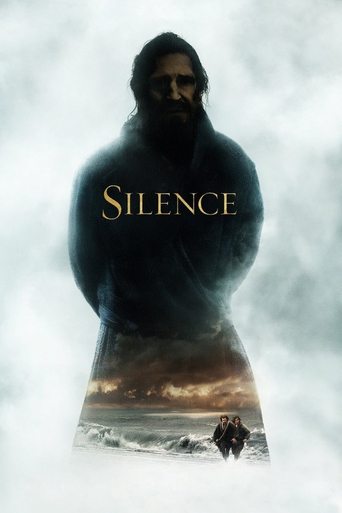
Silence
2016 · Film · 161 min
Directed by Martin Scorsese
In the 17th century, two Portuguese Jesuit priests travel to Japan in an attempt to locate their mentor, who is rumored to have committed apostasy, and to propagate Catholicism.
1 positive6 neutralfrom 7 commenters
Where to watch
No streaming data for this title.

7 comments on Hacker News
>I'm not sure he's made a film I liked in nearly 20 years
You didn't like Silence (2016)?
He really didn't. People who don't really know his work think he just makes mobster movies. But he is actually a quite a varied filmmaker. How does being "depressed, violent, and Italian" fit into The Last Temptation of Christ (which controversially reinterpreted Jesus' story), or Hugo, about the great French filmmaker Georges Méliès? Or Kundun about the Dalai Lama? Or Silence about Japanese Christians?
I think part of why this happens is that critics are part of the "creative" class of people. Creative people are more likely to be open to new ideas and explore, which is more likely to lead them to scenarios in their lives that look something like the non-binary vegan sex worker side of our world. And so, they find the dramatic look into the lives of marginal characters fascinating. I'm going to point to Silence.
https://www.rottentomatoes.com/m/silence_2017
To be a Christian in Japan during this part of the Edo Jidai is an especially marginal identity. It's not hard for a creative type who has seriously been on the margin at some point in their life to relate to that even if they are not Christian. It also doesn't hurt of course that the final message delivered is a pan-out view of his faith in its unconfessed nature which does indeed comport to a contemporary agenda summed up well in the movie's title; "Silence", as an imperative. "It is virtuous to make your sacrifices to Caesar/The Emprah, step on the fumie, and never speak about your religion in public because it causes other people pain and discomfort."
CP is a very touchy subject. But if we really wanted to solve the problem we shouldn't focus on someone accidentally seeing (and thus caching) CP on their device.
CP should be removed at the source, by doing everything we can to take care of kids and preventing abuse and related photography. And CP trading rings should be busted.
But individual pedophiles should be helped with their mental health issues before they act and become pederasts. The subject is so toxic that nobody dares go to a therapist with their issues. There was a recent documentary about it: https://www.idfa.nl/en/film/bb3cd43c-169a-48db-9fd6-e4cbae0d8e1b/silence
Coming back to crypto. Who cares if the images are shared using crypto or on paper or on usb sticks? Once you find a pederast, law enforcement should convince (without torture or similar tricks, offering therapy and help will probably be more effective) them to help expose their network. Same with any activity that is using encrypted communications: https://edri.org/files/encryption/workarounds_edriposition_20170912.pdf
Scorsese put out a film called 'Silence' a few years ago. It's set in that period, stars Liam Neeson, Andrew Garfield and Adam Driver. It's a heavily skewed religious film but very good.
Well you point is correct then, because he definitely doesn't have anything that would be considered "event movies" (which I assume by this you mean tent pole movies like what Marvel does, or other summer blockbusters).
With that said, my counter point was mainly to point out that you boxing in Scorsese as the "mob" guy is really bizarre. He has plenty of other kind's of movies, some of which you might find uplifting. The Aviator, Silence, or Hugo might fall into the uplifting category, but I feel a lot of his work (and the work of good artists) ends up being more nuanced to the point where associating one emotion to it is kind of diminishing the work.
More of the Adam Mars-Jones quote from cited January 4 review[1]:
>Even the most relentless book filters diffusely into the life of the reader, while a film suspends that life for its duration. The transposition of a novel like Endo’s Silence into film, however “faithful”, can only amount to a distortion, an exaggeration overall however many elements of the book are represented. [...] In a book, too, reader and writer collaborate to produce images, while a film director hands them down.
AMJ repeats the common criticism that books are superior to movie adaptations. He also repeats the claim that books are "active" and movies are "passive" entertainment. Those dismissals have been so common for decades since the invention of "moving pictures" that I'm surprised Scorsese even responded to it.
[1] http://www.the-tls.co.uk/articles/public/subtle-absolutisms/