 Hacker Cinema
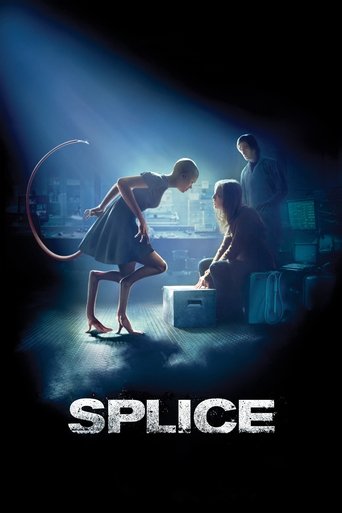
Splice
2010 · Film · 104 min
Directed by Vincenzo Natali
Elsa and Clive, two rebellious young scientists, defy legal and ethical boundaries and forge ahead with a dangerous experiment: splicing together human and animal DNA to create a new organism. Named "Dren", the creature rapidly develops from a deformed female infant into a beautiful but dangerous winged human-chimera, who forges a bond with both of her creators — only to have that bond turn deadly.
1 positive1 negative1 neutralfrom 3 commenters
Where to watch
No streaming data for this title.



3 comments on Hacker News
This sounds like the Genesis of the movie Splice.
I didn't like Cube very much. The acting was bad, the premise was a bit silly... but still, it had something which made it interesting.
And it was the guys first movie, on a tiny budget.
I haven't seen Splice yet, but have heard mostly good things about it. So don't write off the guy just because of Cube.
IRB review is a very important part of modern science, and the system is simply not setup to deal with research that hasn't been throughly cleared by a review board. You could consider IRB approval the first step in peer-review: your study is worthwhile and you aren't going to do anything unethical.
IRBs are designed to protect the subjects/patients, the researchers, and the institutions. To skip that step is pretty unusual, and some hoops had to be jumped through in order to deal with it. I think the fact that the 23andMe study was published at all was a big leap, and represents the flexibility inherent in the scientific community.
The response to "new and cool" wasn't "you didn't do it according to protocol". It was: since you didn't do it according to protocol, we need to verify that you did this ethically.
Imagine what would have happened if they used someone's DNA in their study without their knowledge. When you're talking about publishing links between diseases and people's DNA, you better be damn sure you have permission to use their genetic data. That is what IRBs are good for.
In a world where movies constantly are pointing out how scary/evil/unethical scientists can be (Andromeda strain, Splice), these checks are very important, even if it slows things down a little.