 Hacker Cinema
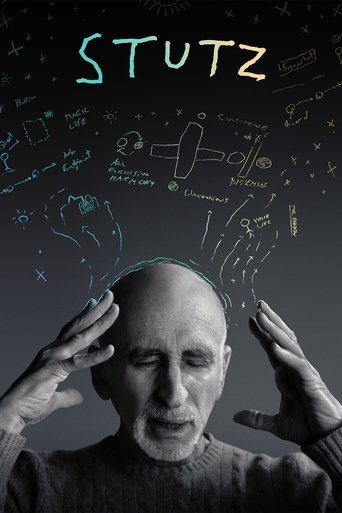
Stutz
2022 · Film · documentary · 96 min
Directed by Jonah Hill
In candid conversations with actor Jonah Hill, leading psychiatrist Phil Stutz explores his early life experiences and unique, visual model of therapy.
5 positive3 neutralfrom 8 commenters
Where to watch
No streaming data for this title.
Videos commenters linked
From YouTube links in the comments below. Most are clips and trailers; “Full” means the uploader says so.






9 comments on Hacker News
To you and anyone else who's struggled with the roller coaster of rejection and not feeling good enough I highly recommend stopping what you're doing right now and watching Jonah Hill's incredible movie, "Stutz" https://www.netflix.com/title/81387962 . As someone who recently went through a barrage of rejections and self doubt this movie blew me away and offers practical "tools" that may help.
I just heard this explained well in https://www.themoviedb.org/movie/799375-stutz where Stutz says three things you can never get rid of: pain, uncertainty and work.
Is the title a reference to the movie 'Stutz'?
Agree with those seeing a therapist but, until then, here are some books that have helped me and were written by practicing therapists.
"Living an Examined Life: Wisdom for the Second Half of the Journey" - James Hollis
"What Matters Most" - James Hollis
"Too Soon Old, Too Late Smart" by Gordon Livingston. I've been finding his other books equally good or better. "The Thing You Think You Cannot Do" covers fear and courage, like the courage to lead the life you want.
If you have Netflix, there's a new documentary called "Stutz" where the therapist discusses some of the tools he teaches. It's 90 minutes long and might be even more digestible than those books.
Give those a chance. See this as an opportunity to get to know yourself better. Try not to be too hard on yourself (easier to say than do - my therapist still gets onto me after three years together when that part of me comes out).
You are not alone in this. I feel you. I am in my 40s and I am constantly trying to improve myself. I believe it is possible to turn yourself around.
I quickly wanted to share fresh resource that might help you. I watched this documentary last night which has lots of practical advice (tools) from a therapist. I highly recommend to watch when you have a chance. It is on Netflix: https://youtu.be/UKCmefQdplI
Called Stutz by Jonah Hill.
You sound like a great son who did a noble thing for your family and father. That's part of your story.
It may be hard to internalize this but you are still young. Statistically, you've got half your life to live yet. Plenty of regular guys have kids when they are older (I see many new dads in their 40s, 50s and 60s).
I had a lot of regret for my past mistakes and even marrying the "wrong" women who I have kids with. I use to regret a lot of things I did not do but I did not do them because I was scared. You know what happens when you are scared, the girl you want marries someone else. But that is life and I made those choices even if I did not want them. So the path is to move forward.
You've reached out which is good. You know something is off. You want to get better. You want to live which is your internal life force reaching out. It wants you to move forward with life.
Suicidal thoughts are common, so when you mean ideation, have you come up with a plan? If so what's your plan? What steps can we take to prevent you from acting on that plan? If that means checking into the hospital do that. Your future self will thank you. You've got to put obstacles in the way to acting on the ideation when you are "clear headed".
The next thing you can do is find a therapist. I know that when you are depressed it is really hard to do that. It feels like the last thing you want to do. Depression in its full capacity can incapacitate you and seems insurmountable. I remember being bedridden for weeks. Happened twice in my life. Eventually I recovered enough on my own but after going to therapy I've realized that therapy works way faster than self-help and medications. Self help can help push you along until you find a therapist or for the in between times.
To pick a therapist just pick anyone qualified at this point that can see you today or tomorrow. Tell them it is an emergency. And keep going to therapy. Ask them to prescribe some actionable things for you to do.
In terms of Actions that helped me in addition to therapy.
1. Quit all chemicals like alcohol and drugs. At least until you are feel better. Commit to that.
2. Eat 3 square meals a day of nutritious food. Go outside and talk a walk everyday.
3. Now watch a couple tv shows (if reading is too difficult):
First on Netflix there is a documentary on Phil Stutz called "Stutz". He is excellent and provides what he calls The Tools (thetoolsbook.com). Watch this and then read up on the tools (and watch the youtube videos). You can pay for some audio and videos as well which may help. The tools is a set of visualizations that are useful for dealing with depression, anxiety etc... It can be hard to see when to apply them but go with it. Keep these tools in the background of everything you do.
Second there is a tv show called Limitless with Chris Hemsworth. This show is about training your body and your mind together to handle stress. The breathing and cold exposure stuff is similar to Wym Hoff. Wym Hoff breathing is super useful as is the cold exposure stuff. Watch this show. Practice breath technique and cold exposure. Increase your stress tolerance. There are small safe exposure steps you can take vs jumping off the deep end so to speak. This is stuff like Wym Hoff breathing (lie down when you do it) and taking cold showers to start.
4. Journaling. Imagine you're writing about you as if you are your best friend. Write down what you are thinking and maybe start with a history of yourself. Try taking a 3rd person perspective rather than a first person one.
5. Medications like anti-depressants can help break the hold depression has but you still have to do the psychological work. You may or may not need them. They can increase depression at first especially in younger folks). A doctor can help here. It is important to tell them you need help.
6. Reach out to friends and family and connect with others. Invite someone out for coffee or if asked to go out do that. If you don't have any, volunteer where you can make new friends over a shared context. Even if you are not religious and the only options nearby are associated with a church, go volunteer. Consider going to church. It is important to connect with other people and be of service to others. Again you don't have to buy into the religion thing. What you are buying into is our shared humanity. You have to take the initiative to reach out to others.
Stutz says that if you're lost, depressed or feeling stuck, it's important to work on your Life Force first. Your life force is like a pyramid. At the bottom is your body, in the middle is other people and at the top is yourself.
Anyone can work on their life force at any time. What I've described above are steps to do that.
This is very common actually. Phil Stutz (a famous psychiatrist) calls it the Snapshot. Basically the Snapshot is the misbelief that if we achieve certain things we will be happy. It's a form of wishful thinking. Instead you have to focus on and enjoy the journey because basic reality is pain, uncertainty and constant work.
There's a Netflix documentary on Stutz (called "Stutz") with Jonah Hill that is quite good although abbreviated on its coverage of "the tools".
I don't have a link to a scientific paper. But if you want to sum the losses yourself, here is something to start with:
1. Last Sunday I streamed a movie called Stutz (2022) for free instead of purchasing it from Netflix. That's a loss of $16 for the industry (1 month subscription, but I am not interested in anything else from their catalog).
In case you missed it, the name of the film not being promoted is "Stutz."