 Hacker Cinema
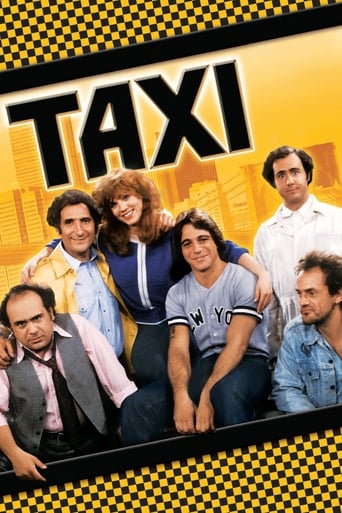
Taxi
1978 · TV series · 30 min episodes · 5 seasons
Created by Stan Daniels, Ed. Weinberger, James L. Brooks, David Davis
Louie De Palma is a cantankerous, acerbic taxi dispatcher in New York City. He tries to maintain order over a collection of varied and strange characters who drive for him. As he bullies and insults them from the safety of his “cage,” they form a special bond among themselves, becoming friends and supporting each other through the inevitable trials and tribulations of life.
2 positive2 negative10 neutralfrom 14 commenters
Where to watch
No streaming data for this title.


15 comments on Hacker News
If you go to Amazon and search "tv antenna" you find lots between $20 and $70. They're very small, too. One of these days I'll go up on the roof and take down the old analog monstrosity and just leave the pole & new antenna.
Besides NFL, all the really big sporting events (MLB, NBA, Olympics) are still on broadcast, although usually not the quarterfinals & other minor games. As is PBS, the local news, and most of the classic TV shows. Not often but sometimes, Cheers, Taxi, and The Bob Newhart Show are more appealing than the streaming garbage.
I've been hearing about the death of broadcast TV for 20 years now. It's not happening, and neither is the death of print magazines.
https://theconversation.com/magazines-were-supposed-to-die-in-the-digital-age-why-havent-they-217371
This made me go look this up:
Actress Marilu Henner, best known for her role as Elaine Nardo in the hit sitcom Taxi, has a highly superior autobiographical memory (HSAM), a rare condition shared by only 100 people worldwide.
I suspect those 100 people would be able to learn certain material faster than others.
I'm also curious about people who have learned mnemonic tricks. I've seen people memorize the order of the US Presidents in just a few minutes once they are taught a memory trick...
But yeah, the point of the article, in my mind, is that nothing beats investing a lot of time in especially in early childhood exposing people to all kinds of learning opportunities.
No, his second big show, “Newhart”.
Plus I don’t know if it’s the case with Bob Newhart, but some old shows on Hulu (like Taxi) are missing tons of episodes.
> Mainstream broadcast TV, for myself in the UK, has been dead for about a decade
OK, I'm not in the UK. However, I always like to defy conventional wisdom that everyone knows, and that is certainly some of it.
Broadcast TV is digital now, in the US at least. An antenna will cost you $50-75 or so, it's tiny, and if you have line-of-sight with the tower, you get a perfect picture. It will be in 4K soon, supposedly.
What's on? Well, sports, if you like that. I watched the US v. Netherlands match yesterday on broadcast. All the big college football games were on yesterday. If you don't watch sports, then yeah, there's not much.
Still: local news, much better than you find on the web. And PBS stations. And ancient TV shows, e.g. Frasier, Taxi. It doesn't replace streaming, but it IS free.
> it can really be anything the writing team wants it to be.
“Moaning Lisa” was an episode idea for the show Taxi.
If I remember my Simpsons DVD commentary correctly one of the Simpson’s writers was fresh off of Taxi and had this idea for an episode for a long time, that didn’t catch on for that show, so it was remolded and rewritten for the Simpsons.
If I watch hockey on an SD channel vs. the HD equivalent channel it isn't a different recording, but it is very clearly worse than HD.
Of course it is, we collectively didn't spend the money on moving to HD because it's the healthy thing to do. Arguing that HD isn't superior to SD would be silly. Good thing that wasn't what I was saying.
What I am saying is that if you were to go watch an old episode of Taxi on CBS All Access, it did not look as bad when it originally aired on a CRT as it does on CBS's rip from whatever source they used.
Actress Marilu Henner has an exceptionally good memory she can recall every second of her life in perfect detail she has hyperthymesia. She was on the TV show Taxi in the 1970s.
https://en.wikipedia.org/wiki/Marilu_Henner
https://en.wikipedia.org/wiki/Hyperthymesia
Hmmm, I mean, on Wikipedia, does anyone want to see user names that aren’t pseudonymous?
I think the policy is more likely to favor names that are not identifiable in the real world.
So nonsense like “Snarf_Yorble” is preferred to “Danny_DeVito” even if Danny DeVito himself is trying to help write an article about the TV show, Taxi, by citing some good sources to fill in blanks and rectify some subtle errors via the talk page.
Favoring handles and nicknames keeps attention focused on the content or data, and not the authors, to retain a degree of objectivity. Merit badges are there, not to promote credit, but credible accuracy and reliable behavior.
> Was it that he was avant-garde for the time?
I don't think that's it exactly. It's very hard to put a finger on. He was often baby-faced as in this interview, but he was a vicious prankster under the hood.
He once surprised an audience by refusing to do any act other than reading aloud The Great Gatsby. After seven minutes (!), the last 4 of which saw him being heckled relentlessly, he asked the audience if they wanted him to play a record instead (presumably many thought he was going to do his Mighty Mouse - one of his most famous routines), and of course they cheered. However, he had already had a vinyl pressed of him reading the The Great Gatsby - picking up right where he had left off.
He continued to read the entire novel as the auditorium emptied over the course of the next 2 hours. He was already a mega star at this point, and finished reading the novel to an almost empty house.
(The first part of this was captured on video, here: http://www.teachertube.com/video/andy-kaufman-reads-gatsby-167287).
edit: Actually, I'm not sure that this clip is from the same event at which he read the entire novel; this one might be where he just did the first 8 minutes of it on SNL (which is also insane).
second edit: You know, now I'm questioning whether he ever did read the entire book to an audience - I have found a website which claims he didn't, but that his publicist just spread a rumor that he did in order to put the audience on edge before the SNL thing. Perhaps I'm confusing it with the depiction in Man on the Moon, in which he does.
> Should I go watch Taxi/Man on the Moon?
Oh yeah. Man on the Moon is a great film; some of Jim Carrey's best work.
> What is quintessential Kaufman?
In my opinion, Tony Clifton. Absolute brilliance.
He was a terrible lounge singer who went to "meet the audience" during his set. He picked on a single person and horribly abused them - throwing their dinner away, pouring water on their head, making fun of their ethnicity, etc, until the audience was enraged.
However, this single person was always a plant - often his brother or his long time writing partner, Bob Zmuda.
Also, his commitment to character was extreme: by all accounts, Andy never, ever smoked cigarettes or drank alcohol (though he did say that cannabis and LSD had been influences on his thinking).
However, as Tony Clifton, he actually drank and smoked to excess. It's bizarre to see. I can't think of another performer who actually changed something so crucial about his diet just for the purposes of being in character.
It's stuff like this that made Andy so memorable.
(rant, sorry in advance)
Eh, f--- Pirate Bay and everyone else who makes a living stealing the efforts of others.
(And F-you too if you're a supporter/user of theirs.)
Of course the various governments were stupid, clumsy, ham-fisted, and in the pockets of corporations. So what else is new?
How does that make it OK to steal stuff?
People want to talk about what total hipocrite jackasses they are (which is true) to deflect attention from the fact that they are casually and constantly taking stuff they don't have a right to (also true, come on why don't you want to talk about that?!?).
If you don't like the terms, prices, availability, etc, of the Taxi reruns they are selling, well, then, don't watch the Taxi reruns. Trust me, despite Danny Devito, you aren't missing much. Likewise for all the pop music, old software, movies and virtually all the other content people are stealing through PB and similar.
Is this the stuff you really what you want to sell your integrity out for? Think about it.
If you all were mainly -- well, even just somewhat sporadically -- taking enlightening, high-quality stuff with an ounce or 1/2 of cultural importance that was otherwise too expensive, then I might be able to understand. But no. You're just mainly swiping bad superhero movies and video editing software that you'll never learn to use.
I think we need to proceed on all the right paths here:
1. yes, the governments and their associated law-enforcement, and regulatory bodies are a-holes who are beholden to petty, stupid, obsolete, obnoxious corporate ip holders.
AND
2. Stealing is wrong (and that doesn't change if you are stealing from 1.)
The author blames the modern sitcom's remoteness from working and lower-middle class concerns with their creators' immunity from the recent recession. In place of everyday situations, we have shows set in "soundstages and writers’ rooms," the haunts of the out-of-touch in New York and LA. So you wind up with a show with this sort of genesis:
Our creator was once a prominent writer and performer on a comedy sketch show, which aired live every Saturday night from an NBC studio in New York. It ran for 90 minutes. After their time on the show came to an end, our creator decided to pitch a sitcom based on their experiences there. The lead character is the head writer on a comedy show, similarly produced in New York. They must balance their work in the writers' room and their personal life, though this turns out to be difficult. A pilot is made, and our creator plays the lead.
Modern viewers may recognize this as 30 Rock, but it is in fact The Dick Van Dyke Show. It is based not on SNL but on a direct ancestor, Your Show of Shows. Carl Reiner's performance in the pilot may have dissuaded executives from casting him in the commissioned series (hence Dick Van Dyke), while Tina Fey remained the lead in her own version. But otherwise the parallel rings a sight near perfect.
The author stumbles over himself insisting, however, that while The Dick Van Dyke Show did not give vent to working and lower-middle class concerns, it did at least feature characters who "had careers" and were definitely of a class. As if the same were not true of shows like 30 Rock (which is at times obsessed with class difference), or of Parks and Recreation and The Office. These do not depict realistic workspaces, but why place that demand on a sitcom? And why not place the same demand on, yes, The Honeymooners, Taxi, The Mary Tyler Moore Show, I Love Lucy, The Beverly Hillbillies, Green Acres, The Andy Griffith Show, and on and on. In all cases the demands of the form—and in almost all cases the demands of overly long tenures—stretched the premises and the rare attempts at realism very thin.
I think you can make an argument that the most popular comedies available right now—whether on TV or at the movie theaters—are unflinchingly escapist. (Though, as the article notes in its discussion of an episode each of Horace and Pete and Girls, this has not gone unnoticed or unremarked by all of the shows' writers. Still, these two are not the most popular things around by any stretch.) Similarly, Fred Astaire and Ginger Rogers were seen to traipse across exclusive resorts, high-class stages, ballroom floors, and Venice, in elaborate dresses and a "top hat, white tie, and tails"—all during the Great Depression. Sometimes hard circumstances produce a public clamoring for comment; sometimes the public just wants a reprieve.
No, Seinfield was unfunny to me even when it first aired, and it's not because of what it says.
I can watch 20 other sitcoms from 10 and 15 years before Seinfield (from MASH to Mork and Mindy to Taxi), that I wasn't even adult when they first run, and they are still funny, even when their styles and jokes have been copied....
Plenty of shows taped in front of a live studio audience still sweeten it with a laugh track. But I have no idea if BBT does.
edit: wikipedia says yes. "Sweetening has been used in a number of television series, from older shows like Happy Days, Taxi, The Mary Tyler Moore Show, to newer sitcoms Two and a Half Men and The Big Bang Theory" http://en.wikipedia.org/wiki/Sweetening
I thought the section on TV shows was nonsense as well. He cherry picked a few examples that fit his model.
Off the top of my head some modern comedies that don't fit are Modern Family, Parks and Recreation, and Desperate Housewives.
There were plenty of classic shows set in the city as well. Mary Tyler Moore, The Jeffersons, The Bob Newhart Show, Three's Company, Taxi, Welcome Back Kotter.
Liked the show? Maybe it was the old commercials. The "Taxi" and "Happy Days" research appears to fail to distinguish between a program being interrupted by today's commercials versus yesteryear's commercials. Many people delight in old ads, whether they be newspaper ads, magazine ads, movie posters, or whatnot, because they're history. They show us the changes in design esthetics, cultural values & propaganda, fashion, and so on. (I happen to be keen on fonts and women's eyebrow styles.) That's why such things have value as collectibles. I can't help picturing the research subjects smirking at the "bad" ties worn by the Michael Brownstein lawyers.
Liked the show? Maybe it was the pacing of the program for commercial interruption. TV ads are not injected at random intervals. They're injected between scenes. But not just any scenes. They're injected after scenes which were written to be followed by a commercial break. In other words, the TV show was designed to be enjoyed with the breaks. For example, contrast made-for-TV movies (designed for breaks) with made-for-theater movies (designed for continuous viewing). Watch an adless video of a made-for-TV movie, and you can see the story build to a little climax every few minutes, and more frequent climaxes as the story progresses. The ever-increasing climaxes get so tiresome, in my taste, that they cry out for interruption.