 Hacker Cinema
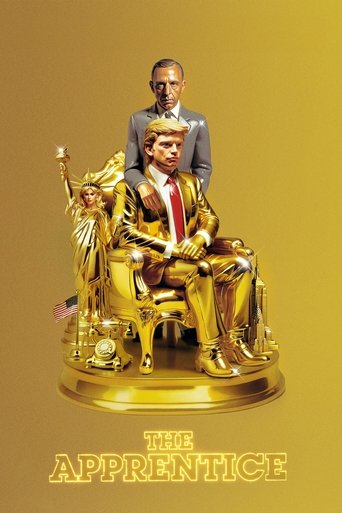
The Apprentice
2024 · Film · 122 min
Directed by Ali Abbasi
A young Donald Trump, eager to make his name as a hungry scion of a wealthy family in 1970s New York, comes under the spell of Roy Cohn, the cutthroat attorney who would help create the Donald Trump we know today. Cohn sees in Trump the perfect protégé—someone with raw ambition, a hunger for success, and a willingness to do whatever it takes to win.
2 negative1 neutralfrom 3 commenters
Where to watch
No streaming data for this title.




3 comments on Hacker News
Pretty sure for all the examples given at the beginning, these can easily be explained as natural parts of the writing process.
The Gladiator II example is just lampshading. If you just wrote "the prisoner grabbed the weapon the guard brought in to the cell, and then killed the guard with it" the very first thing someone's going to ask is "well why did the guard bring a weapon in?" and then the writer says "oh well he didn't consider it a usable weapon" and then "but clearly it is, so that doesn't really solve anything" and rather than coming up with a better escape method the writer just leans into the absurdity of it - the on the nose dispensing of folksy wisdom establishes that the guard is just an idiot rather than leaving the audience to contemplate the contrived situation.
For Megalopolis, “What do you think of this boner I got?” [he shoots her] isn't exactly a compelling scene when reading it. It makes a lot of sense to punctuate the scene with some emotion to make it make some sort of sense. Can this emotion be shown on film without dialogue? Possibly, but the writer can't be sure how it'll actually look, and they need to convey to both the actor and director what emotion needs to be conveyed. It sounds like placeholder dialogue which could be cut or changed as needed.
For the Apprentice, again the writer likely doesn't know exactly how the scene is going to turn out. Is "Trump Tower" going to be clearly legible on the model as the scene is shot? Do you even want to spoil it by showing the name on the model? The point is this is supposed to be a reveal.
In all three cases, these lines very well could be great with proper setup and delivery, or perhaps could have been reworked into great lines. The issue is just these are mediocre films. None made any serious attempt to polish their scripts. It's not a deliberate tactic to dumb down movies or deal with poor attention spans, it's just the makers of the movie saying "eh, good enough."
Hollywood has always been a little bit dumb, a little bit over-written. It's hard to have both artistic individualism and a reliable business. This is not a new trend.
The examples are not very good. I would take Gladiator II, but Megalopolis was a self-funded project which is completely out of left field, and The Apprentice... I'm not sure what it's an example of. Many more titles are dismissed with a couple words. They really lose me when it comes to Anora. That's quite possibly the worst take I've heard about that film yet, and I've read some Letterboxd reviews.
> What feels new is the expectation, on the part of both makers and audiences, that there is such a thing as knowing definitively what a work of art means or stands for, aesthetically and politically.
Before rushing to judge today's movies, shall we remind ourselves what popular movies 20 years ago were? There were some real stinkers there, too, and they were not more smartly written in this regard. They just weren't.
> The point is not to be lifelike or fact-based but familiar and formulaic—in a word, predictable.
Has this person forgotten Titanic, one of the best-selling movies of all time? It's extremely formulaic, predictable, and intentionally so. It's basically opera, not really a new genre.
It occurred to me that backstabbing is a common tactic of war historically, and increasingly of a certain group of power-seeking individuals specifically. A trait that The Apprentice and it's similar ilk of reality TV shows like Survivor invariably promoted.
My comment today on a YT video;
"Trump never apologizes or shows contrition (Roy Cohn's 'always deny' doctrine) as it shows weakness, similar to Putin perceiving appeasement as weakness. He then sets up a scenario (he called it "great television") where he expects Zelenskyy to apologize and say thankyou for the 100th time. He told Zelenskyy he had no cards, so apologizing or showing appreciation-on-demand (for nothing in exchange) would be submitting to being a loser in Trump's own mindset, which is the point of the whole fake deal on offer. No different to the "deal" he made with Afghan government for natural resources, before he sided with the Taliban to withdraw US troops in betrayal of that very agreement. When Zelenskyy pointed out that Putin can't be trusted for any ceasefire, Trump then raised his voice cos his own betrayals (nearly everyone who worked for him that wasn't paid, or went to prison by following instructions, or was summarily fired as per his catchphrase) are viewed as his favorite playing card."
Treachery has been his default modus operandi throughout his personal life (cheating and divorce) as well as in business and politics ("hang Mike Pence"). Reality TV then normalized it to the level of mass-entertainment as he suggested.