 Hacker Cinema
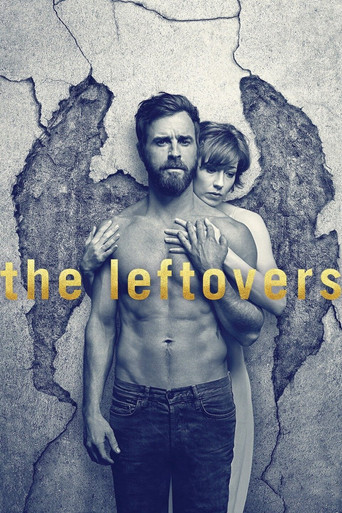
The Leftovers
2014 · TV series · 3 seasons
Created by Damon Lindelof, Tom Perrotta
When 2% of the world's population abruptly disappears without explanation, the world struggles to understand just what they're supposed to do about it. This is the story of the people who didn't make the cut.
13 positive2 negative4 neutralfrom 19 commenters
Where to watch
No streaming data for this title.

22 comments on Hacker News
I can swear by anything that Lindelof does for TV
Lost, The Leftovers, Watchmen, Mrs Davis: they are all great
Can't wait for Lanterns.
(His movies career is... less good. He shines in serialized stories I guess)
I must wave the flag for The Leftovers, whose third season holds an impossible 99% RT score: https://www.rottentomatoes.com/tv/the-leftovers/s03
I hated the first few episodes but I think it might now be the finest show I've ever seen (and I've seen all those mentioned here).
The Leftovers [1], season 3 episode 7.
[1] https://en.wikipedia.org/wiki/The_Leftovers_(TV_series)
The Fog of War. It caused me to see geopolitics from both a simpler and more constantly ambiguous perspective.
A River Runs through It. Even more so the book, but the movie gets the job done: the meanings of our experiences only make sense once their dust has settled.
The Leftovers. I'm going to cheat a little and say a TV show here. Better than anything else, it draws a connection between the philosophical immensity of things like 2001/Interstellar and the real drama of everyday human lives.
I can kind of get Wikipedia's stance here. They're really not supposed to be litigators of "what actually happened," which may not be knowable. They have defined rules for what counts as an authoritative source and nonfiction books that are generally taken seriously are in that set. So if a book says it, it's good enough to be on a Wikipedia page.
Does that means it's true? I highly doubt it. I wasn't alive in the 60s, but I've known a lot of Marines in my life. I was in the Army myself. I've known people who were Marines in Vietnam. I've never known anyone who ever operated a rifle who would interpret a claim this way or belief a self-cleaning rifle was a possible thing.
But unfortunately, even if you are personally an expert, Wikipedia doesn't let you come in and tell a page it's wrong. You have to publish your knowledge in an authoritative archival source and then it can be cited. I get that it can be frustrating as a subject-matter expert, but I don't know what better sourcing and citation rules an encyclopedia can have. They don't internally litigate the validity of a claim. They define what outside sources count as citable and then trust those sources.
Hell, I experiened a fairly stupid version of this a few months ago. I edited the page for Slayer's Reign in Blood in the section for pop culture references, adding a mention that Angel of Death was used in the Leftovers when Nora pays a prostitute to shoot her and uses the song to cover the gunshot sound. I linked to an episode summary on another wiki and that got deleted because apparently Wikipedia doesn't allow other wikis to be cited as sources. Fair enough as a general rule, though I think it doesn't make sense in this context because Wikipedia has episode summaries of television shows that don't cite sources at all. So I just removed the cite and linked to HBO's home page for the episode and that stuck, even though it doesn't have a description and you'd have to actually watch the episode to confirm I'm not lying.
But hey, whatever, rules are rules. No rules are perfect. Courts get it wrong sometimes, too.
Dance, Dance, Dance which is a “sequel” to Wild Sheep Chase is my favorite, followed by WUNC and then HBW/EOW.
Total aside but has anyone found good Murakami-esque movies or TV Shows? Parts of The Leftovers actually gave me the same feeling, especially “International Assassin” and the surrounding episodes but am happy to hear others.
> every book, movie, TV show, video game and song fails to give me an interesting or meaningful experience
I'm curious, have you tried watching shows like Russian Doll? Andor? The Last of Us? The Leftovers?
These are shows that deal with the very deepest of human themes -- growth overcoming trauma, political radicalization, contradictory aspects of love, and finding meaning in life (respectively, for those four shows).
They're some of the most exciting and well-written pieces of art to come around in a long time. I can't imagine applying the term "grey slop" to those. And then after each episode, you can easily spend a couple of hours reading story analysis and criticism, listening to podcast analysis and so forth.
I can't help but wonder if you're not finding things like these that are actually pushing the envelope. Modern entertainment isn't stale at all, if you know where to look. (Obviously I'm not talking about the NBC reboot of the sitcom Night Court.)
I really don't think that's a fair take on The Leftovers. It was adapted from a novel, which season 1 follows the plot of pretty closely and completely. The remaining two seasons are entirely new plot but iirc the author was involved.
The novel doesn't resolve the core mystery. I won't spoil whether the show does, but it's kind of beside the point anyway. One of the core themes is how people grapple with sudden loss, something beyond their control, something unknowable. In any case the show resolves itself with a satisfying amount of closure in three seasons. Much fewer open threads and plot holes than LOST. The unresolved aspects of The Leftovers are genuinely thought-provoking and deep.
I wholly agree with Wikipedia's summary: "The first season received mostly positive reviews. However, the second and third seasons were highly acclaimed, with many critics referring to The Leftovers as one of the greatest television series of all time, with particular praise for its writing, directing, acting (particularly Theroux’s and Coon's) and thematic depth."
You say "The finale comes only when there's no more money to be made" ... that doesn't jive with a final season having a 99% on Rotten Tomatoes and 98% on Metacritic!
I avoid anything by Abrams or Lindelof at this point because they are emblematic of this writing formula. You can see it in Lindelof's The Leftovers, Abrams' Star Wars, and of course LOST. It's also present in any pilot they help create, for example Once Upon A Time.
I agree with your deconstruction: these shows are optimized for selling an engaging pilot episode with only a back of the napkin roadmap for the rest of the show. The finale comes only when there's no more money to be made.
I'm very excited by writers like Baran bo Odar and Jantje Friese who are able to write interwoven plots comparable to LOST, but with cohesive endings. Check out Dark for an example.
> I was not holding out much hope when "Damon Lindelof producer of Lost, decided what we really needed was for him to create a new TV series in the Watchman universe"
Well, Lindelof was also the showrunner for The Leftovers, which was a profoundly moving and well-made show. He also co-wrote the Alien prequel Prometheus. I wasn't too surprised that his Watchmen show was good!
Anyway, as for Neuromancer... Graham Roland was showrunner for Dark Winds, which was pretty solid, so maybe that bodes well. On the other hand, his writing work on Lost was entirely just on the final season, which was a nonsensical mess, so who knows.
I find much better content on TV than in movies these days. My favourite format is probably the mini-series, where a self contained story is told properly, with no openings for a second season or franchise opportunity.
One of the best and strangest TV shows I have watched is The Leftovers. If you want something different check it out. Season 3 is sublime.
Airing 1 or 2 episodes a week gives maximum opportunity for a show to be successful, esp if it's a smaller show that doesn't have a built in audience (ie. if it's not a Marvel/Disney show or returning seasons of successful shows). Airing weekly means that there is an ongoing conversation around your show (if it's any good) and each media outlet is potentially writing about your show n times as opposed to writing about your show 1 time reviewing the entire thing, that results in more chances for the audience finding your show. The cancelling the service thing is at best a secondary concern. Moreover creators of many show prefer that their show be consumed on a week to week basis as opposed to binged in 1 sitting with little opportunity for the audience to reflect on it.
HBO has mastered that art of "1 episode a week to maximize the audience and buzz of what appears to be a niche show" even on their streaming service and as a result have found unconventional hits like Euphoria, The White Lotus, Succession, The Leftovers which would otherwise have been lost in the glut of peak tv abyss if they were just dropped in one night.
Weird article
> How much do we need to know about a TV detective to be invested in a whodunnit?
There are tons of shows that do exactly that. Turn on a random CBS procedural and you will get exactly that- 40 mins of by the numbers crime solving with a smartass quip thrown in every once in while.
On the other hand there are options for those who are bored by the repetitiveness of crime solving in these shows and get more invested when the characters in the show are full blown people not just vehicles for crimes to happen or be solved (say True Detective (Season 1) or Broadchurch).
I am sure there is a market for both these things and options for viewers that are interested in either option (or even both depending on their mood). Let the free market sort it all out. Not sure why the author of this article is so outraged.
> As one of the showrunners of Lost, Damon Lindelof was as responsible as anybody for the backstory epidemic, creating a time-hopping narrative tangle that concluded with a crushing disappointment.
> On his next show, The Leftovers, he learned his lesson and leaned into his characters’ reactions to the mysterious disappearance of 2% of humanity rather than the reasons for the event. Trauma was the cake rather than the icing, and therefore taken seriously. In becoming so comfortable with complexity and ambiguity, Lindelof made one of the finest shows of the decade.
Another strange argument, even if some people were disappointed by the LOST ending it was still one of the most popular shows of its era and is to this day considered to be one of the best shows ever made both in the critic and regular person circles.
On the other hand The Leftovers was widely panned in its first Season and was never a popular success. While it has its ardent fans, it's never going to come close to having the popular success or impact on tv as LOST did.
I like both shows. Like everything else it is not one or the other, you can have both and let people choose.
This entire article comes across as: "these are the things I like and anyone who likes what I don't like is wrong and everyone should only make art that fits my personal sensibilities" eventhough nothing is stopping the author to keep liking the things he likes and let others enjoy things they like. There is no shortage of content out there.
My other Four:
o Firefly - no brainer. Brilliant. o Battlestar Galactica - Has some issues mid-late course, but still pretty end-end enthralling. o Dark (I keep re-watching this over and over every few months. I have many notebook pages full of analysis. Seriously good SciFi for the most part.) o Altered Carbon (mostly Season 1 - but Season 2 was okay)
Big Recommendation:
Not really science fiction (even bigger themes explored) but far superior in terms of overall quality of work/screen writing, and has a similar "concept" that a lot of supposed science fiction shows have - "The Leftovers" - Which I put on my list of the 5 most brilliant things on Television (Sopranos/The Wire/Deadwood/Breaking Bad being the other 4).
I'll give a honorable mention to stuff I loved but I can't totally recommends:
o Travelers - I'm a sucker for a good Time Travel Show. o Foundation - Pretty - I watch it, but I totally would never recommend it. o Fringe - Wow - was totally into this. Definitely an acquired taste though. o Raised By Wolves - Interested in where it's going. Could entirely suck eventually I guess. o Black Mirror - Hit and miss, though hits often enough that I keep coming back to it. o WestWorld - I mean, we all watched it. Season 1 was *awesome* if you watched it in realtime and didn't read all the internet commentary when the aha moment hit you. Season 2 was pretty good as well IMHO. Season 3 was just dreck where the screen writing tanked *but* it paid an *awesome* homage to the very last of the Foundation Novels to bring it all home.
It's interesting that you're citing a film made 60 years before the 21st century as an example of a 21st century trend. If anything, we seem to be moving in the opposite direction. Star Wars tried to explain where the force comes from. Christopher Nolan includes ridiculously detailed exposition dumps explaining everything (in spite of the ambiguous ending of Inception, everything about how the world worked was explained in meticulous detail). Even the canonical mystery box master himself, Damon Lindelof, took to heart all the backlash about the non-explanation ending of Lost. Nobody expected The Leftovers would ever give an explanation of what caused the Sudden Departure, but it did.
Heck, even David Lynch himself gave Laura Palmer an origin story in Twin Peaks: The Return! And even where he tried to preserve some mystery, the companion book by Mark Frost explained all of it.
That's an interesting point. It reminds me of that TV series "The Leftovers."
> I can't recommend watching HBO's Watchmen enough.
Fair warning though: Damon Lindelof is responsible for Lost and The Leftovers, which had notoriously unsatisfying conclusions. Some of the plot arcs are starting to terminate with actual plot movement, so there is hope that the season might achieve some form of closure. If this show finishes after one season and succeeds in telling a coherent story, I will be surprised.
Besides the great references others have made here, I'll add that you need to have a certain mindset when watching movies that you -choose- to analyze for deeper meaning. Often I'll get there on a 2nd / 3rd watch. More often I'll need a little help from online research. The Leftovers (HBO 3-season series) is a great example. I watched it twice, then sat down and just wrote about it. To myself. Things came out that I didn't expect, then I researched what others were saying online. That introduced new wormhole to explore.
The leftovers,though it is TV,but is better than many movies.
> What did they do there all day?
From the wiki page on Simeon Stylites, the most famous of these type of saints (and I think the first one who chose to live on top of a pillar) (https://en.wikipedia.org/wiki/Simeon_Stylites):
> Even on the highest of his columns, Simeon was not withdrawn from the world.[citation needed] If anything, the new pillar attracted even more people, both pilgrims who had earlier visited him and sightseers as well. Simeon was available each afternoon to talk with visitors. By means of a ladder, visitors were able to ascend within speaking distance. It is known that he wrote letters, the text of some of which have survived to this day, that he instructed disciples, and that he also lectured to those assembled beneath.[9] He especially preached against profanity and usury. In contrast to the extreme austerity that he practiced, his preaching conveyed temperance and compassion, and was marked with common sense and freedom from fanaticism.
Interestingly enough there is a similar character in season 2 of the HBO TV-show "The Leftovers", which I highly recommend (the show, that is). Here's its IMDB page: http://www.imdb.com/title/tt2699128/
It really does because it sort of treats each season as a story.
Game of Thrones works sort of the same way.The first several episodes are clearly just setting the plot up, which I find boring. There is no pay off. It's actually pretty terrible to watch week to week.
But shows like Mad Men or the Leftovers really require an episode by episode approach. They each have a story to tell. The seasons and series have arcs, but each episode is also story line.
That sounds straight up from the TV show "The Leftovers" in which there's a nihilist cult that paints things in white!