 Hacker Cinema
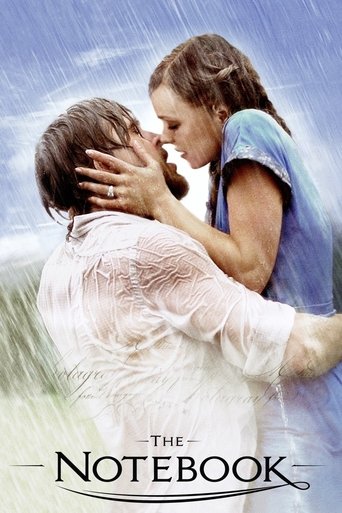
The Notebook
2004 · Film · 123 min
Directed by Nick Cassavetes
An epic love story centered around an older man who reads aloud to a woman with Alzheimer's. From a faded notebook, the old man's words bring to life the story about a couple who is separated by World War II, and is then passionately reunited, seven years later, after they have taken different paths.
1 positive3 negative3 neutralfrom 7 commenters
Where to watch
No streaming data for this title.


9 comments on Hacker News
The Notebook (one of the few films that have made me cry). Also, Life Is Beautiful (1997).
Sometimes to tell a story you add a bunch of extra details, that are not critically relevant to whatever you are trying to say. Maybe you're saying you love Michael Bay movies, and then you list off a bunch of movies. And the other participant in the conversation might be like: actually I don't think Michael Bay did The Notebook. You might engage in the dispute, or move past it. Or if it's a very casual conversation, turn it into a rhetoric exchange where you try to convince it must indeed have been Michael Bay. Point being, just be aware of why you're having the conversation. If for you it is an exchange of facts, fine, do the dive (sometimes, I do this). But often, it doesn't seem to matter for the larger story you are trying to tell - I love boom boom Michael Bay movies, share your favourite boom boom movies.
Last thing is, sometimes people come across as totalizing in text but they're really just saying something broadly. This is good conversational style, kinda like this thread, where you go through a collaborative exposition. Vs someone who nails all the details from the get go, and also manages to capture the relative weightings of each scenario in a way that read lightly.
Okay, maybe I am rambling a bit now...what was Michael Bay's last movie again?
I believe the lack of a moral element is due to Hollywood movies normalizing cheating. I mentioned it elsewhere in these comments, but there's a lot of celebrated cheating in widely popular movies (both classic and modern) like Casablanca, The Notebook, and Sleepless in Seattle.
Perhaps the behavior came before the movies, but I'm skeptical because it seems to be the natural behavior to avoid pursuing people in relationships (it will probably cause emotional trauma for the person in a relationship, as it would be natural to feel guilty about cheating, though I indirectly know of a person in a relationship who seemed to have felt no guilt about cheating at all).
>And for such a person, perhaps it's alien to consider that others don't suffer such a temptation.
The idea that temptation out of a relationship can be celebrated is reinforced by Hollywood movies. There's a lot of celebrated cheating in both classic and modern popular films like Casablanca, The Lady Vanishes, The Notebook, and Sleepless in Seattle.
Your view is admirable and I hope to share it, but popular movies are a strong force for people taking the opposite view as it normalizes the behavior of leaving a committed relationship for other people.
> And people don't understand why I fell into a two week existential crisis after I saw 'The Notebook'
Thank you. I watched that movie with my wife 15 years ago, now, and it remains the scariest, saddest movie I've ever seen.
I think this would be more compelling if you demonstrate that 7 years is long enough to generate 80% of the revenue. For many artistic works, it can take years to produce them (writing a book for instance), and many don't gain traction for years either. Film adaptations of books are a great example.
A real-life example: The Notebook (the book) was published in 1996. The Notebook (the movie) was released eight years later, in 2004. With a seven year copyright, the book would be in public domain, and the author may not see a dime from the movie. Is that fair? Is paying the author of the book royalties from the film's revenue a burdensome cost to society? I assert that the author of the book should be able to earn money from the wildly successful film adaptation of his movie, whether he's directly involved with the production of the film or not.
I'm sure there are a lot of subtle technicalities I'm missing, but I think the core of this argument stands.
I'm in favor of reducing the duration of copyright, but I think something in the region of 30 years is a more reasonable amount of time than 7 years.
Regarding the constitution, I think that the means of promoting creation of new works is the ability for creators to profit off of their works. By reducing the potential for profit, you reduce the incentive to create. I can see how overly-restrictive copyright law can inhibit creativity, but I think a 7 year period swings too far in the opposite direction.
Try as well "Amorres Perros", "Jamon Jamon" (with Penelope Cruz!), and basically all of Almodóvar's movies. Well, maybe not "Mala education". For a more girly movie, "Lucia y el sexo" - not as girly as "The Notebook", and interesting and twisted in an unique Spanish way - definitely watch it with your girlfriend/boyfriend.
Let me ask you: why do you make your text fixed-width? It's got to be a conscious effort because you do it repeatedly, and it makes the rest of us cranky.
I haven't seen the movie yet, and for the record? "Just like films" means nothing. Unless you're fascinated in the art of filmmaking - if you're a "buff" - it doesn't count. I have friends who "just like films" who watch The Notebook and American Beauty and cite those as "incredible films", and that just doesn't count. The people who really like films are the ones who get deep into them.
But I haven't seen Citizen Kane, so I'll withhold judgement.
Are you kidding me? Hemingway is seen by a lot of people as the master of writing concise prose. Aesthetically, he's got something beautiful going: he eliminates unnecessary statements. His six-word short inspired me as a high-school sophomore: I took up writing haiku to learn how to capture that incredibly tense feeling that Hemingway inspired. On the Hemingway-versus-Faulkner debate (Faulkner once insulted Hemingway by saying he used "commonplace" words; Hemingway responded by saying that Faulkner was too pretentious to reach somebody emotionally), I side more with Hemingway, though I think that Joyce beats both of them hands-down.
[tl;dr]
Of course there are other forms of beauty. Do you not read the statements I've made? Reread what I said in response to you, regarding Harry Potter versus Narnia. I'm pretty sure I said specifically that I liked Harry Potter more, and considered it a more valuable story, despite its not being as well-written as Narnia. I think that some people were masters of aesthetic, but never learned how to tell a good story: for that reason, I dislike Steinbeck quite a lot. I think the opposite can be the case.
My statement, as I've already clarified, was made against the use of the phrase "literature" alone. I use the word "literature" to describe writing that has aesthetic merit. When I read It, I call it a damn good story. I would not call It literary because Steven King is not a literary writer. He is literate, but not literary. He is a good writer who excels in substance and falters in style. I'm over-describing this, I think, but that's because my more concise explanation seemingly had no effect.
Another example: I think Isaac Asimov wrote damn good stories. I think that he was a master of logic, and that he wrote some of the best intellectual fiction I've ever read. I don't call his writing literature. I call it fiction. If somebody said in front of me that Asimove was a cornerstone of literature, I'd tell them that I disagreed, and explained why. I think he's a valuable part of the history of fiction. I think he's a masterful storyteller. If I were to make a list of writers to recommend to others, or even to history, I'd ditch both Hemingway and Faulkner and put Asimov on instead, though I'd admit that's not a popular opinion. However, I would not call him literature.
Whether something touches you or not doesn't make something literature. It doesn't make art, either. There's an art to being capable of drawing emotions, and that is an art that makes some writers memorable. However, you can draw emotion without any finesse whatsoever: witness Nick Sparks and his movie adaptations. People openly weep at The Notebook. That doesn't make it a well-crafted movie. I wouldn't call it an important movie in terms of cinema, in the same way that I'd say the novel is not an important piece of literature. If somebody asked me how to write a tearjerker, though, I'd point them there before I'd point them to Citizen Kane or Ulysses, though I'd probably point them to something like To Kill A Mockingbird first. (It should be noted that To Kill A Mockingbird is expertly written, tells a compelling story, and manages to draw tears all at once. These three things require separate skills and Harper Lee had all of them. Do you understand what I'm trying to say yet?)
[/tl;dr]
You can't ignore the connotations and meanings of the words that you choose. (Well, you can, and clearly you are, but you shouldn't.) There is a difference between being able to tell a story and being able to craft a good sentence. There's a difference between both and being able to draw emotion. The three are not linked immutably, though many good writers absolutely could do all three.
I'm not ignoring beauty. I'm not stuck in a mindset. I'm just particular about the words I use. Call it the mark of a writer. I posted, I will say yet again, because I thought it was worth a side discussion on what constitutes literature. I will say yet again that I liked Steve Yegge's post. It was an article that was worth reading. That doesn't make it well-written. That doesn't make it literature. It makes it, plain and simple, a good article. I don't object to people who like it because of that; I object to people who use the very specific term "literature" to describe the more general idea of "good writing."