I mean, yes, these are religious texts, but if we are to judge them on a level with other content, they absolutely warrant a warning.
The abrahamic religious texts intersect largely around the Old Testament, which is a smorgasbord of genocide, slavery, casual murder, infanticide, sexual abuse of all flavours, and all the rest.
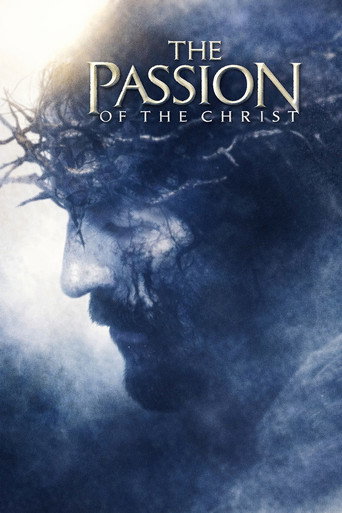
I guess the question is whether religious texts should be exempt from content warnings, in which case one should expect films like “The Passion of the Christ” to be available for general audiences, not R.
Jordan Peele does a fantastic impersonation of Ray Parker Jr. (“the Ghostbusters guy”) promoting his lesser known movie theme songs he’s submitted through the years. Talk about bad songs! Jumanji, Passion of the Christ, Apt Pupil. lol. https://youtu.be/GxjNOv5QPzM?si=zSduoOlbIULoKOMC
For me it is surprising that the Passion of the Christ is not more polarizing.
Even, or perhaps especially, as a Christian, although I appreciated it, it was brutal to watch. The violence felt very visceral. This was a movie I rate highly, but can’t say that I enjoyed watching.
Not really, it's clear demand for Christian stuff in America is huge. Yet the media avoids this like crazy.
One of the biggest movies of all time is "The passion of the christ" there.Yet most media in America is highly liberal and arguably anti-christian.
It's not about the money clearly, its not about the money.
American Corporations have undergone idealogical capture. There is no other reason Disney risked and lost their self governance by going up against Desantis.
This maybe changing though. My firm is actively beginning to re-evaluate its social activism after 15% layoffs (more layoffs incoming too). The next big phase is regaining our market in the "heartland". I'm in strategic meetings with a lot of executives, that are becoming screaming matches over the direction of the firm.
Ye ... Imagine 'Passion of the Christ' in English. It would have been so much worse. What other examples are there? I can only think about the other Mel Gibson movie about Azteks. He seems to have a thing for proper languages.
I’m also fine with a game/movie about Jesus but my point isn’t so much that the figure is a sacred cow (Passion of the Christ proved there’s a lot of interest, amongst other media) but rather that /when/ he is depicted the depictions tend to run along the respectful side because it is the religion of others.
And it’s not about “faithful”. I’ve played the original games and obviously “Kratos” isn’t a historical Greek figure anyway, but the original games weren’t about /story/. They were hack and slash games with a bit of backdrop in the form of naked Greek women and ionic columns.
To me the problem is when you want to /act/ like you’re a story game with a big dramatic plot and worldbuilding, why bother using a mythology if you’re going to piss all over it and get it entirely wrong? It’s like doing a “Sesame Street” game and Big Bird has PTSD from wasting too many people in Vietnam and then shoots up a building.
I really don’t have enough analogies for how much I hate the game’s story and plot… and characters. And setting.
But also, it’s a very good game despite that. It’s like playing a version of DOOM where you help out Hitler and everyone pretends Hitler is a decent guy and that Hitler is misunderstood. You’re playing DOOM, so that’s great but why am I wading through a pile of horseshit to do it?
By extension of that analogy, why should I have to wade through a hack writer’s truly awful fuckup of a story just to play the hacky and slashy bits people are buying the game God of War for. Why should I have to see dumb articles written about a dumb version of a story. Again, it’s like playing a game where Hitler is the good guy and then an article comes out “ways Hitler was misunderstood”.
It’s such a fundamental fuckup of the reality it is astonishing to me.
(Sorry, I know being passionate is basically illegal here)
> imagine modern degenerate media execs trying to do a on screen Bible.
Actually, they'd probably treat it well: sex, violence, vengeance, sodomy, incest, torture. Sounds like a perfect script for a Hollywood movie. Just ask Mel Gibson how well "Passion of the Christ" did.
> That's what muslims claim. Actually reading the thing does not at all give that impression
Did you read it in Arabic? Do you even speak the language?
> don't immediately recognize is greek it becomes a lot easier.
One really nice thing about Arabic is that you can reduce practically every word to 3 or 4 letter roots. This really makes it clear where a derivative of a word came from (including the word "Quraan" incidentally).
> As for the language of the Quran, have you ever googled "Christopher Luxenberg" ?
I have heard of him, yes. His argument is painfully laughable that it's unbearable to answer with a straight face. Without going into much detail, it is clear that he is selecting whatever supports his so called analysis, and discarding (or he is perhaps ignorant of) everything else. A beginner in Islamic studies would be able to refute him blind folded so to speak.
> Here's his central argument : rewrite the quran in arameic(/greek), letter-by-letter and it makes sense, both in a historical context, the grammar is suddenly correct
Umm, no. I have looked into Aramaic as well as Hebrew (I developed an interest in these languages after watching Passion of the Christ and recognizing a bunch of words in the movie). My knowledge of Arabic gives me an advantage in that I am able to easily make out similarities in syntax and pronunciation (incidentally, a lot of (most?) modern Hebrew speakers really twist the language, and it sounds nothing like it would have sounded back in the day -- many letters are dropped or merged, pronounced incorrectly, etc). The key point being: there is no one-to-one mapping of Arabic letters to Aramaic or Hebrew letters. There is a very large overlap; however, there exist letters in Arabic not present in Aramaic/Hebrew, as well as as the other way around (such as 'p' and 'v').
I concur that there are some words shared between these languages (e.g. "house", "bird", "eye", "them", "one"). However, the grammatical constructs, transformation of words, usage, plurals, pronunciation, etc are all quite different. Arabic grammar and conjugation is much more rich and complex than Aramaic or Hebrew. As a tiny example, "house" => "bayt" in Arabic/Aramaic/Hebrew -- a place of resting. Now, "yabeet" (only in Arabic) means to spend the night at a house; but in this example, you can see that they both have the same root of (ba-ya-ta). I have not seen this behavior in Aramaic or Hebrew. Aramaic is closer to Hebrew than Arabic.
That being said, it is impossible to have a letter-by-letter re-write from Arabic to Aramaic by definition. It's illogical and impossible.
> Oh and there is even an Arameic word for "Songbook" (meaning an extract of the New Testament, with most text put into verses to be sung, as you can find today in every church on the planet). Know what that word is ? "Koran"
Wrong again. The Aramaic (Syriac actually) word you are looking for is "Kriyana" ('reading the scriptures' or 'lesson'). The three-letter root of Qur'aan is (Qa-Ra-'a) -- to read/recite. So, while they sound similar (not surprising given what I mentioned about similar roots above), or even have somewhat similar meanings, they are not the same word as you were trying to make it out to be. If anything, the Arabic word "Kira'a" (reading/recitation) is closer in meaning (it's a gerund) to the Aramaic version than Qur'aan (a proper noun). Also, the Quraan has multiple names too, such as Al-Furqan, Al-Thikr, Al-Huda, etc, but that doesn't really relate to this discussion. Just something for your information.
> Keep in mind that Arabic is not in fact that far removed from Greek, because it is based on Hebrew
According to Wikipedia, Greek is Indo-European, whereas Arabic and Hebrew are Semitic (deriving from Afro-Asiatic). I re-iterate that I am completely fluent in Arabic, and I have Greek colleagues. The languages are not similar (if at all) as what you're trying to point out. Are you sure you're not just re-iterating things you heard before from someone and trying to pass one on me?
Hebrew is a Northwest Semitic language (like Aramaic), both deriving from a Central Semitic language family. Arabic is also derived from a Central Semitic language family. This makes Arabic and Aramaic/Hebrew more like uncle/nephew instead of siblings or even descendents (like how Hebrew descended from Aramaic).
The analogy you are trying to make with the poem does not hold. The Quraan's Arabic is not obtuse like that at all. This just reinforces the fact that you don't seem to speak the language at all, yet you try to make a statement based on false claims. For your information, the Quraan and Hadith (moreso the former) are used as references for the Arabic language to know what is proper grammar from improper -- which yet again makes the poem analogy ridiculous.
I wrote a blog post about this back in 2005, when Hostel was coming out. It seems that's right about our fascination with torture on TV has started. While I cringe at my writing from 9 years ago, it seems like things have only gotten worse since then.
> With seemingly inevitable theatrical success of 'Hostel' and recent mainstream movies such as 'Passion of the Christ' and 'Sin City' reveling in accurately depicting violence and torture, I started thinking what does that say about our society and what horrors are next in line for the viewers, hungry for more blood and suffering. And then it dawned on me - almost this exact situation was already predicted, in a dystopian 1966 sci-fi story by Robert Silverberg called 'The Pain Peddlers'.
> 'The Pain Peddlers' depicts a scary, bleak and sarcastic view of the future - in the early 00's, television is king. And what brings most money to TV networks is live surgery. In the story, the main character is a TV producer who got a very promising prospect - an old man suffering from gangrene and a family, too broke to take care of the hospital bill. The old man needs to have his leg amputated, and the family agreed to do it on live TV. It's the producer's job to convince the family to have the amputation without anesthesia - for more money, of course. Nothing brings in the viewers quite like real human agony.
> Remembering this story, which I read long time ago, was a very scary experience for me, because... in 1966, when it was written, it was pure fantasy - the notion of something like that actually happening never occurred to Silverberg or his contemporaries. But does it sound that incredible now? With TV viewers getting tired of same-old reality shows and public's growing hunger for violence, how long until a new reality show depicting real surgery appears on, say, HBO? Probably not right away. But I can definitely see something like that happening, not too far away in the future.
True, but I suspect that doesn't massively prolong most movies, only big ones that people are passionate about (Star Wars, The Godfather Trilogy, etc).
Just randomly picking... 2004. Top 10 movies from that year, and pulling future media sales predictions out of my ass:
Shrek 2 kids movie, profitable regardless.
Spider-Man 2 probably poor
The Passion of the Christ probably poor
Meet the Fockers nobody cares.
The Incredibles kids movie, profitable regardless.
Harry Potter and the Prisoner of Azkaban great.
The Day After Tomorrow nobody cares.
The Bourne Supremacy possibly good.
National Treasure nobody cares.
The Polar Express nobody cares.
I mean, I am sure all of these will have future releases on new media. There is no reason not to re-release movies, it is essentially printing money), but will many of them see dramatic sales that will really change how we view the profitability of those movies? Meet the Fockers was a good movie, but nobody is going to give a shit if you re-release it in 3D, 4K resolution, "hyperdisk". Only a few have that potential I think, and it gets more bleak if you stop looking at the top 10.
After the initial burst of home media sales, I just don't see most movies getting anything more than a trickle of revenue. For every movie like Office Space, there are dozens that aren't.
> The one that is beyond the pale is a quote from Mel Gibson.
Actually, its a mockery of a Mel Gibson by projecting a quote from Mel Gibson about (IIRC) his ex-wife into a notional sequel to Mel Gibson's film The Passion of the Christ, with Jesus being put into the position of the subject of the original quote.
As such, its probably the one least subject to challenge as being indicative of misogyny, since it is mocking the conflict between Gibson's statement and his public shows of piety.
I've thought about this problem a lot and I'm glad to see there is a site out there trying to tackle this problem. For me, I always thought about movies in terms of investment with 4 options, "I'd buy it", "I'd rent it", "I'd watch it for free", "I'd avoid it". I think dollars speak louder then opinions. The problem is that nowadays in the world of streaming video, this scale gets completely trashed as the friction to invest in a movie is lowered considerably.
I do like the idea of production value vs replay value, I remember when I saw Passion of the Christ I told a friend it was an amazing movie i never want to see again.
Yeh same here. Typically graph x-axis are time, totally threw me off.
So seeing that in reverse I was like "Well because we have more family and less Rated R movies nowadays that are blockbusters". Even rated R movies are not the same as the top grossing one is 'Passion of the Christ'.
Not sure what is worse graphs with time in the wrong direction or that more family movies are being made now with killing in them.
 Hacker Cinema

14 comments on Hacker News
I mean, yes, these are religious texts, but if we are to judge them on a level with other content, they absolutely warrant a warning.
The abrahamic religious texts intersect largely around the Old Testament, which is a smorgasbord of genocide, slavery, casual murder, infanticide, sexual abuse of all flavours, and all the rest.
I guess the question is whether religious texts should be exempt from content warnings, in which case one should expect films like “The Passion of the Christ” to be available for general audiences, not R.
Jordan Peele does a fantastic impersonation of Ray Parker Jr. (“the Ghostbusters guy”) promoting his lesser known movie theme songs he’s submitted through the years. Talk about bad songs! Jumanji, Passion of the Christ, Apt Pupil. lol. https://youtu.be/GxjNOv5QPzM?si=zSduoOlbIULoKOMC
For me it is surprising that the Passion of the Christ is not more polarizing.
Even, or perhaps especially, as a Christian, although I appreciated it, it was brutal to watch. The violence felt very visceral. This was a movie I rate highly, but can’t say that I enjoyed watching.
Not really, it's clear demand for Christian stuff in America is huge. Yet the media avoids this like crazy. One of the biggest movies of all time is "The passion of the christ" there.Yet most media in America is highly liberal and arguably anti-christian. It's not about the money clearly, its not about the money.
American Corporations have undergone idealogical capture. There is no other reason Disney risked and lost their self governance by going up against Desantis.
This maybe changing though. My firm is actively beginning to re-evaluate its social activism after 15% layoffs (more layoffs incoming too). The next big phase is regaining our market in the "heartland". I'm in strategic meetings with a lot of executives, that are becoming screaming matches over the direction of the firm.
Ye ... Imagine 'Passion of the Christ' in English. It would have been so much worse. What other examples are there? I can only think about the other Mel Gibson movie about Azteks. He seems to have a thing for proper languages.
I’m also fine with a game/movie about Jesus but my point isn’t so much that the figure is a sacred cow (Passion of the Christ proved there’s a lot of interest, amongst other media) but rather that /when/ he is depicted the depictions tend to run along the respectful side because it is the religion of others.
And it’s not about “faithful”. I’ve played the original games and obviously “Kratos” isn’t a historical Greek figure anyway, but the original games weren’t about /story/. They were hack and slash games with a bit of backdrop in the form of naked Greek women and ionic columns.
To me the problem is when you want to /act/ like you’re a story game with a big dramatic plot and worldbuilding, why bother using a mythology if you’re going to piss all over it and get it entirely wrong? It’s like doing a “Sesame Street” game and Big Bird has PTSD from wasting too many people in Vietnam and then shoots up a building. I really don’t have enough analogies for how much I hate the game’s story and plot… and characters. And setting.
But also, it’s a very good game despite that. It’s like playing a version of DOOM where you help out Hitler and everyone pretends Hitler is a decent guy and that Hitler is misunderstood. You’re playing DOOM, so that’s great but why am I wading through a pile of horseshit to do it?
By extension of that analogy, why should I have to wade through a hack writer’s truly awful fuckup of a story just to play the hacky and slashy bits people are buying the game God of War for. Why should I have to see dumb articles written about a dumb version of a story. Again, it’s like playing a game where Hitler is the good guy and then an article comes out “ways Hitler was misunderstood”. It’s such a fundamental fuckup of the reality it is astonishing to me.
(Sorry, I know being passionate is basically illegal here)
> imagine modern degenerate media execs trying to do a on screen Bible.
Actually, they'd probably treat it well: sex, violence, vengeance, sodomy, incest, torture. Sounds like a perfect script for a Hollywood movie. Just ask Mel Gibson how well "Passion of the Christ" did.
I probably saw die hard and other movies like that in middle school.
I remember seeing saving private ryan around that time too.
The only movie that ever really bothered me for violence was the passion of the christ.
> That's what muslims claim. Actually reading the thing does not at all give that impression
Did you read it in Arabic? Do you even speak the language?
> don't immediately recognize is greek it becomes a lot easier.
One really nice thing about Arabic is that you can reduce practically every word to 3 or 4 letter roots. This really makes it clear where a derivative of a word came from (including the word "Quraan" incidentally).
> As for the language of the Quran, have you ever googled "Christopher Luxenberg" ?
I have heard of him, yes. His argument is painfully laughable that it's unbearable to answer with a straight face. Without going into much detail, it is clear that he is selecting whatever supports his so called analysis, and discarding (or he is perhaps ignorant of) everything else. A beginner in Islamic studies would be able to refute him blind folded so to speak.
> Here's his central argument : rewrite the quran in arameic(/greek), letter-by-letter and it makes sense, both in a historical context, the grammar is suddenly correct
Umm, no. I have looked into Aramaic as well as Hebrew (I developed an interest in these languages after watching Passion of the Christ and recognizing a bunch of words in the movie). My knowledge of Arabic gives me an advantage in that I am able to easily make out similarities in syntax and pronunciation (incidentally, a lot of (most?) modern Hebrew speakers really twist the language, and it sounds nothing like it would have sounded back in the day -- many letters are dropped or merged, pronounced incorrectly, etc). The key point being: there is no one-to-one mapping of Arabic letters to Aramaic or Hebrew letters. There is a very large overlap; however, there exist letters in Arabic not present in Aramaic/Hebrew, as well as as the other way around (such as 'p' and 'v').
I concur that there are some words shared between these languages (e.g. "house", "bird", "eye", "them", "one"). However, the grammatical constructs, transformation of words, usage, plurals, pronunciation, etc are all quite different. Arabic grammar and conjugation is much more rich and complex than Aramaic or Hebrew. As a tiny example, "house" => "bayt" in Arabic/Aramaic/Hebrew -- a place of resting. Now, "yabeet" (only in Arabic) means to spend the night at a house; but in this example, you can see that they both have the same root of (ba-ya-ta). I have not seen this behavior in Aramaic or Hebrew. Aramaic is closer to Hebrew than Arabic.
That being said, it is impossible to have a letter-by-letter re-write from Arabic to Aramaic by definition. It's illogical and impossible.
> Oh and there is even an Arameic word for "Songbook" (meaning an extract of the New Testament, with most text put into verses to be sung, as you can find today in every church on the planet). Know what that word is ? "Koran"
Wrong again. The Aramaic (Syriac actually) word you are looking for is "Kriyana" ('reading the scriptures' or 'lesson'). The three-letter root of Qur'aan is (Qa-Ra-'a) -- to read/recite. So, while they sound similar (not surprising given what I mentioned about similar roots above), or even have somewhat similar meanings, they are not the same word as you were trying to make it out to be. If anything, the Arabic word "Kira'a" (reading/recitation) is closer in meaning (it's a gerund) to the Aramaic version than Qur'aan (a proper noun). Also, the Quraan has multiple names too, such as Al-Furqan, Al-Thikr, Al-Huda, etc, but that doesn't really relate to this discussion. Just something for your information.
> Keep in mind that Arabic is not in fact that far removed from Greek, because it is based on Hebrew
According to Wikipedia, Greek is Indo-European, whereas Arabic and Hebrew are Semitic (deriving from Afro-Asiatic). I re-iterate that I am completely fluent in Arabic, and I have Greek colleagues. The languages are not similar (if at all) as what you're trying to point out. Are you sure you're not just re-iterating things you heard before from someone and trying to pass one on me?
Hebrew is a Northwest Semitic language (like Aramaic), both deriving from a Central Semitic language family. Arabic is also derived from a Central Semitic language family. This makes Arabic and Aramaic/Hebrew more like uncle/nephew instead of siblings or even descendents (like how Hebrew descended from Aramaic).
The analogy you are trying to make with the poem does not hold. The Quraan's Arabic is not obtuse like that at all. This just reinforces the fact that you don't seem to speak the language at all, yet you try to make a statement based on false claims. For your information, the Quraan and Hadith (moreso the former) are used as references for the Arabic language to know what is proper grammar from improper -- which yet again makes the poem analogy ridiculous.
I wrote a blog post about this back in 2005, when Hostel was coming out. It seems that's right about our fascination with torture on TV has started. While I cringe at my writing from 9 years ago, it seems like things have only gotten worse since then.
> With seemingly inevitable theatrical success of 'Hostel' and recent mainstream movies such as 'Passion of the Christ' and 'Sin City' reveling in accurately depicting violence and torture, I started thinking what does that say about our society and what horrors are next in line for the viewers, hungry for more blood and suffering. And then it dawned on me - almost this exact situation was already predicted, in a dystopian 1966 sci-fi story by Robert Silverberg called 'The Pain Peddlers'.
> 'The Pain Peddlers' depicts a scary, bleak and sarcastic view of the future - in the early 00's, television is king. And what brings most money to TV networks is live surgery. In the story, the main character is a TV producer who got a very promising prospect - an old man suffering from gangrene and a family, too broke to take care of the hospital bill. The old man needs to have his leg amputated, and the family agreed to do it on live TV. It's the producer's job to convince the family to have the amputation without anesthesia - for more money, of course. Nothing brings in the viewers quite like real human agony.
> Remembering this story, which I read long time ago, was a very scary experience for me, because... in 1966, when it was written, it was pure fantasy - the notion of something like that actually happening never occurred to Silverberg or his contemporaries. But does it sound that incredible now? With TV viewers getting tired of same-old reality shows and public's growing hunger for violence, how long until a new reality show depicting real surgery appears on, say, HBO? Probably not right away. But I can definitely see something like that happening, not too far away in the future.
True, but I suspect that doesn't massively prolong most movies, only big ones that people are passionate about (Star Wars, The Godfather Trilogy, etc).
Just randomly picking... 2004. Top 10 movies from that year, and pulling future media sales predictions out of my ass:
Shrek 2 kids movie, profitable regardless. Spider-Man 2 probably poor The Passion of the Christ probably poor Meet the Fockers nobody cares. The Incredibles kids movie, profitable regardless. Harry Potter and the Prisoner of Azkaban great. The Day After Tomorrow nobody cares. The Bourne Supremacy possibly good. National Treasure nobody cares. The Polar Express nobody cares.
I mean, I am sure all of these will have future releases on new media. There is no reason not to re-release movies, it is essentially printing money), but will many of them see dramatic sales that will really change how we view the profitability of those movies? Meet the Fockers was a good movie, but nobody is going to give a shit if you re-release it in 3D, 4K resolution, "hyperdisk". Only a few have that potential I think, and it gets more bleak if you stop looking at the top 10.
After the initial burst of home media sales, I just don't see most movies getting anything more than a trickle of revenue. For every movie like Office Space, there are dozens that aren't.
> The one that is beyond the pale is a quote from Mel Gibson.
Actually, its a mockery of a Mel Gibson by projecting a quote from Mel Gibson about (IIRC) his ex-wife into a notional sequel to Mel Gibson's film The Passion of the Christ, with Jesus being put into the position of the subject of the original quote.
As such, its probably the one least subject to challenge as being indicative of misogyny, since it is mocking the conflict between Gibson's statement and his public shows of piety.
I've thought about this problem a lot and I'm glad to see there is a site out there trying to tackle this problem. For me, I always thought about movies in terms of investment with 4 options, "I'd buy it", "I'd rent it", "I'd watch it for free", "I'd avoid it". I think dollars speak louder then opinions. The problem is that nowadays in the world of streaming video, this scale gets completely trashed as the friction to invest in a movie is lowered considerably.
I do like the idea of production value vs replay value, I remember when I saw Passion of the Christ I told a friend it was an amazing movie i never want to see again.
Yeh same here. Typically graph x-axis are time, totally threw me off.
So seeing that in reverse I was like "Well because we have more family and less Rated R movies nowadays that are blockbusters". Even rated R movies are not the same as the top grossing one is 'Passion of the Christ'.
Not sure what is worse graphs with time in the wrong direction or that more family movies are being made now with killing in them.