 Hacker Cinema
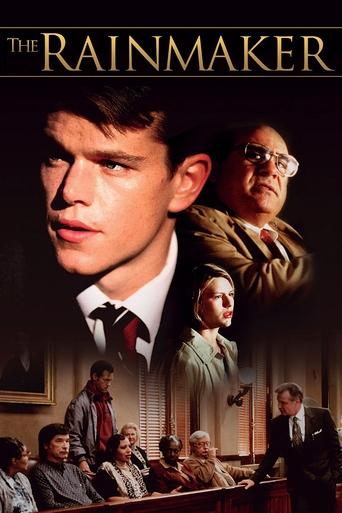
The Rainmaker
1997 · Film · 135 min
Directed by Francis Ford Coppola
Fresh out of law school and desperate for work, idealistic rookie Rudy Baylor takes on a powerful insurance company accused of denying a dying boy’s claim. Teaming up with a scrappy, unlicensed paralegal, he finds himself in a David-versus-Goliath courtroom battle that tests his ethics, courage, and belief in justice.
1 negative4 neutralfrom 5 commenters
Where to watch
No streaming data for this title.


5 comments on Hacker News
I think most people are unaware that Coppola has also directed the following: Twixt (2011), Tetro (2009), Youth Without Youth (2007), The Rainmaker (1997), Bram Stokers' Dracula (1992), The Godfather Part III (1990), Tucker: The Man and His Dream (1988), Gardens of Stone (1987), The Cotton Club (1984), Rumble Fish (1983), The Outsiders (1983), and One from the Heart (1981).
In other words, Coppola has directed plenty of bad to mediocre films after his incredible run from The Godfather through Apocalypse Now (1972 to 1979). Granted, that run was enough to forever ensconce him in Pantheon of great films directors. I think Megalopis is getting so much (undeserved press) because Coppola says its his last film and it was self financed. The trend line in his movies, however, has been negative for a long time. So, were it not for those two remarkable attributes, Megalopis would probably have come and gone with little notice, much like the rest of his since the 90s.
“allows real costs to be ignored” Economists call these negative externalities.
There are a handful of movies that involve the biggest tort litigations in the US: Erin Brockovich, Dark Water, A Civil Affair, the Rainmaker. It’s not clear that most of these businesses would exist if the actual cost of negative externalities was displayed on the accounting ledger with a dollar value.
In US healthcare (insurance), mailrooms may receive accountable mail i.e., mail pieces that can be tracked by sender (such as USPS registered mail, FedEx/UPS courier packages etc.,).
Mail is cut, opened, documents sorted, scanned and processed at the mailroom. But the paper is retained for X number of days at the mailroom facility and then Y number of days in an offsite storage facility and then disposed off through shredding. Mailroom staff move the paper that is ready for shredding into a shredding bin (that is locked; because HIPAA). Accountable mail is retained the longest (barring Legal which is even longer).
A shredding company brings an industrial heavy-duty shredder and picks up the shredding bins. A mailroom staff member unlocks the bin and supervises the onsite shredding.
That is the level of complexity that a simple deferred shredding requirement adds to a workflow.
Before you ask Why on earth are they keeping the paper? -- Remember that these are claims (and many times, claim appeals i.e., appeals against a previously denied claim; sometimes they come from lawyers on behalf of the insured); Imagine a mis-sorted document that causes an appeal to be delayed in processing. The insurance company is liable to be fined for each day of delay. Also, in case of accountable mail, the sending party has proof of delivery of the document, so if the case went to court, it is going to be a replay of the scenes from movie The Rainmaker and arguments on why the insurance company did not process the appeal decision on time.
The most interesting part of this article is that Tesla is involved. Beyond that, it's a lone wolf bad actor looking for a Rainmaker[0].
[0] https://www.imdb.com/title/tt0119978/
ACA raised the bar on the minimum level of coverage for private plans. This means that the shitty door-to-door private plans you make movies like The Rainmaker about had to increase costs to start providing actual coverage for healthcare.
You can tell because while some premiums have increased, the overall healthcare costs (including premiums) for all Americans has been reduced.