 Hacker Cinema
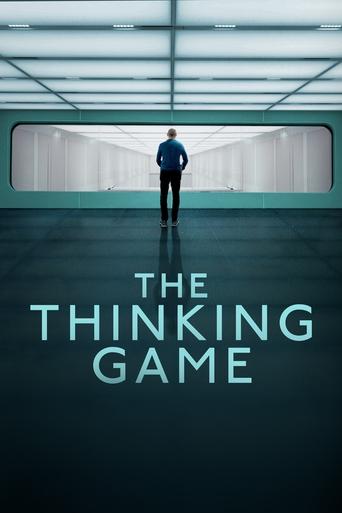
The Thinking Game
2025 · Film · documentary · 84 min
Directed by Greg Kohs
Chronicles the extraordinary life of visionary scientist Demis Hassabis and his relentless quest to solve the enigma of artificial general intelligence.
1 positive5 neutralfrom 6 commenters
Where to watch
No streaming data for this title.
Videos commenters linked
From YouTube links in the comments below. Most are clips and trailers; “Full” means the uploader says so.




8 comments on Hacker News
On the STEM side, yes no doubt he is a lot smarter than me.
But as per the documentary of his life, he is wholly focused on AGI and will remain unfulfilled if he, or indeed anyone else, doesn't achieve it within his lifetime.
https://en.wikipedia.org/wiki/The_Thinking_Game
Gift link: https://www.wsj.com/tech/ai/google-deepmind-documentary-youtube-thinking-game-732bfa06?st=edBGaA&reflink=desktopwebshare_permalink
Discussed here if anyone's curious:
The Thinking Game Film – Google DeepMind documentary - https://news.ycombinator.com/item?id=46097773 - Nov 2025 (141 comments)
"The Thinking Game" is an absolutely fascinating and inspirational documentary about DeepMind and Demis Hassabis: https://www.youtube.com/watch?v=d95J8yzvjbQ
Makes you really optimistic about the future of humanity :)
After watching The Thinking Game documentary, maybe Amazon has little appetite for "research" companies that don't actually solve real world problems, like Deepseek did.
It's from a documentary that tracks Hassabis' life. I c/p from an old comment of mine (the quotes are from the documentary, can probably look up timestamps if you need, but it's in the first ~15 minutes I'd say, when they cover the first days of Deepmind):
----
In 2010, one of the first "presentations" given at Deepmind by Hassabis, had a few slides on AGI (from the movie/documentary "The Thinking Game"):
Quote from Shane Legg: "Our mission was to build an AGI - an artificial general intelligence, and so that means that we need a system which is general - it doesn't learn to do one specific thing. That's really key part of human intelligence, learn to do many many things".
Quote from Hassabis: "So, what is our mission? We summarise it as <Build the world's first general learning machine>. So we always stress the word general and learning here the key things."
And the key slide (that I think cements the difference between what AGI stood for then, vs. now):
AI - one task vs. AGI - many tasks
at human level intelligence.
To put things into perspective: DeepMind was founded in 2010, bought by goog in 2014, the year of this "prank". 11 years later and ... here we are.
Also, a look at how our expectations / goalposts are moving. In 2010, one of the first "presentations" given at Deepmind by Hassabis, had a few slides on AGI (from the movie/documentary "The Thinking Game"):
Quote from Shane Legg: "Our mission was to build an AGI - an artificial general intelligence, and so that means that we need a system which is general - it doesn't learn to do one specific thing. That's really key part of human intelligence, learn to do many many things".
Quote from Hassabis: "So, what is our mission? We summarise it as <Build the world's first general learning machine>. So we always stress the word general and learning here the key things."
And the key slide (that I think cements the difference between what AGI stood for then, vs. now):
AI - one task vs. AGI - many tasks
at human level intelligence.
----
I'm pretty sure that if we go by that definition, we're already there. I wish I'd have a magic time traveling machine, to see Legg and Hassabis in front of gemini2.5/o3/whatever top model today, trained on "next token prediction" and performing on so many different levels - gold at IMO, gold at IoI, playing chess, writing code, debugging code, "solving" NLP, etc. I'm curious if they'd think the same.
But having a slow ramp up, seeing small models get bigger, getting to play with gpt2, then gpt3, then chatgpt, I think it has changed our expectations and our views on what is truly AGI. And there's a bit of that famous quote "AI is everything that hasn't been done before"...
> Any discussion about AGI requires a written definition of the term to have a reasonable discussion.
I agree, this is the hardest thing to pin in any discussion. What version of AGI are we even talking about?
Here's a definition / explanation of AGI from the early days of DeepMind (from the movie "The thinking game"):
Quote from Shane Legg: "Our mission was to build an AGI - an artificial general intelligence, and so that means that we need a system which is general - it doesn't learn to do one specific thing. That's really key part of human intelligence, learn to do many many things".
Quote from Hassabis: "So, what is our mission? We summarise it as <Build the world's first general learning machine>. So we always stress the word general and learning here the key things."
And the key slide (that I think cements the difference between what AGI stood for then, vs. now):
AI - one task vs. AGI - many tasks
at human level intelligence.
----
Now, if we go by this definition, which is pretty specific and clear, I think we've already achieved this. We already have systems that have "generally" learned stuff. And can do "many tasks" at "human level intelligence". Again, notice the emphasis on "general" and "learning". We have a learning machine, that takes in vast amounts of tokens (text, multimodal, even bytes at the end of the day) and "learns" to "do" many things. And notice it's many tasks, not all tasks. I think this is QED at this point.
But, due to the old problem of "AI is everything that hasn't been done yet", and the constant goalpost moving, together with lots and lots of writing on this topic, the waters are muddier today, and lots of people argue and emphasise different things in the AGI field.
> Fortunately there is a lot of practical utility without AGI
Yeah, completely agree. I'm with Simon's recent article on this one. It doesn't even matter at this point if we reach AGI or not, or who's definition we use. I get a lot of value today from these systems. The debates are moot from my point.