 Hacker Cinema
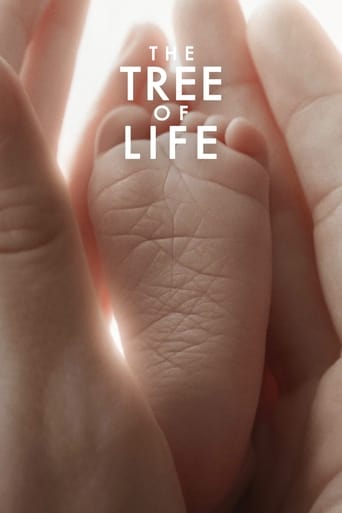
The Tree of Life
2011 · Film · 139 min
Directed by Terrence Malick
The impressionistic story of a Texas family in the 1950s. The film follows the life journey of the eldest son, Jack, through the innocence of childhood to his disillusioned adult years as he tries to reconcile a complicated relationship with his father. Jack finds himself a lost soul in the modern world, seeking answers to the origins and meaning of life while questioning the existence of faith.
13 positive8 negative3 mixed6 neutralfrom 30 commenters
Where to watch
No streaming data for this title.


33 comments on Hacker News
Thanks! Here's the full list: 2001: A Space Odyssey, 8½, Aguirre the Wrath of God, Ali: Fear Eats the Soul, All That Heaven Allows, Apocalypse Now, Ashes and Diamonds, A Woman Under the Influence, Barry Lyndon, Bicycle Thieves, Breathless, Casablanca, Céline and Julie Go Boating, Chinatown, Chinese Roulette, Citizen Kane, City Lights, City of Pirates, Contempt, Daisies, Damnation, Dishonored, Earth, Electra My Love, El Topo, Eraserhead, Eyes Wide Shut, Film Socialisme, Fitzcarraldo, Fuego en Castilla, Hiroshima Mon Amour, Holy Motors, Inauguration of the Pleasure Dome, In a Year with 13 Moons, India Song, Inland Empire, Irma Vep, Koyaanisqatsi, La Dolce Vita, La Jetée, Late Spring, L'Eau de la Seine, Le Voyage dans la Lune, Lolita, Los Olvidados, Lost Highway, Lucifer Rising, Man with a Movie Camera, Metropolis, Mirror, Mulholland Drive, Night Music, Ordet, Orpheus, Persona, Pickpocket, Playtime, Psycho, Rebecca, Rosemary's Baby, Rumble Fish, Scarface, Seven Samurai, Sherlock Jr., Singin' in the Rain, Stalker, Sunset Boulevard, Taste of Cherry, Taxi Driver, Testament of Orpheus, The 400 Blows, The Blood of a Poet, The Cabinet of Dr. Caligari, The Color of Pomegranates, The Green Ray, The Holy Mountain, The Isle, The Lady from Shanghai, The Night of the Hunter, The Passion of Joan of Arc, The Seventh Seal, The Spirit of the Beehive, The Tales of Hoffmann, The Tree of Life, The Turin Horse, Time of the Gypsies, Tokyo Story, Touch of Evil, Trans-Europ-Express, Ugetsu, Un Chien Andalou, Uncle Boonmee Who Can Recall His Past Lives, Vampyr, Videodrome, Wavelength, Werckmeister Harmonies, Wild Strawberries, Moonlight Sonata, Stellar, The Haunted House Biased toward European art cinema, experimental work, and directors who broke conventional narrative rules.
The Tree of Life is singular to me as a piece of cinema, americana and a meditation on the beauty of life and especially childhood.
When I saw it the first time, I was so awestruck by the breathtaking cinematography and the incredible music, but even more so by the vision of it all. I had simply never seen anything like it.
I saw it another 4 times before it left theaters.
Badlands and Days of Heaven are definitely his most conventional films and thus good starting points. Badlands especially is a great film, Days of Heaven is a bit uneven in terms of plot and pacing, but the cinematography is beautiful.
Then you have The Thin Red Line and The New World, which to me feel like a transitional period between the more conventional films and The Tree of Life, which is the first film that is characterized through and through by Malick's extremely divisive style. I personally love The Thin Red Line, but I can see why it's not for everyone. (I would skip The New World.) All later films have a very recognizable style, for which I think The Tree of Life is the best starting point.
Long story short: I'd start with Badlands, then watch The Thin Red Line, then The Tree of Life. If you like the last one, watch any of his later films.
I should give Malick another shot. I love film, but only first tried him when I was much younger (Thin Red Line) and don’t think I really got it.
Never tried Tree of Life or any of his more recent stuff.
Got any recommendations in the first 2-3 of his you’d suggest?
Tree Of Life is nothing short of a masterpiece IMO. Influential on me personally as my first exposure to how much editing and structure (or lack thereof) build directorial style. It left an impression on me to feel so much for a film that explicitly says so little.
Obligatory mention of that iconic low-angle shot of The Mother floating gracefully across the plains. One of the best of all time.
The 90s films mentioned in this post are works of art and the actors and creators were artists. Compensation sustains the art, but it’s not the primary purpose.
Netflix is a business. The content on Netflix is largely designed or purchased with a primary goal of engaging paying users.
We can find plenty of films that are works of art after the 90s. One Battle After Another is a recent one that comes to mind. Parasite, No Country for Old Men, Arrival, Moonlight, Tree of Life, Midsommar, Mandy…
So personally I like films that makes me feel something without that feeling being explicitly forced upon me. This is an incredible thing to achieve that only a select few directors can do. Not “baiting” the viewers into emotions but also not being cold at the same time. Just by showing and how do they show it. Like the case of “a picture is worth a thousand words”. It’s a razor thin line but that makes these films I enjoy special and sincere.
(I'll only mentions stuff from the 21st century because otherwise I'd sit here for days)
I love japanese cinema so I'm very biased towards films from there.
- The Taste of Tea (2004) from Katsuhito Ishii
- Nobody Knows (2004) from Hirokazu Kore-eda
- Tony Takitani (2004) from Jun Ichikawa
- Memories of Matsuko (2006) from Tetsuya Nakashima
- Departures (2008) from Yojiro Takita
- Still Walking (2008) from Hirokazu Kore-eda
- Tokyo Sonata (2008) from Kiyoshi Kurosawa
- One Million Yen Girl (2008) from Yuki Tanada
- Haru’s Journey (2010) from Masahiro Kobayashi
- Story of Yonosuke (2013) from Shuichi Okita
- Shoplifters (2018) from Hirokazu Kore-eda
- Drive My Car (2021) from Ryūsuke Hamaguchi
Two korean film I've really liked
- The Handmaiden (2016) from Park Chan-wook
- Pieta (2012) from Kim Ki-duk
A chinese film I've seen recently and it was pretty good
- Black Coal, Thin Ice (2014) from Diao Yi-nan
Iranian films are incredibly good and crazy what they could make despite the situation there
- A Separation (2011) from Asghar Farhadi
- Taxi (2015) from Jafar Panahi
- The Salesman (2016) from Asghar Farhadi
- There Is No Evil (2020) from Mohammad Rasoulof
- My Favourite Cake (2024) from Maryam Moghaddam and Behtash Sanaeeha
Some european films I've enjoyed
- Enter the Void (2009) from Gaspar Noé
- Leviathan (2014) from Andrey Zvyagintsev
- Alcarràs (2022) from Carla Simón
- Fallen Leaves (2023) from Aki Kaurismäki
And last but not least some actual Hollywood films that I think are pretty good
- The Tree of Life (2011) from Terrence Malick
- Cloud Atlas (2012) from Lilly Wachowski and Lana Wachowski
- First Reformed (2017) from Paul Schrader
- Nickel Boys (2024) from RaMell Ross
The Tree of Life was one of the only films I’ve ever considered walking out of, I hated every moment of it. I’m delighted to hear you were spellbound by it.
I think I loved everything about The Tree of Life except for the scenes with Sean Penn. Whatever mysterious antipathy the girl behind you in the cinema felt for the movie, I felt for Sean Penn. The kind and probably accurate interpretation is that actors are at the mercy of their directors and editors in movies like this, but his scenes don't feel like they're part of the same movie.
I watched Tree of Life in the cinema. I was spellbound. It spoke directly to me, no mental processing of a story, I was tuned to this film. I didn't feel its time. As the film ended a girl behind me said to her friends 'this was the biggest piece of shit I have ever seen'. I understood her and it was a perfectly fine opinion. She didn't 'get it', but it didn't have to do with taste or intelligence or anything like this. She was just not able to receive it - as if it was a signal sent she could not process.
Our wedding rings have these words from the film engraved: 'unless you love, your life will flash by'. We married late - our kids were already almost at school. The love in the words is about the love of your family, just like in the film.
And why the Thin Red Line is perfect - just view the "Swing Scene" as a work of religious art: https://www.youtube.com/watch?v=s40YpEsVkxk The inner monologue of Ben Chaplin's private Bell about what the role of love is when you encounter war, asking 'Who lit this flame in us' is a visual prayer.
(And yes, this is Miranda Otto, aka Eowyn)
I saw Megalopolis and loved it. Mind you I went in knowing that it was apparently a $100 million Neil Breen flick. That only made me want to see it more though, since I've sat through all of Neil Breen's movies in awe of how bad they were.
Hard for me to call Megalopolis bad though.
It's operatic and impressionistic. People keep asking what it all means, I've never thought you had to know what a movie means to enjoy it.
Something like Southland Tales, meets Tree of Life, meets Neil Breen.
(That maps shows that film location and many others, almost all right off Highway 101:
E.T. (1982), Outbreak (1995), The Tree of Life (2011), The Majestic (2001), After Earth (2013), the canoe chase scene from Last of The Mohicans (1936)...
It's always nice to see a list which includes movies I haven't watched or heard of. Alas I suspect many are hard to find now, the streaming services don't show much interest in picking up the classics.
My sub-list:
Film I'm pleasantly surprised to see in the top 10: Mulholland Dr.
Film I'm not going to complain about: 2001. It's impact can't be denied even if the last bit drags
Film I'm happy to see recognized: Yi Yi
Films I found underwhelming:
-- Melancholia
-- Tree of Life
Films I'd forgotten about that I now have to watch again:
-- Dr. Strangelove
-- Playtime
-- Yi Yi
-- 8 1/2
Film I would have ranked higher: The Third Man
I watched it at home, so I didn't walk out technically, but I also turned off "Once Upon a Time in Hollywood". The only movies I've physically walked out of have been "The Departed" and "Tree of Life". I don't think it's a big deal to bail on something you're not enjoying, but have given a best effort to get into.
Totally in agreement. The Thin Red Line is possibly my favorite film of all time, while I hated The Tree of Life; except for that awesome creation segment. And I also loved A Hidden Life.
The Thin Red Line is one of my top films, and I walked out of The Tree of Life. Only afterwards did I realize they were directed by the same guy. And then this spring I saw A Hidden Life. I thought it was absolutely fantastic. I plan to rewatch The Tree of Life to see if I like it better than first time. Perhaps I was not in the mood for that type of movie that particular evening.
I need to watch Solaris and Stalker.
Tree of Life was one of my favorite film experiences ever, but I wouldn’t care to watch it again.
I’m curious - why did you feel like Tree of Life was incomprehensible?
I think we have to agree to disagree; I found The Tree of Life (the only Malick movie I've managed to finish) to be a boring, incomprehensible mess of a movie, while Solaris and Stalker have been, in my opinion, somewhat interesting things.
They made that movie. It's called Tree Of Life and it sucks.
Malick isn't the best example here. Tree of Life was made for around $30 mil and his most recent, A Hidden Life was made for in the vicinity of $8 mil. In the context of our current blockbuster climate where the latest Bond movie costs upwards of $300 mil to make, I wouldn't call Malick's films "big expensive movies," and I certainly wouldn't compare it to Coppola's $120 mil+ price tag. Hollywood has shown that it will only give that kind of money to films that fit a strict, suffocatingly rigorous formula (i.e. existing IP, car chases, explosions, world-saving heroes, etc). It most certainly will not fund a project to the tune of seven figures based on an original idea that has been described as “a love story that is also a philosophical investigation of the nature of man.” If you don't have a remake or reboot of an existing IP, you're not getting funded, period.
Also Malick is a consistent awards contender in years where he releases a movie. Tree of Life is one of the most critically acclaimed films this century and studios like to invest in critical prestige when they can, given a reasonable budget. His movies also generally make their money back. This is also why networks will let TV shows like Crazy Ex Girlfriend and The Americans go on towards a natural conclusion, instead of canceling immediately, even if viewership is low. Coppola simply does not have that reputation anymore. In fact, I think he lost it all the way back in the early 80s. After Apocalypse Now, he failed to make a movie that captured unanimous critical favor like his string of hits in the 70s. Four of his last five movies have been largely panned. His 1996 flop, "Jack," is one of the worst movies I've ever seen and a lot of other critics agreed. A movie like that typically ends careers. He does not have the cachet to warrant an investment of $120 mill on an idea that appears at first glance to have dubious mainstream popular appeal. With that said, I would certainly see it.
Uh, why not The Tree of Life?! One of the most incredible movies ever made. I thought To The Wonder was comparatively nothing at all.
Definitely give The Tree of Life another go, and watch Malick's older films too - they are wonderful. Avoid all of his most recent films unless you're feeling very, very meditative (I slept extremely peacefully through the last third of Knight of Cups, I will say).
I once saw Tree of Life, totally on a whim, no knowledge at all, bought a ticket when passing the cinema during an evening walk.
I left the movie in the middle. I thought it so bad, but fascinatingly bad. Well at home I found out it was directed by same director as The Thin Red Line, one of my favorite movies. Since then I have been puzzled, I really should give Tree of Life another chance.
I don't know about you, but I'm somewhat fascinated by these opinions! I mean, if Inception and Interstellar are "juvenile", what possible vocabulary do they have left for all the superhero films we now have in the cinema?!
In all seriousness, of course Inception and Interstellar are very different films to 2001 (just as 2001 is very different to Kubrick's other films, really), and made I think for a very different audience. There actually aren't all that many films that can easily be compared to 2001 - Tarkovsky's Solaris and Stalker are probably as close as you're going to get, and both of those are, relatively, only a little more recent. Malick's The Tree of Life isn't quite a sci-fi film, but always feels to me like a very good companion to 2001.
Perhaps the reason you won't really see much like 2001 ever again is that modern audiences, on the whole, just can't really cope with it - the pacing is regarded as risible and the ambiguity is too much intellectual effort.
I think "difficult" is the wrong word. I think "challenging" is a better one.
In many cases, books (and other forms of expression/art) are acclaimed for being difficult -- but they're difficult for the sake of being difficult. There's difficulty but no reward. After having read some of these books (or attempted to), I think they're pointless.
However, we do need challenging books/art. Challenges are how we grow, develop, improve, etc. Something can be challenging without being difficult/impenetrable.
Also, challenges come in various forms: they can be stylistic (difficult prose) as well as moral or intellectual or political. (One common complaint I hear about fiction is: "I don't like the characters." Well, yeah, that's sort of the point: you probably wouldn't like a lot of people if you knew them.)
Some concrete examples:
Novels:
Joyce's Ulysses: I actually really like Ulysses. As a whole, it's a slog. But there are wonderful passages throughout. It's also very funny.
Wallace's Infinite Jest: same as above, often even funnier as the humor is more contemporary.
Films:
Malick's The Tree of Life: a wonderful, slow, all-encompassing film that doesn't rely on the conventional approach to narrative
Thanks for this.
The essayist seemed to want a very different film. He wanted one that challenged its audience more directly with the childhood id (as he put it, presenting the audience with the "Big Fuck You"), and that had a more complex and unexplainable range of emotions on the part of both the kid and the adults. In this way, the OP claims, the film spent its time in the shallow end of the pool. (I have to agree.)
But, it was a kids movie. As an adult, I can view it as not risking much, but my 9-year-old was very anxious in several parts of the movie. It was a real emotional ride for her. On its own terms, the movie succeeded very well.
Malick's "The Tree of Life" (mentioned several times in the OP) also succeeded, but also was a flawed film, especially so for a non-believer like me. My wife cannot abide pretense and was giggling through the big bang/dinosaur sequence of TTOL.
TTOL and Inside Out are odd movies to put next to each other; one being so determinedly beautiful and almost too personal and idiosyncratic, and the other trying to enact universal emotional states for children.
I don't think the author expects children to enjoy The Tree of Life; I think he just believes it's possible (if difficult) to write a film for children without losing its subtlety.
"The very notion of what’s appropriate for children looms over any consideration of a movie intended for children."
This is the author's justification for why he's critiquing the film. I disagree, personally, because he himself is not a child. I doubt any child would enjoy "The Tree of Life".
Malick is the director for "The Tree of Life", another movie about a child's inner life that the author contrasts "Inside Out" to in the article.
I wouldn't say he expected any different; I think he just loathes the fact that these "kid's movies" are, as you called them, simple, or better yet, simplistic.
He thinks the movie does a disservice to kids by presenting what is, in his opinion, a distorted and sugar-coated representation of mental life and motivations.
Essentially, he thinks that a good movie would pass to viewers what Malick's Tree of Life does about the inner life of children (feelings of wonder, the need to act out for its own sake, the deception ones does for others and even oneself, etc) in a way that would appeal to kids.
(By the way, this is just what I understood from the review; I haven't seen Inside Out)
While i don't disagree with you, I'd like to share something that recently struck me.
Although I hated the film Tree of Life, there was a pertinent line that has resonated with me since.
"The nuns taught us there were two ways through life - the way of nature and the way of grace. You have to choose which one you'll follow."
"Grace doesn’t try to please itself. Accepts being slighted, forgotten, disliked. Accepts insults and injuries. … Nature only wants to please itself. Get others to please it over them. To have its own way."
The penny dropping moment is when you question nature "goodness". Nature is often perceived to be "the pure way", but we often forget that the pure way can be brutal and unforgiving. Nature is the route of the shortest path, highly optimised to survive and flourish often at the cost of others and without compassion. Grace balances nature.
Some of that is quoted from The Imitation of Christ by Thomas à Kempis (see Book 3, Chapter 54):
http://www.leaderu.com/cyber/books/imitation/imb3c51-59.html#RTFToC290
You don't actually have a problem with movies using formulas, you have a problem with them feeling formulaic. (Chances are.)
Formulas exist because, when followed properly, they work. For the casual movie viewer, I'm sure that 90% of your favorite movies adhere to this structure, more or less. That, alone, won't cause your movie to feel bad.
There are countless other variables that affect whether or not a movie feels formulaic but, very roughly, I'd suggest that it's when a writer/production team feels like the formula -alone- is enough, that it should work. The beats are just there, but there's still no pulse.
IMHO, this summer, Fast Six nailed the beats perfectly, and people walked away mostly satisfied. Man Of Steel didn't, people were unhappy. Most Pixar movies are lockstep with this structure. Few people gripe about the formulaic pixar movies.
You could probably convince me that movies, as an artform, are more or less built for this structure in the same way that sonnets have a particular rhyme scheme. Sure you can make other kinds of poems, but if the audience really likes sonnets, what's the point? I think the average movie-goer really likes Sonnets, so to speak. And there's nothing wrong with that. Not everyone has seen enough movies to develop an appetite for The Tree of Life.
Note: I've read Save the Cat, have studied screenwriting at a graduate level, and have a (very humble) IMDB listing. So consider this my 2.1 cents worth.
It may also be your movie tastes differ from his too. Right now I am noticing basically two groups of people (not correlated to age): one group which enjoys the effects, 3D, epicness... and the other which is disillusioned with today's movies (ie yay another movie where I watch CGI dudes shoot around and then get a 3D fly-over the battle-field every 5 seconds).
I think there is something to be said for the funneling of movie budgets into a few MASSIVELY costing movies (ie per the Spielberg interview that was posted on HN last week). I, myself, enjoy a good "Dark Knight", but also something like the King's Speech or The Tree of Life. The question is whether both can keep being made for their respective budgets, and both in film vs other media.