 Hacker Cinema
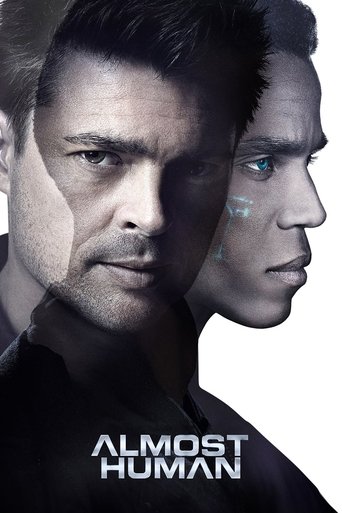
Almost Human
2013 · TV series · 1 season
Created by J. H. Wyman
DramaCrimeScience FictionFantasyActionAdventure
The year is 2048. By mandate, every cop must partner with a robot. Detective John Kennex returns to work after waking up from a 17-month coma. As he adjusts to working with his new partner, Dorian, a discontinued android with unexpected emotional responses, John also must learn to get along with his new colleagues.
4 positive1 negative8 neutralfrom 13 commenters
Where to watch
No streaming data for this title.

14 comments on Hacker News
I agree with you. Star Trek TOS only had two good seasons. Season 3 was widely panned. And it still spawned a massive franchise.
Plus there have been dozens of one-series sci-fi shows (Almost Human, Terra Nova, Space:Above and Beyond, etc.) and none have the same pull as Firefly.
Almost Human - SPOILER
Maybe we'll all need a face changer like that used in Almost Human, season 1, episode 3.
The TV series almost human.
Its near future cop series about the effects of technology. Got a slight cyberpunk feal. I liked it a lot but unfortunately it was canceled after one season.
Shows are expensive to make period it just depends what is your "catch", drama's can be also very expensive to make especially historical ones Broadwalk empire has nearly the same budget as GOT, Rome (the HBO & BBC one) was the most expensive show ever made besides friends which had a budget of over 10M$ per episode because much of the cast was being paid over 1M per episode.
It's not always the budget it's also the production Firefly managed to make very good use of VFX with relatively "small" budget, BSG didn't had an explosive budget either, Star Gate had also a relatively small budget with the VFX heavy episodes having less than 400,000$ effects budget they just used it rather well.
On the other hand you can have very high budget shows looking like B-movie quality, Terra Nova, Falling Skies and Fox's attempts at scifi Almost Human (which was a freaking amazing show and Fox exec's need to pay in blood) and their current Minority Report shows are very expensive but have very low quality looking effects.
And if you want the best example of how budget can easily be misused well then Agents of Shield had a 14M budget for the pilot and even the per episode budget was considerably lower it was still pretty damn high and they still managed to completely cock it up both in the visuals and the story/plot departments.
IF they'll build a solid production team hopefully there are some folks at Paramount Television that worked on previous shows and are still either alive and or working in TV production and give them budget and creative freedom to work then we might get a good product, if this is going to be brand managed like AOS then it's going to be completely bonkers.
AOS is tethered to the cinematic Marvel's universe and it's it's biggest flaw, it's plot is completely dictated by the movies and it spoiled Cap 2 for me and just became a running joke.
Agent Carter was considerably better because it was set back enough in the past that they can do anything without having to tie it in with the movies.
And this is my biggest must have for this show, either put it in the original canon, reboot it again, or throw it so far away from the movies that it couldn't touch them with a 10 foot pole or don't make it at all.
I'm not normally one to jump on the "it's the media" bandwagon, but it's unusually true in this case, although not in the way you present it. I think that shows and movies have show "the good guys" using torture more and more frequently, and this has actually changed our perception of right and wrong.
(For example: 24, Almost Human, Batman...almost too many to list. It's funny to watch the second Rambo movie and ask yourself if there's any difference at all between the russians in afghanistan in the 80's and the US there in the 00's.)
an episode of Almost Human had 'anti-camera spray' that did this, as well. maybe a comic was based on that?
> more reliable biometric based ID
> Privacy as we knew it is dead
I wonder if the next round of physical criminal technology advances will be about shielding and forging identities, using fake fingerprints (3d printed, perhaps), fake contacts (again, perhaps 3d printable?), fake faces (again, perhaps 3d printable, plus makeup?), fake gaits/comportment (which can be disguised or imitated, with enough practice).
And where that's not practical, like DNA evidence at crime scenes, there will be countermeasures. The second episode of Almost Human comes to mind, with its passing mention of "DNA bombs" that shower a room with what I expect was imagined as lots and lots of dna snippets, or perhaps rapid-growing bacteria or fungi with many engineered variants of human STR loci to FUBAR PCR analysis.
Or alternatively spread so much random DNA around the crime scene that its impossible to sequence all the samples. Reasonable doubt in a can.
(I think 'Almost Human' had something like this in one of the episodes)
Reading this, I totally expected it to be featured in a future episode of Almost Human ... and then I remembered it was canceled and I had a sad :(
I wonder if this works for TV shows.
I know plenty of people who like all/most of Firefly, The Sarah Connor Chronicles, Dollhouse, Defying Gravity, Almost Human, etc.
All shows that got cancelled after a season or two because they failed to attract a wide enough audience.
Of course. Though I wonder if this pattern will change when it comes to the kinds of implants talked about in the article.
As an aside, I'm reading a book (Open Veins of Latin America) and it starts out with the history and how the Spaniards barely needed to do anything to wipe out the Amerindians since there was such a wide gap in weapon technology (plus bacteria) between them.
An implant which literally makes you a better human might be kept highly priced, like a Ferrari, which doesn't come down in price after a few years.
If anyone wants to see this mostly played out in a tv show, Almost Human (episode 10) introduces the notion of "chromes" who are genetically enhanced humans. Inherently better than regular humans, the show has them preferring their own company rather than mixing with regular folk. I'm hoping they'll expand on the concept in further episodes.
But you see, it's not a problem at all ... at least, in the grand scheme of things. Every person that sees bitcoin in that checkout screen is going to say, "what the heck is bitcoin?"
Then the next time they hear about bitcoin (like say, on the hit TV show Almost Human http://www.youtube.com/watch?v=k8LqlMzEe-I), they'll say, "oh, I've heard of that before, I wonder what it's about". And so on and so on. You're doing a service :)
So I'm watching this new show "Almost Human." its about a future where technology destroys the traditional CSI techniques (e.g. DNA bombs to wipe out DNA evidence), and police are "forced to respond" with synthetic human police. So you have a cop that can go into a business and just download all the documents on their network without touching anything. At one point the synthetic cop asks his human partner "we don't need a warrant for this?" And the partner is like "I didn't think so either." The point of the joke is that the robot wants to follow the warrant requirement, because its a rule, but the human cop knows that its okay to break the rules when the bad guy could get away.
So no, not everyone opposes mass surveillance. Just watch some movies. Since the time of westerns there's been this deep seated idea that procedural protections are optional when a bad guy could get away. This is not a failure of democracy. This is a non-democratically designed procedure being eroded by democracy.
This was the key theme of only the second episode of the new cop drama Almost Human. I agree with you. However, I think there is a more immediate market in industry, and one that doesn't require nearly as complex robots.