 Hacker Cinema

True Lies
1994 · Film · 141 min
Directed by James Cameron
A fearless, globe-trotting, terrorist-battling secret agent has his life turned upside down when he discovers his wife might be having an affair with a used car salesman while terrorists smuggle nuclear war heads into the United States.
4 positive2 negative14 neutralfrom 20 commenters
Where to watch
No streaming data for this title.
21 comments on Hacker News
True Lies as well! I noticed last week the print on AppleTV in 4k had a lot of GenAI artifacts in it (things being optically impossibly sharp, skin detail).
I looked and yes, it was processed around 2022. I’m sure if they tried again with better models it would be better. Is that the future of film preservation?
The source I read also said that the fucking DVD remains the best available copy of True Lies.
It's a similar thing to watching movies from before the mid-2000 (I place the inflection point around Collateral in 2004) where after that you get overly dark scenes where you can't make out anything, while anything earlier you get these night scenes where you can clearly make out the setting, and the focused actors/props are clearly visible.
Watch An American Werewolf in London, Strange Days, True Lies, Blade Runner, or any other movie from the film era all up to the start of digital, and you can see that the sets are incredibly well lit. On film they couldn't afford to reshoot and didn't have immediate view of what everything in the frame resulted on, so they had to be conservative. They didn't have per-pixel brightness manipulation (feathering and burning were film techniques that could technically have been applied per frame, but good luck with doing that at any reasonable expense or amount of time). They didn't have hyper-fast color film-stock they could use (ISO 800 was about the fastest you could get), and it was a clear downgrade from anything slower.
The advent of digital film-making when sensors reached ISO 1600/3200 with reasonable image quality is when the allure of time/cost savings of not lighting heavily for every scene showed its ugly head, and by the 2020's you get the "Netflix look" from studios optimizing for "the cheapest possible thing we can get out the door" (the most expensive thing in any production is filming in location, a producer will want to squeeze every minute of that away, with the smallest crew they could get away with).
The Abyss is a movie by James Cameron, who also made Terminator, Terminator 2, Aliens, True Lies, Titanic, and Avatar.
"The Abyss" is about a deep sea crew that encounters ... aliens...?
And yes, in general, I recommend The Abyss. It's definitely not the same as Project Hail Mary, but it does have similarities.
https://www.imdb.com/search/title/?title_type=feature&release_date=1994-01-01,1994-12-31
Pulp Fiction
Lion King
The Mask
Four Weddings and a Funeral
Dumb and Dumber
The Crow
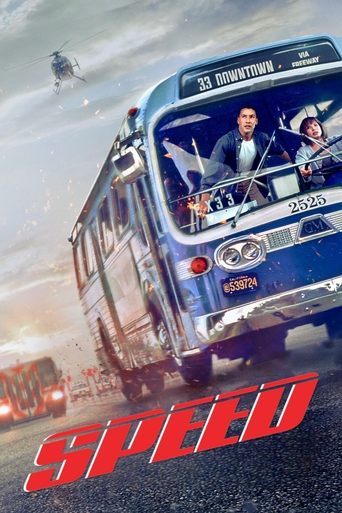
Speed
True Lies
Interview with the Vampire
Natural Born Killers
Ace Ventura
Stargate
Clerks
The list goes on. Lot's of movies that turned out to be classics or cult classics, or the start of some great careers.
What does "modern levels of image quality" mean in this context?
The article is about AI upscaling "True Lies", which was shot on 35mm film. 35mm provides a very high level of detail -- about equivalent in resolution to a 4k digital picture. We're not talking about getting an old VHS tape to look decent on your TV here.
The differences in quality between 35mm film and 4k digital are really more qualitative than quantitative, such as dynamic range and film grain. But things like lighting and dynamic range are just as much directorial choices as script, story, any other aspect of a film. It's a visual medium, after all.
Is the goal to have all old movies have the same, flatly lit streaming "content" look that's so ubiquitous today?
I think the argument against "isn’t there space for people who just want to see the story but experience it with modern levels of image quality" is that such a space is a-historical -- It's a space for someone that doesn't want to engage with the fact that things were different in the (not even very distant) past, and (at the risk of sounding a bit pretentious) it breeds an intellectually lazy and small-minded culture.
Works where archive.is is blocked:
https://web.archive.org/web/20240413093536if_/https://www.nytimes.com/2024/04/13/movies/ai-blu-ray-true-lies.html
I recently watched the new Aliens remaster and actually thought it mostly looked very good. It was definitely a bit jarring at first because it doesn’t look like an 80s movie anymore: it’s too crisp. But once I got over the strangeness of it and realized some of my attachment to the original look was nostalgia I liked it. I do wish they’d kept more film grain, it’s a little too cleaned up, but it looks good nevertheless.
From what I’ve read the same team did all these Cameron remasters, and True Lies was the first one so they were still figuring some stuff out and it’s more flawed as a result. Haven’t seen it yet, though. But based on Aliens I’m interested in rewatching The Abyss.
This works a bit https://web.archive.org/web/20240414193245/nytimes.com/2024/04/13/movies/ai-blu-ray-true-lies.html
True Lies was shot by cinematographer Russell Carpenter (Titanic, Avatar: The Way of Water) on 35 mm photochemical film (in Super-35 “common top” format, with Eastman EXR 50D 5245, EXR 200T 5293, EXR 500T 5296 stocks) using Arriflex 35 BL4, 35 IIC, and 35-III as well as Moviecam Compact cameras, along with Zeiss Standard Speed, Super Speed, and Cooke Varotal lenses. Visual effects were also filmed in VistaVision format. The film was then finished photochemically in the 2.39:1 aspect ratio for theaters (which included 35 mm anamorphic blow-up release prints, as well as 70 mm blow-ups).
For its release on Ultra HD, Lightstorm, working with Park Road Post, has built a new 4K Digital Intermediate using recent 4K scans of the original camera negative (confirmed per Lightstorm). This footage has been “optimized” by Park Road’s proprietary deep-learning algorithms. Photochemical grain has been greatly reduced, though not eliminated entirely, while fine detail has been “enhanced” algorithmically. There are also occasional shots throughout the film that appear to have had a bit of old-school noise reduction applied, but it’s hard to be sure if it’s actual DNR or simply just that the Park Road process has been a little too heavy-handed in places.
True Lies is a 1994 release. On what assumptions do you base the idea that the theatrical release cut has been already lost and that there is only "raw film plate footage, without any of the post production work"? True Lies was printed in 70mm and was especially known for its image quality, compare the quote below. (Where do you get the 2K from?) Also, 70mm film should have more information than 4K digital video.
> Both Cameron and Carpenter maintain that those prints — struck in both 35mm and 70mm — are among the finest they have ever produced (release prints were handled by Deluxe, while CFI provided interpositives and dailies). The filmmakers reserved special praise for the quality of the 70mm prints, which were blown up from the 35mm negative. Cameron reports that his past attempts to strike 70mm prints from 35mm negative have been satisfactory but hardly spectacular. "The 70mm prints of this film are shockingly great in terms of image quality," he states. "This is the fourth time I've printed in 70, and it's the first time that the 70 prints have looked substantially better than the 35s. The 35mm prints of True Lies are very good, but the 70s look like IMAX by comparison. We ran tests side by side, and it was no contest."
https://theasc.com/articles/true-lies-tests-cinemas-limits
True Lies was a huge hit and an Arnold movie. I’m 100% sure they have tons of 35mm copies of the whole movie, and the original negative. It would be insane if they didn’t.
By the time True Lies came out home video already existed, so Hollywood had learnt about the long tail of movies in home release.
The kind of movies we don’t have good prints for are usually either obscure, so nobody wanted to pay to keep everything in good condition, or somehow damaged, or like you said, not good films stock or just old enough damage happened.
An additional thought regarding Up-scaling: Until about 7 years ago, almost all digital VFX (including on True Lies and Titanic mentioned in the article: done by Digital Domain at the time) for film was still being rendered/delivered at 2K (other than occasional larger format things like IMax), so it's almost certain that in the 90s/2000s, while the plate footage on film might in theory have been very high resolution if scanned (if the film stock was good enough), the VFX delivered for it will have been only good enough for 2K resolution as that's what it was rendered/delivered at originally.
So anything "requiring" a 4K release would almost certainly have had to have been up-scaled, unless the studio managed to get the original VFX vendor to re-render/comp and deliver 4K footage which I've heard of happening in a few cases (Star Wars re-releases, some Pixar stuff), but other than that isn't generally done and the VFX can only be upscaled from the "original" delivery.
Sigh. I haven't seen the True Lies transfer so I won't comment on that. But I have to take issue with that 4k 60fps clip ("The lumiere family goes on a trip 1895") and They Shall Not Grow Old.
The author calls both "disgusting" and "really fucking bad". I'm sorry, but I think they're both incredibly impressive feats of engineering and super impressive. Both films have done something which is otherwise impossible with original, grainy, out-of-sync b & w footage: Given us viewers a sense of immersion and realness that we'd otherwise be unable to experience.
None of us know what it was like to see the world of 1895 or 1914. And grainy black and white footage doesn't change that. But 4k 60fps footage gives us a true sense of "being there" and in that reality and I think that's damn incredible (and I'm thankful for it).
I think the author err'd using documentary footage as an example of what's bad about this. Taking an old film (a piece of art) and upscaling it is one thing. Taking real-world footage and making it more real is another thing entirely.
True lies, it was missing for a long time. DVD and the high seas were the only option. Great film.
I've never met anyone who considered James Cameron to be other than a blockbuster factory. Aliens, the Abyss, True Lies, writing the second Rambo film... who the hell would be surprised that James Cameron was involved with a Terminator movie?
Aside form that, Terminator 2 not only isn't Cameron's best effort, it's not even the franchise's best effort. It was the beginning of "to hell with making sense, look at these explosions," which got worse with each passing film, and better in the Sarah Conner Chronicles.
Most of Cameron’s older movies hold up very well. Aliens is still fun, tense, and well-paced. Even True Lies is still fun.
I think Cameron’s secret weapon is the camerawork and editing. He really lets the camera breathe and has an incredible sense of “beats” for every cut.
So, I mean, I know that not everyone loves The Lord of the Rings movies. But I just need everyone to remember that Peter Jackson did them. And I mean, I thought Heavenly Creatures was really interesting, and I think I'm one of the dozens of people who really liked The Frighteners (yes, I'm a hipster Frighteners fan.) But if you'd asked me, "Viking, should we trust Peter Jackson to make 11 hours and 21 minutes of The Lord of the Rings (extended editions)?" I would have said, "No," and I would have, in my humble opinion, been totally completely wrong.
I mean, I just need to remind people that great movies exist. LA Confidential. The Matrix. Hell, even the Fugitive is a lot of fun (for what it is.) Mr. Robot is simultaneously amazing and also boring as shit for huge stretches - but man, they committed to that vision, and when the big moments hit, they hit hard. True Lies. True Romance. The Abyss. The Fisher King. Good Will Hunting. Inglourious Basterds. Hell, even Hackers. And Sneakers.
I think Daemon and Freedom could be done wonderfully.
Just imagine ending the series with a nice cackle...
"I do so enjoy my vork..."
Counterpoint is action movies where the conflict with the villain is not the primary conflict. e.g. True Lies; sure there's some terrorist stealing nuclear bombs, but that's not what the audience cares about.
Along those lines, it's low-key fascinating for me to see unintentional 9/11 imagery in pre-9/11 movies. Look at something like True Lies, which treats a terrorist attack and a plane destroying a building as lighthearted action movie fare.
You never see that kind of imagery treated so flippantly after 9/11. 2000s movies with 9/11 analogues (War of the Worlds, Munich, Cloverfield, etc.) deal with it mostly indirectly and always as deep-set trauma.
https://en.wikipedia.org/wiki/List_of_entertainment_affected_by_the_September_11_attacks
I don't see the moral problem this article hints at. The film is rated PG-13, not the concept of Avatar or the merchandise.
And given the comments about True Lies any subversion of the rating system sounds like a great thing. Obviously otherwise excellent movies are being made into mediocre crap so that they can reach a wider audience and rake in more money.
(feel free to downvote at will ...)
my trollish reply to everyone who has been analyzing the heck out of Avatar in the past week has been: "it's a friggin' ACTION movie, that's all! enjoy it as that, and don't expect more!"
james cameron was the guy who brought us the Terminator movies, True Lies, and a few other great heart-pounding action movies of the 80's and 90's (Titanic was an outlier for him ... it was far different than any other movie he had done). nobody was over-analyzing the geo-political realism or marital relations in True Lies.
the man is an action filmmaker. his movies should be compared to other big-budget Hollywood action films (e.g., transformers, bourne movies), not to deeply profound works of sci-fi/fantasy art like LOTR, Neal Stephenson novels, etc.