 Hacker Cinema
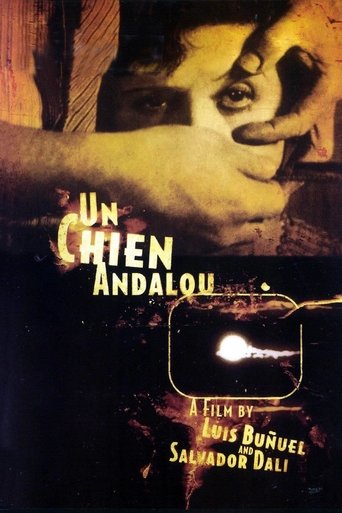
Un Chien Andalou
Un chien andalou
1929 · Film · short · 17 min
Directed by Luis Buñuel
Un Chien Andalou is an European avant-garde surrealist film, a collaboration between director Luis Buñuel and Salvador Dali.
2 positive8 neutralfrom 10 commenters
Where to watch
No streaming data for this title.


10 comments on Hacker News
Thanks! Here's the full list: 2001: A Space Odyssey, 8½, Aguirre the Wrath of God, Ali: Fear Eats the Soul, All That Heaven Allows, Apocalypse Now, Ashes and Diamonds, A Woman Under the Influence, Barry Lyndon, Bicycle Thieves, Breathless, Casablanca, Céline and Julie Go Boating, Chinatown, Chinese Roulette, Citizen Kane, City Lights, City of Pirates, Contempt, Daisies, Damnation, Dishonored, Earth, Electra My Love, El Topo, Eraserhead, Eyes Wide Shut, Film Socialisme, Fitzcarraldo, Fuego en Castilla, Hiroshima Mon Amour, Holy Motors, Inauguration of the Pleasure Dome, In a Year with 13 Moons, India Song, Inland Empire, Irma Vep, Koyaanisqatsi, La Dolce Vita, La Jetée, Late Spring, L'Eau de la Seine, Le Voyage dans la Lune, Lolita, Los Olvidados, Lost Highway, Lucifer Rising, Man with a Movie Camera, Metropolis, Mirror, Mulholland Drive, Night Music, Ordet, Orpheus, Persona, Pickpocket, Playtime, Psycho, Rebecca, Rosemary's Baby, Rumble Fish, Scarface, Seven Samurai, Sherlock Jr., Singin' in the Rain, Stalker, Sunset Boulevard, Taste of Cherry, Taxi Driver, Testament of Orpheus, The 400 Blows, The Blood of a Poet, The Cabinet of Dr. Caligari, The Color of Pomegranates, The Green Ray, The Holy Mountain, The Isle, The Lady from Shanghai, The Night of the Hunter, The Passion of Joan of Arc, The Seventh Seal, The Spirit of the Beehive, The Tales of Hoffmann, The Tree of Life, The Turin Horse, Time of the Gypsies, Tokyo Story, Touch of Evil, Trans-Europ-Express, Ugetsu, Un Chien Andalou, Uncle Boonmee Who Can Recall His Past Lives, Vampyr, Videodrome, Wavelength, Werckmeister Harmonies, Wild Strawberries, Moonlight Sonata, Stellar, The Haunted House Biased toward European art cinema, experimental work, and directors who broke conventional narrative rules.
In the US, a random/personal selection of major works that will be public domain are:
* Ernest Hemingway's novel "A Farewell to Arms"
* Ludwig Wittgenstein's essay "Some Remarks on Logical Form"
* The first part of the 14th edition of Encyclopædia Britannica
* William Faulkner's novel "The Sound and the Fury"
* René Magritte's painting "The Treachery of Images"
* Wassily Kandinsky's painting "Upward"
* "Un chien Andalou", directed by Luis Bunuel and cowritten by Salvador Dali
* "The Cocoanuts", the first film of the Marx Brothers
* the first "Silly Symphony" cartoons, including "The Skeleton Dance".
Not a bad year at all!
This is nice.
Sometimes I watch a movie or TV show with the TV sound turned off and a Spotify playlist playing on my speakers or headphones. This works great with old black and white movies, but also with absurd comedies or cult movies you've watched a number of times with the sound on.
Actually one of my weekend project ideas was to create a community-curated library of movies/episodes with Spotify playlists that go well with it.
For example "Un Chien Andalou" (a french silent b/w short film from 1929) goes well with Hemelbestormer - Portal to the Universe (post-metal album).
Possibly combined with some THC for an even more immersive experience.
Wasn't the razor blade slicing an eyeball originally from a 1929 French movie called "Un Chien Andalou"?
Source: https://www.straightdope.com/columns/read/1959/in-un-chien-andalou-is-a-real-eyeball-being-sliced/
I feel compelled to speak up on behalf of Un Chien Andalou.
You know that scene, right at the very beginning, where an unseen person strops a razor before the famous slicing with it? Four strops are given four shots, alternating angle with side of the razor. The woman's eye is your own. This film with its technique will open up the metaphorical eye of your perception of it, suggesting unknown and even unknowable things.
Now, I won't argue that Dalí or Buñuel did or didn't achieve that. My knowledge of the subject is sparse in comparison to others'. But I would say that the opening scene (by itself) qualifies as one of the most sophisticated, novel and ambitious prologues/invocations humanity has generated. I'd further posit that that knowledge should raise one's priors for suspecting dense meaning in the rest of the work, knowing nothing else.
Edit/Afterword: I'd also argue that Lynch's absurdities and nonsense are not intended to frustrate the viewer, or if so it is only true inasmuch as frustration is a signal to loosen assumptions in terms of what you are watching--to parables and dreams have a deep logic to them, in that they use symbol and association to convey felt perceptions, understandings and beliefs.
I get that the complaint is that at some point people start replicating the form without being motivated by (what one perceives as) artistic genius. But that issue, of an initially straightforward and perspicuous intent generating works of great meaning which are in time stripped of their most attractive aesthetic attributes in culture's great scrapyard, is endogenous to this society of ours. It doesn't make those aesthetic qualities bad, and it certainly doesn't need to poison the value of their source (whether it does or not is up to the beholder). Yet it is understandably easy to grow jaded in a world where aesthetic competency is almost totally uncorrelated from rational/conceptual merit.
> He talked more about encoding, not compression.
Not really. Call it what you want, but the claim was that you could fit many movies in the same space as one small one (by today's standards), presumably based on similar content shared across multiple movies. Suppose I record a movie of me walking through my city for an hour, and you record one of close-ups of surfers. I find it highly unlikely that you could find a non-trivial amount of duplicate frame content between the two.
Now let's mix in frames from Un Chien Andalou. I'd bet that the union of our three movies' compression dictionaries would be approximately the size of the sum of them.
> Was Jan Sloot the biggest conman of the 90s?
He was quite possibly sincere, but he was still wrong. He was squaring a circle and it just can't be done.
john,
11:58~ :: resolution issues :: you mention comparing 1080 to 1440 saying 'you have to look kind of carefully or interact with it for a long time to determine the difference in quality' those are the exact two things you do with the screen when using the oculus.. first thing i found myself doing was counting pixels, because i could, because the screen is on my nose tip, and interacting with it a long time is physically painful: after a two hour film my eyes had bags under them but white bags as if my eyes were starved of blood for that whole time cut off by the goggles pressing to my face; but this is what i wanted: i wanted a digital workspace! terminals flying around me, above me below me, stacked in front of me, i want my development marathons to be done in a virtual space
.
18:00~ :: interlacing scans :: why do the scans have to be left to right? i like the multi line gap interlacing idea: each individual gap creating its designated frame; but i wonder if you've considered scanning the lines from the middle out in both directions.. is this possible? hardware changes? one upsetting realisation with the oculus was the importance of both neck to skull mobility as well as eye rotation mobility, if my vision is focused at the center and blurred in the periphery i need something moving both with my pupils as well as my skull, but since your tech has yet to offer a way to do this it could easily exploit its own limitations by just scanning those lines from middle out as it already assumes i am looking straight ahead at the screen, also at 33 minutes you talk about the importance of resolution..?
.
23:00~ :: position tracking :: vision purity is a heartbreaking itch.. i've spent very little time thinking about the issue of position tracking.. i left the tracker unplugged for a long time in the early days of using the device, i only really plugged it in in order to assume a position of solidarity with the project as it is, hopefully only for now, in its entirity.. only thought i've had is embedded seems necessary.. i'll be looking at a blade of grass and as i get closer to it, getting down on the ground to really look at and around then suddenly i will leave the field of view for the tracker and be jarringly thrown into some default position until i adjust and i'm picked up again and placed back at my actual position
.
33:00~ :: resolution :: interesting to come back to this later and from an opposing position.. i think this sort of developmental focus contradiction is necessary to simultaneously improve multiple aspects of the experience
.
40:00~ :: stereo pano :: this sounds like me arguing with my math teacher in highschool how calculus is 'just a hack', a practical hack that has giving us signifigant comforts from the technology it affords, but most assuredly a hack.. the head tilt problem sounds like an area for fascinating research, also sounds like a capture problem, the photographer, that when figured will become a display problem, the stereo display tech.. perhaps you could usurp the capture solution by messing around with light field cameras like lytro? and solve the display issues before capture shows you you have them
.
42:00~ :: stereo pano cirque demo :: i like the incorporation of positional audio, this reminded me of the scene in guardians when rocket is disciplining a defeated drax:'we've all got dead people'; this was the first scene in a 3d movie where i felt like the set was built with 3d in mind, the practical effects seemed to catch up with the digital, shedding their historic bindings to the theatre, and i was impressed and excited about the future of 3d movies for the first time
.
48:37 :: benchmarking :: 'i'm sure i could write a benchmark that could win relative to something else'.. that is the single most hilarious and excellent sentence in regard to benchmarking that i have ever heard, love it
.
50:00~ :: cardboard :: cardboard is interesting, i read it the first time as a sort of commentary`derision`joke by googs to bacefook for buying oculus, but the execution was so well done and thought out that it almost redeemed itself, and in reality the cardboard makes you appreciate the oculus more.. i think stereoscopy is innately flawed and with the cardboard you can see the limitations and shortcomings outright which effectively shows how well the oculus hides its flaws
.
1:06:00~ :: thermal :: the thermal seems a greater problem for gear than oculus, why the gear placed a shell around the phone stead some clip in feature seemed to aggressively deny this as an issue, but hearing how much you are concerned and interested in thermal issues makes me wonder if samsung's agreement with oculus has tied you all to their gear interests or what are your motivating affects? i understand the whole whats good on mobile is great on`for pc but still..
.
1:10:00~ :: up vectors :: 'breaking what we want to accomplish in vr'.. i'm sorry i disagree with you on this one, hard coding any elements of the experience is going to make for a bad user experience, have your interests as defaults but allow users to use it as they want, i want to lay on my back and have my virtual up vector orthagonal to my meat space up vector, sometimes, sometimes we make unreasonable descisions but i want to be able to.. like laying on my back watching a movie, thankfully the whirligig player allows me to orient the screen to whatever angle regardless of the positional trackers' understanding of my virtual orientation
.
1:11:40 :: async time warp :: 'you win arguments by showing an existence proof', excellent
.
1:22:00~ :: eye slicing :: un chien andalou
.
1:27:00+ :: questions
. 1:35:00~ :: lenses :: i look forward to seeing your non-circular lens implementation, the idea of rendering more than throwing away the excess is the optimal way to develop
.
thank you for your time, and effort
.
.. edit :: gramm`err
Not so strange. It's just an art piece and there is lots more of that kind of thing out there. Look into early 20th century surrealism for instance. Watch the film Un Chien Andalou.
It would be more interesting if it was not trying to be a knockoff of the Voynich manuscript.
Also, some anime is like this, for instance Porco Rosso and The Wings of Honneamise. Both of them take place in alternate realities.
The very phrasing of the question betrays the author's weak understanding of the subject. Of course games aren't art. Games are a medium.
And like any modern medium, it can be used to make art such as the game We the Giants, or the film Un Chien Andalou. It can also be used to make things that some might not consider to be purely art but that at least indisputably contain a lot of art, such as most any RPG or Hollywood movie. And of course there's also your straight-up entertainment - a sports game or a sports broadcast.
Humans tend to assume that their experiences are normative, and are surprised to see instances where their experiences are not shared. As a personal example, my friends are usually significantly shocked to learn I haven't seen the movie "The Boondock Saints". Yet they think nothing of the fact that they haven't seen Salvador Dali's "Un Chien Andalou", which I have. Our values are informed by our experiences, so we also tend to assume our values are shared by others.
Assuming one's values are normative leads to assuming that the fact they aren't reflected in the world must be the result of some external entity, a secret society, or this nebulous "the system". Instead, if one assumes that one's views aren't normative, then it is clear why one's views are not reflected in the world in aggregate: it's a simple tautology. Occam's Razor applies.
"The system" is not an entity unto itself, it is intractable from the people within it, it is nothing more than the people within it. The "invisible hand of the market" is merely a short-hand, anthropomorphizing term for "the aggregate activity of the people within the poorly defined borders of 'the market'." If something isn't a particular way, it's because "most people" demonstrably do NOT concede your point, or if they do, do not assign such great importance to it as to warrant change.
I don't like that elderly care personnel are paid less than middle managers either, but I'm not suggesting to force everyone else to make that valuation. When you say, "we as a society have to find a way...", and if you are suggesting that way be via government intervention, then really you're saying, "I want to force everyone else in society to pay for my way..." (undemocratic, even totalitarian). Then we have to write a new tax code to pay for it, and we get this situation here in the OP. If instead you are suggesting that you will live by example and proselytize to your fellow man to do the same, then really you're using "the invisible hand of the market" to enact the change you desire.