 Hacker Cinema
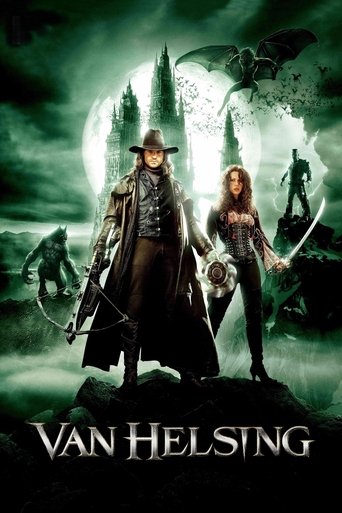
Van Helsing
2004 · Film · 132 min
Directed by Stephen Sommers
Famed monster slayer Gabriel Van Helsing is dispatched to Transylvania to assist the last of the Valerious bloodline in defeating Count Dracula. Anna Valerious reveals that Dracula has formed an unholy alliance with Dr. Frankenstein's monster and is hell-bent on exacting a centuries-old curse on her family.
2 positive2 negative1 neutralfrom 5 commenters
Where to watch
No streaming data for this title.



5 comments on Hacker News
> Next I will explain why Van Helsing is one of my favourite films...
I hope it wasn't sarcasm because you made me look for it on Netflix :).
Next I will explain why _Van Helsing_ is one of my favourite films...
That would be interesting.
Oh, I love it. Not because it's good, it's not, it's an incoherent mess; but it's a great incoherent mess. By which I mean that it tries so hard and fails so badly I end up somehow seeing through it to the vision of the film Lynch was trying to make, which is a masterpiece. It's fascinating.
And there are moments of brilliance to it. The Guild Navigators! The Emperor's Court! The spacecraft design! I even love the poorly matted and ludicrously scaled sandworms, which convey a sense of grandeur that modern films somehow have trouble with. Oh, and Toto's soundtrack is great.
Ah, here we go.
David Lynch's sandworm ride: https://www.youtube.com/watch?v=ld2DMsyy0go
Scifi channel's sandworm ride: https://www.youtube.com/watch?v=WVqXE9ZY5wk
Which of those is more fun?
I'd rather have a glorious failure like Dune over the polished insult that was Avatar any day.
Next I will explain why Van Helsing is one of my favourite films...
I have two general ideas. Steal them. I don't have time to implement.
1) Find innovative ways to reduce production costs. Production is expensive. Unimaginably so. This can be things like: a) Redesign physical set equipment. Ex: Set lights are expensive; a single light can cost tens of thousands of dollars. Design a new light that takes advantage of modern LEDs or something, or that can be deconstructed to serve multiple lighting functions (beyond what exists today). b) Design automation to replace physical support crew on the set. Payroll is an enormous cost. Ex: Invent a tracking system that would make the boom mic not require a person to physically move it around to follow the actors. Yes, mechanization would eliminate jobs - such is the nature of creative destruction. c) Innovation in use of set design and photography to make things look much more expensive than they are. A shining example of this was how Orson Welles shot Citizen Kane. Another example is what Spielberg did with the nonfunctional shark in Jaws. For those two, you're probably going to have to check out a book to learn how they did it. And more recently the impressive-looking but cheap sets and photography in Underworld (2003). These directors did unbelievably good things with constraints. Find a way to systemize this. To study what could be made cheaper, look at films that cost way too much, and see how each shot could've been cut down to bare bones - the absolute minimum dollar amount required to make the exact same look and effect.
The most choking example of waste I've ever personally witnessed was on the set of Van Helsing (2004) in Prague. The entirety of Old Town Square was cleared, about a hundred security held people out around the perimeter, and giant cranes and lights lit a scene of Hugh Jackman leaping in the air. What was the end product that appeared in the movie, you ask? A two-second shot of Jackman leaping in the air above some cobblestone. The whole thing could've been accomplished on a 10' by 10' mockup of cobblestone in a studio, or a cobblestone street somewhere cheaper to rent the entirety of than the Old Town Square of Prague.
2) As mentioned elsewhere in this thread, marketing costs are gargantuan. You have to get eyeballs on your enjoyable entertainment. I watch independent film. The difficulty of going into a little-known film, even one that's received some good notice, is that I generally don't know a thing about it. People enjoy trailers. Create trailers. Once production is complete, making a trailer for it is essentially free - it requires the software you used to edit the film and your own time and effort. Run strings of trailers for unknown films on IFC. Run a 30-minute block of 30 to 45 second teasers with links to the film's site, where you have the 2 1/2 minute trailer and more information. Get eyeballs on productions. Right now getting eyeballs on productions is forbiddingly expensive. Revolutionize it. Cheapen it.
I don't think innovating other entertainment will kill Hollywood any faster. You have to innovate the film industry itself. Every human culture throughout history has enjoyed watching performers enact a story, of some kind or another. Moving pictures of performers enact a story isn't going anywhere in popularity. There's a reason it's such a profitable industry. Technology has advanced to the state it's in today where moving pictures of performers enacting stories are easily viewed the world over, but I don't think you should think about changing the type of entertainment so much as the mechanics of the medium.
My preferences change over time. How can a good recommendation algorithm account for that?
I'm confused. You just re-rate the discrepancies - I do that routinely (some movies seem okay after you watch them, then a few days later you realise they were eminently forgettable). The Netflix UI makes this easy by showing you the movies you recently rated for a while afterwards. I'd be pretty surprised if the recommendation algorithm didn't have a time weighting in it too, counting the movies you have rated recently more than the ones you have rated in the distant past.
You also seem to think that multiple profiles is a workaround - well to me, it's a really good solution to that kind of problem. When Netflix announced they were going to pull the feature I was one of the many people who complained, and was very happy when they reversed themselves.
"Remember that this guy is a writer not an engineer. His solution is likely bad! [..] The problem statement is still there"
But is it? I don't have any personal evidence that it is, and dude says it is but he doesn't rate movies so how can I know? Is it for you? Do you find that Netflix recommends movies you would have liked 5 years ago but no longer do so because your tastes have changed? If so then yes, we have a problem.
I do have a problem with the Netflix recommendation algorithm in that I don't feel it deals well enough with klunkers - just because I enjoyed 5 Hugh Jackman movies does not mean I will enjoy Van Hesling, because Van Helsing was a really bad movie and would not have been a good movie even with the second coming of James Dean. The solution to that is pretty simple technically though.