 Hacker Cinema
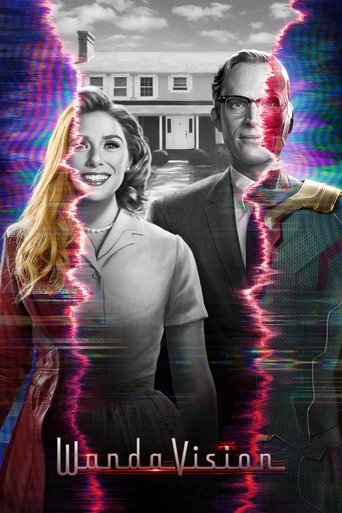
WandaVision
2021 · TV series · 1 season
Created by Jac Schaeffer
Science FictionFantasyMysteryDrama
Wanda Maximoff and Vision—two super-powered beings living idealized suburban lives—begin to suspect that everything is not as it seems.
8 positive5 negative3 mixed12 neutralfrom 28 commenters
Where to watch
No streaming data for this title.


29 comments on Hacker News
Personally, aside from Russian literature, I now prefer American literature, which I think is underestimated in China. I really like that film adaptation, but what the film expresses is something else, not the same as the novel’s core theme.
My own understanding is that American literature has at least three themes that are very distinctive and different from Europe. One is the depiction of desolation and human loneliness before the American continent was developed into a prosperous land. Another is the pursuit of the American Dream, where people achieve success through relentless struggle. The third is what this novel expresses: what happens after success? Money and career cannot solve all problems; people need more to fill an entire life.
I think this kind of contradiction is expressed most clearly in American literature and is also most worth articulating within the American cultural context. This is because its commodity economy and social transformation have been too successful, and it lacks the kind of historical entanglements that Europe has to dilute these problems. As a result, this sense of emptiness stands out even more sharply and demands a more urgent response.
I don’t know if there are horror films like this, but I once saw something similar in the TV series WandaVision. She creates an illusion in which she and Vision are a standard middle-class couple, well-fed and well-clothed, with the visuals in black and white. This made it feel like a horror story to me. Why? Because you feel as if they lack nothing, yet they seem like empty shells: their lives are filled with commodities, and all their actions seem stripped of a spiritual dimension.
Of course, I don’t think that America’s secular success means it has no spiritual world; rather, the former has been so successful that the latter has been greatly neglected. The purpose of American literature should be to depict, under the success of this commodity economy, what people’s inner lives have actually become, and what they ought to pursue. This, to me, is its most distinctive quality.
Shouldn't most of the episodes of WandaVision be included? (I'm sure it's a rights thing, but that's the premise of the show ...)
Think they are in the process of tearing down the WB one (christmas vacation, bewitched, partridge family, wandavision, etc) to make room for sound stages.
The universal one is unique if you know what to look for. It pops up in a lot of older TV shows. It is kind of neat to see it in twilight zone before they built some of it out.
There are quite a large number of vids on youtube where people go inside the buildings. Most end up being storage for stuff or setup areas for different productions.
A friend of mine just does one service at a time, and it's low-key fairly brilliant. There's a bit of headache with installing / uninstalling apps on televisions and having to log into things once a month or quarter or however long it takes him, but the kernel of the idea is that there are generally only a few new, good shows worth watching for any given network, but all the good shows are roughly equally distributed between networks.
So instead of paying $10 a month to Disney for Mandalorian, Wandavision, Loki, an additional $10 for Peacock for Mrs. Davis, Bel Air, and Poker Face, plus however much else for HBOMax, Netflix, Hulu, etc., he could just pay one network $10 a month, binge the couple of good shows that they had, and then instead of waiting months for the next thing to come out, unsubscribe and switch to another network. Lather, rinse, repeat.
He isn't as current, and sometimes it's hard to chat about whatever the current new thing is, but society has effectively already given up on the concept of the whole nation tuning in to any one thing and it being the topic of watercooler conversations for a myriad of reasons.
Note: He has children, and I have no idea how he handles this other than to note that he also has a digital antenna, so some shows are "always available" (or at least as much as is allowed for)
... and then they pull back as soon as they might be about to say anything interesting, or take anything but a very-boring stance on any position.
Looking at you, Falcon & Winter Soldier. And Wandavision, for that matter. And several of the movies—friggin' Spiderman: Far From Home, ugh. Even Black Panther ends up feeling like a missed opportunity that almost went somewhere interesting, had all the pieces in place to, then... just didn't, I suspect in part because it would likely have required a less-well-proven-in-superhero-movies story structure, so would have been riskier. The second one revisits that a little and tries to recover some of the potential the first one just left lying on the floor, but damn, that first one could have been great, period, not just "decent for a Marvel movie".
It's almost better when they don't even hint that they might be trying to convey a message or have interesting themes, because then it's frustrating when they inevitably fail to follow through. It's so bad that when one of the films manages to have even fairly-safe themes and actually treats them half-decently and takes well-worn, safe positions on them (the Guardians films) it puts them at the very top of the Marvel pile, so far as that aspect is concerned, at least.
They tease messages and interesting themes more often than they really commit to them, unfortunately.
I think really the big thing is that the films are very high budget and therefore Disney/Marvel are scared to do anything in the least offensive because they want the most return. So it’s not so much intentionally kid friendly as just as vanilla as can be for safety.
Streaming/episodic is much lower budget so they take more risks to try and bring in a different set of audiences that their films weren’t pulling in. My wife for example doesn’t care at all for the films, but really got into Wandavision and She-Hulk because the premise was more interesting to her.
I think the safety of the films might also disappear soon too as China and a few other countries recently rebuffed them. Marvel has tried very hard for years to be very China friendly because it’s a huge market, but recently with Shang-Chi they got blocked. So now they’ve stopped pandering to a more conservative market.
Coincidentally the big up and coming market is progressive youths and I think you’ll see a lot more topics that speak to them (or at least what a Disney exec thinks does). I don’t think Disney gives a crap about being progressive for the morality of it, but after they’ve had a pretty bad few years at the hands of conservatives (China, Florida gay rights etc), they’re now realizing this progressive market is ripe for the picking.
I think She-Hulks tone comes firmly from that pivot. So I suspect what is traditionally seen as child friendly values will see a down turn in their big projects.
That said, media is both a reflection of us and we are a reflection of it. So I think what topics will be considered child friendly will also change dramatically over the next few years.
So I personally enjoy this style of storytelling - it rewards you for knowing the backstory of all the characters, it allows for a richer universe, and you don't feel like the film treats you like an idiot for explaining everything you might already know.
But - I can also see why this is a problem - you're right that people who haven't seen Wandavision would be very confused by this film. Wanda went from being a hero in Infinity War/Endgame, to suddenly being a villain.
I felt completely left out, because although I had seen the last Spiderman movie, I hadn't watched Wandavision or half of the TV shows. It was like trying to follow a game in a sport you only have a casual interest in: you kind of know the rules but have no idea who the main teams or players are or who is up or down in the league, so your enjoyment is limited to the occasional good goal or pass (or VFX shot in this case).
In contrast to DC movies - very hit and miss in quality, but you can at least watch a movie without having to follow a dozen other TV shows and other films in the franchise.
Disney also has the benefit of being able to makes billions in movie theater that pays for content before if ever gets to streaming. On the other hand, how many people watched Loki and WandaVision to have context for Dr. Strange? It’s the famous “flywheel” that Disney has been talking about since the 60s.
WandaVision goes much farther than referencing MCU movies too. Each episode is a reference to a different decade of family sitcoms starting from the 50's.
I recently watched the whole Marvel Comics Universe series in chronological order. I'd seen a lot of them, but not all, and everything made so much sense when seeing it this way. WandaVision, of course, makes no sense at all without having seen most, if not all, of the movies.
I think marvel has actually gotten fairly good at fights and making them interesting to watch as a function of why the hero is unique tbh.
Throwing huge punches is bad. Firing arbitrary laser blasts is even worse. Especially when the consequences of being hit seem so trivial. But it can be done well. I think Thor Ragnarok is a good example of this.
This is the first movie in which both Thor and Hulk were actually shown as extremely strong with little more than just physical blows. What’s noteworthy is that most of the fights they’re in are very easy for them, and frankly it’s much more fun to watch them stylishly stomp 100 goons and look strong rather than incomprehensibly struggle to fend off 10 nobodies. Filmmakers tend to be afraid of having a fight scene without tension.
Avengers infinity war fight v. Thanos also comes to mind as a quick little highlight reel of each of a dozen characters special contributions. It comes across as competent and unique.
Off the top of my head, black panther, iron man 1,2,3, guardians of the galaxy 1,2, Shang chi, wandavision, earlier avengers, all felt particularly bad at this.
Writing sonnets, directing movies, preventing a 13 year old from taking heroin, preventing police abuse, solving the Israel-Palestine issue, solving depression, figuring out which religion is correct.
Things that it could probably do: Write song lyrics, screenplays, identifying drug dealers, things political parties can agree on, gauging your mental health similar to how Garmin watches can gauge physical health, finding MH 370, pass a typical tech interview.
Also if you play with AI as it stands today, you'll notice some characteristics. It reminds me a little of Vision in WandaVision. It's adorably naive in some things. It has a certain "dialect", probably depending on how it's trained. It reminds me of a 14 year-old American.
I would comment as follows.
Iron Man - sort novel for setting marvel tone but mostly banal action movie
Iron Man 2 - banal action movie
Thor - banal action movie
Captain America: The First Avenger - particularly banal action movie
Marvel's The Avengers - banal action movie
Iron Man 3 - banal action movie, sort of interesting to see protagonist suffering PTSD anxiety from being a superhero
Thor: The Dark World - banal action movie
Captain America: The Winter Soldier - first interesting take. Patriotism is not the same as government obedience. Real fight choreography approaching a soft john wick.
Guardians of the Galaxy - Early rock and roll aesthetic pretty interesting
Avengers: Age of Ultron - banal action movie, perhaps mcu lowpoint
Ant-Man - superhero heist movie, literally deconstructs larger than life superhero tropes. I think thumbs up
Captain America: Civil War - by this point doing the mcu's own thing, which is novel, but probably not interesting outside
Doctor Strange - banal action movie
Guardians of the Galaxy Vol. 2 - aesthetic still feels mostly fresh.
Spider-Man: Homecoming - super down to earth high school drama, frustrated working class villains suffering the fallout of superheroes, seems interesting to me
Thor: Ragnarok - great film, very genre savvy. Rare achievement to make godly strength brutes feel really engaging to watch. Taika Waititi is a genius.
Black Panther - pretty good. interesting aesthetic. directly addressing racial tensions.
Avengers: Infinity War & Endgame - Mostly fan service and not too surprising but honestly still novel.
Ant-Man and the Wasp - Ehhh I really don't remember
Captain Marvel - Beginning had some great hard sci fi imo. Thought the ending message of newly apotheosizied female not needing to prove herself to her evil male mentor was a solid take, whereas a classic "mano a mano" kind of showdown would be so typical of the genre
Spider-Man: Far From Home - Villain emphasizing themes of the power of deceptive media? heck yeah.
Wandavision - Really bizarre and interesting start. Unfortunately non-self-aware conclusion
Falcon and Winter Soldier - Active discussions of race and the problematic nature of superheroes being supremacists? Very good.
Loki - kind of a super cliche topic (time cops) that is also somehow really rare? eh.
honorable mentions for Logan and Deadpool for being just great; and the Amazing Spiderman for its excellent aesthetics despite terrible writing.
A Few Observations :
I initially searched for marvel shows presently in limelight. Loki -> Not available What If -> Not available The Falcon and the Winter Soldier -> Not available Wandavision -> Available
Marvel Shows are more discussed in marvel subreddits like /r/marvelstudios than individual subreddits like /r/wandavision
After sorting out by No of comments only i found out, author of the website has actually grouped them together under Marvel. So Wanda vision Discussions are shown under two places but not linked to each other.
Another one aspect the website fails to capture is the discussions going on in multiple subreddits created for the same TV Show.
For example game of Thrones had individual subreddits for each houses in the show, out of which /r/freefolk was very famous (1M+ Subscribers) and had in depth discussions going on when each episode aired.
Fascinatingly, that is the one show I am not enjoying... specially because I keep thinking "this is just a comic book, made into a TV show for seemingly no reason" ;P. (The issue with it for me is that every single story is underdeveloped and rushed, which seems to be part of the genre of comic books... and I honestly kind of get it for a comic book? But it doesn't stand up for me at all in a TV show format. Wandavision, in stark contrast, was just a beautiful use of the TV medium to me, starting with the very first minute when you are hit with "OMG, this is the set of the Dick van Dye show... or is it?" and they spend the entire series paying homage to the entire history of sitcoms in its own medium.)
Just to clarify, there has been four MCU TV shows this year so far: Wandavision (great), Loki (great), Falcon and the Winter Soldier (terrible), and What If (good and sometimes great).
All four are made by Marvel Studios (not Marvel Television like Daredevil and Agents of Shield) with actual Marvel actors and firmly take place in the MCU.
It's worth checking out What If. If you don't like the show, I still recommend watching the fourth episode (Dr Strange).
I'm usually in the cinema for opening night of new MCU movies, so this isn't said from a place of hatred of disgust of the movies. They're cookie-cutter corporate media that does the bare minimum to not be entirely the same movie every time.
The acting isn't high quality across the board -- it's average. The plots and their twists are, frankly, banal in every aspect apart from being vehicles of spectacle. There's no real moral gray-ness to the characters, Wenwu from Shang Chi being an obvious exception to the rule.
The shows, which were supposed to come in with a fresh, long-form perspective on main characters and their struggles start out with interesting premises and then quickly falter because of their adherence to the MCU mythos. Wandavision and Loki completely fail in the latter half of their seasons to pay off any of the character beats in favor of big spectacle and exposition dumps.
This article doesn't cover _how_ marvel was able to be successful for so long.
This article from HBR does, and I think is particularly insightful: https://hbr.org/2019/07/marvels-blockbuster-machine
They have a podcast epsidoe released around the same time that covers the same content, if you prefer listening.
People like to criticize marvel (mostly closed-minded people who assume all the movies are the same and choose not to watch them because they 'lower the quality of film' somehow by existing) but there's a lot to learn from them.
There is a lot of fantastically original content coming out of marvel. I thought WandaVision was a particularly fun twist on the history of television.
The Marvel Cinematic Universe is like a TV show.
Each episode may not be that great, but the series as a whole can be greater than the sum of its parts.
And like any serialized TV series, you can't really skip episodes without missing key parts of the story, so once you commit to the show you're on the bandwagon.
And given the success of the MCU, it's carved itself a powerful place in popular culture that won't disappear for a long time.
Also, even the Marvel TV shows can be surprisingly high quality (I absolutely loved Loki and Wandavision, but hated Falcon and the Winter Soldier)
Don't forget Loki, or WandaVision for that matter.
I think there's been both qualitative and quantitative changes to American pop culture. Today's audience is able to handle more sophisticated or just convoluted complex narrative structures than in the past. From comic book cinematic universes to Christopher Nolan's gimmicks, we've come along way from straightforward standalone popcorn films. Now even dumb action movies have to be not just a sequel but intertextual, living within a cohesive fictional space. Everyone knows what "canon" refers to and most know common tropes. (Speaking of R&M, that show seems to be an example of running out of tropes to the extent of burning itself out, imploding into bigger and more meaningless reveals.)
That's also because of quantity. We've simply got too much content, across both films but TV shows, games, tie-in novels, comic books, and other media. Merchandising has been huge since the original Star Wars, but now every franchise has a Wiki and dedicated scholars. It's a whole new level of meta. Maybe that's the only way we can handle the scale of content we are bombarded by; to try to fit them together into cohesive contexts.
I don't know what that means for us as a society or as a culture, but I do note that The Matrix, or at least its sequels, helped to accelerate this process. Back in 2003, the series had both the Animatrix animated shorts and the Enter the Matrix video game that added to the story depicted on-screen, even introducing key characters that movie-only viewers would be confused by (such as the Kid).
I would say that dense intertextuality and cross-media world-building, not so much the Gnostic question your reality themes (which are old hat now), is the current defining legacy of The Matrix.
WandaVision was brilliant and innovative and unique.
So I don't think they are at the point yet of just cranking out derivative shows and movies based on the same template.
Haven't seen Black Widow yet (I'm getting "wait 'till it's free" vibes), but opinions of Loki are... not universally good. I, for one, was skeptical about the other two shows and ended up loving both except for the last episodes (which was still OK for Wandavision, but outright bad in F&WS), while Loki was the one I was most interested in, but I've spent almost the whole time furrow-browed thinking "how is this so bad? How? Why did they make that choice? Why is this scene still going on?"
What's best and what's worst in Marvel tends to draw opinions that are all over the place, excepting that rarely does anyone rank the two Guardians movies near the bottom. Like Star Wars, I guess. You can get rankings that are wildly different, except for a few things (almost no-one is going to rank Empire very low, and almost no-one is going to rank AOTC higher than the middle, for instance).
Those shows most definitely assume prior knowledge of the universe. That said, having avoided "superhero movies" for years (due to not being impressed with random one-offs that I watched), I finally bit the bullet and watched the whole set in order with my kids and it made a huge difference, with enormous payoff in Infinity War and Endgame. FWIW, I think both WandaVision and Loki are fantastic.
> I don't want to have to watch three previous movies and two TV shows to fully enjoy the movie that's in front of me.
I recently started watched Loki on Disney+, 3 episodes in, I still have no idea who Loki is, where he comes from, what his intentions are and what he is capable of...
Same problem with WandaVision. I agree, it's exhausting.
Some things are germaine to a plot, some are not. This is a frequent issue in hero movies where a producer wants some particular detail added for nostalgia, or wants an extra villian added because they scored well in audience opinion testing.
The standard example of this is romantic subplots. Frequently stories with no romantic subplot are modified to have one to align with a studios research - and these romantic subplots always feel fake, pushed down your throat and overall contrived, especially for characters never written to have chemistry.
Social justice bingo is the romantic subplot of our time. I have no doubt there are general mandates around including certain ideas or themes, or removing others. See eg, the huge plot change in "WandaVision" where they even left in the Doctor Strange commercials (plot point from original story) but totally removed him from the ending.
Quite. I DCCed Trek and SG1 episodes in the late 90s and early 00s because they weren't available in the UK.
I don't do that with Discovery, Picard, Wandavision, etc, because they are available.
Then they completely cocked up Lower Decks and wouldn't take my money. Bittorrent to the rescue.
There is always competition.
you think that's high? I usually binge at least 2-3 seasons of a new-to-me show a month on netflix, prime, hulu, if I'm really busy -- my wife makes up for the time I miss watching new-to-her shows, or the kids watch new-to-them shows or disney launches a new movie... I mean.. Wandavision, Falcon+Winter Soldier, Mandalorian, New Mighty Ducks are top notch and that's just disney...
Netflix has the Witcher which I still need to watch, just finished two different ones on figure skating Zero Chill (Hockey+Figure skating) and Spinning out. Both really good shows that weren't on my radar. Recently finished Queen's gambit too--also great and not on radar...
Lots of back-burner shows too (waiting for the next season).
7-11pm is usually dinner, tv with family put kids to bed, watch 1-2 shows with wife, then go to bed. Sometimes I watch old movies that are new to me just cause I heard they're good but haven't seen them yet. Grew up in 80's and just recently finished Fast Times at Ridgemont High for example.
120 hours of screen time's easy... weekends are probably a lot more.. maybe 8 hour sessions, definitely enough to watch 1 whole new-to-us series... esp. with lockdowns and covid.
Another thing for which DuckDuckGo is useless: finding media. It or whatever crawler it uses totally falls for those keyword-flooded sites that have a couple ads and then paragraphs of "wandavision watch free mr robot now free download all seasons season 1 101 dalmatians disney land[...]" autogeneration. I wish they'd do something about all the spam.