 Hacker Cinema
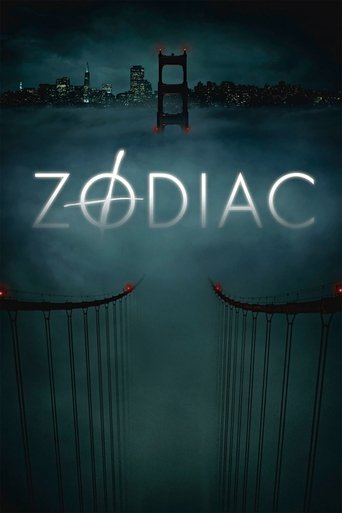
Zodiac
2007 · Film · 157 min
Directed by David Fincher
Police conduct a manhunt for the Zodiac Killer, a serial killer who terrorized the San Francisco Bay Area during the late 1960s and early 1970s, taunting police with letters, bloodstained clothing, and ciphers mailed to newspapers.
6 positive1 mixed3 neutralfrom 10 commenters
Where to watch
No streaming data for this title.

10 comments on Hacker News
I think mouth of madness maybe makes it. It's isn't always about reality being 'bent' in the fiction of the movie. It's also how the mood of the film contributes. For instance I would not put fight club on this list. I might consider seven. Zodiac has the mood but is missing something... I'm not sure I would put much fincher on the list personally, though I like many of his films.
Not Fincher, but a late edition. I would put PTAs 'Inherent Vice' on the list if I could edit it.
This seems super dubious. I just watched the 2007 film Zodiac this week so it's recently on my mind. The prime suspect, Arthur Leigh Allen, has so much incriminating evidence against him that it's just nuts to me that anyone considers this anything but a solved case.
Seriously, just read this:
https://zodiackiller.fandom.com/wiki/Arthur_Leigh_Allen#Incriminating_Evidence
Most importantly of the list, a guy he shot who lived picked him out of a set of photos and said he was certain that was the man who shot him.
Like....how can you go through that list and come to any other conclusion? It seems very clear that it was just procedural error by the police that let him get away with it back then. When investigators contacted him anew in 1992, he suddenly died of heart failure before they could interview him.
Is anyone familiar with Robert Graysmith's books on the Zodiac Killer? The Fincher film "Zodiac" is based on Graysmith's research/obsession. I don't think the film mentions anyone named Poste at all. I'm wondering if he ever came across Graysmith's radar.
Zodiac might make a better film, but actually I guess you can just transplant the protagonist into a variety of wacky adventures over a number of seasons. I think Snowcrash (like Cryptonomicon or Anathema) relies a bit too much on explanations for it to work on the screen. Diamond Age feels like it comes to too much of a conclusion, maybe it’s a mini series
All of Stephenson's books are crying out for TV or Movie adaptation! (hint: esp. Snowcrash & Zodiac!).
Wasn't the Zodiac brutally simple, the typical Fincher-like precision, almost sterile presentation of the story, with almost perfect linearity? I mean, I love that movie, but I love it especially because it's not "deep". (It doesn't mean there are no interesting questions/plotlines, of course there is the whole who-was-really-the-killer question. Of course there's the whole personal drama of the main character.) But compared to Seven - I think - there's a lot less abstract/social commentary and symbolism. (Even though it's full of the killer's code symbols.)
Let me just toss out a recommendation to the 2007 film Zodiac, which I really enjoyed. Directed by David Fincher (The Social Network). Great movie and a nice summation of events.
I love Cryptonomicon but I don't think it would be adaptable in any way that bears more than a superficial similarity to the book. Though actually I feel the same way about Snow Crash, so we'll see.
As far as adaptability of Stephenson goes, I could see Zodiac, or maybe REAMDE, that would work in a way that resembles the books. Maaaybe Seveneves, though you have to deal with the significant separation between Part 2 and Part 3.
The rest of his books, including Cryptonomicon and Snow Crash, are too intertwined with "theoretical" concepts to make much sense in an adaptation. I mean, yes: you can have a show or movie about a pizza deliverer/hacker named Hiro Protagonist who swordfights in the metaverse; or Jack and Eliza's Adventures in Enlightenment Europe; or whatever. But the real underpinnings of the story aren't going to make it in and that's what makes Stephenson's books interesting.
Actually, the provenance adds way more than 1000% or whatever. That 1000% is the provenance discounted by the chance that it's totally made up and, therefore, outright fraud.
Look at this story: [1]
"As Van de Hoeven recalled, they were sitting in her sun-flooded living room, making small talk about how Zodiac could have been a great movie, had it not been so slavishly devoted to ’70s period detail. When Tarantino noticed the figurine on the mantle, he jumped up from the sectional couch."
That didn't happen. If it had, the figuring could be worth a lot more than $50.
$50 - the new price - is in a lemon market of fake stories.
If they really want to test the price of a story, why not do it in a way that isn't fraud?
Why don't they start with real stories about objects that have actually been verified, in a printed book for example from which they can quote, and then simply do the experiment by not mentioning this true story in some cases and mentioning it in others?
This would decrease the "fraud discount" SIGNIFICENTLY since in the cases where you DO mention the story, you can also mention the references that actually back it up. There's no real chance you're just inventing it. For example, if a distinctive custom object was photographed with Obama, you can link to the photograph while "telling the story".
In the version where you don't tell the story, but only describe the object, you don't link the photographic proof either.
That way you can really tell how much value the story adds, instaed of how much value discounted by the chance (which is in this case the reality) that it's just being made up.
[1] EDIT: for the source I followed their link "The project was so successful (and so interesting) that they have now repeated it 5 times and put all the results up on the web. It is also a book." which links to http://significantobjects.com/about/ - I'm quoting from the first picture I followed on the right sidebar, since I wanted to see what these stories sounded like.
What amazes me about the coverage of this film is that David Fincher is getting totally overshadowed by his subject. Case in point, Techcrunch doesn't even mention that Fincher is the director, even crediting the film to Aaron Sorkin who just worked on the script.
Why is this an oversight? Fincher is one of the smartest directors in contemporary American film. Seven was a brilliant critique of how visual media feeds social violence. Fight Club turned a stylish but shallow nihilist novella into a meta-recursive critique of nihilism itself. Zodiac was a narrative masterpiece created out of nothing. The Game was an ambitious attempt to turn The Magus into a film that succeeded so well no-one seemed to notice. And even his lesser works, Panic Room and Benjamin Button, were still films that tried for something and are worth watching.
Yet not a single mention. Amazing.