 Hacker Cinema
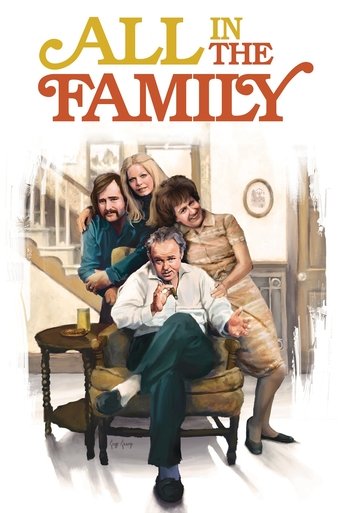
All in the Family
1971 · TV series · 25 min episodes · 9 seasons
Created by Johnny Speight, Norman Lear
Archie Bunker, a working class bigot, constantly squabbles with his family over the important issues of the day.
10 positive1 negative1 mixed14 neutralfrom 26 commenters
Where to watch
No streaming data for this title.



26 comments on Hacker News
Oh dang. Last night before falling asleep my wife told me "some guy from Spinal Tap died" while scrolling on her phone. Didn't think much of it.
Wake up and first thing I do is read this...
Rob Reiner? Really? What a terrible shame. What a loss. His films and even his time on All in the Family really helped shape the cultural landscape.
Nothing had as large an impact on my sense of humor growing up as This is Spinal Tap. Just thinking about the movie now I chuckle to myself. Most of his other films are certified classics.
He will be greatly missed.
He was also brilliant as Michael “Meathead” Stivik in the phenomenal TV series “All in the Family”.
Amazing how many classics he worked on throughout his career.
The US broadcast syndication market is really only set up to sell shows that have more than 100 episodes. I think UFO, Space:1999, and the 1955 Robin Hood were among the few shows seen on regular non-PBS stations. The Disney Show would sometimes run UK-filmed material. (Scarecrow, Thomasina) Partly it's because Americans can't understand the words when they hear many UK dialect accents, so they tune out those shows and that tanks the ratings. Even if you give a station a free tv show they lose money if no one watches it. We do better at remaking shows like All in the Family, Sanford and Son, Skins, and Being Human.
The US TV show "All in the Family" in the early 70s included the character Archie Bunker, who was an outspoken bigot. This might have been the origin of using "the Oriental persuasion" as a joke. My parents thought it was hilarious, and explained the joke to me. Yes, since then, that usage has leaked from being humor to being used in the sense above.
I have two thoughts on this: it's important to find contentment regardless of situation, but I would caution against settling for less.
I've noticed that as more and more aspects of the American dream have been stripped of us by the uber-rich in recent decades, a certain kind of fatalism has settled into our collective psyche. There's a sense now that the quiet life is out of reach, regardless of income. That wages will never rise fast enough to keep up with the rising cost of housing. That there are just more and more and more people everywhere, that our heritage is being gentrified. That the hustle and bustle has nearly eclipsed most personal interaction. Basically that the worsening struggle of postmodernism has replaced community, tradition, and so on.
Ironically I had welcomed tech/progress up through the late 1990s, because young people today may not realize how ignorant times were then, when shows like All in the Family may as well have been documentaries. If you watch Saved by the Bell and Napoleon Dynamite, notice how there's no real technology, and there's an impression that the future is coming, but at a glacial pace. It wasn't like today, where if something hasn't been invented yet, it just means you haven't searched hard enough for it on the internet. We still had science instead of manifestation, so nobody told us how much our dreams mattered, only that we should put our noses to the grindstone.
Now in middle age after a lifetime of hard work with little to show for it, I find myself asking what all of this is for. What's the point of tech if it just makes you work harder? Shouldn't it make life easier, and bring more money and resources your way? And I think a lot about people who are good for nothin. Energy vampires who suck the life out of you when you're trying to make progress. They used to be people like me, angstful cynics who pointed out the absurdity of the modern world, who took solace in shows like South Park. Today they're the thought leaders and billionaires who vacuum up all available capital and lobby the government to take away our freedoms. What good are they if they only take but never give?
The key part of the article was unions. You want the quiet life, you've got to organize. This lone wolf, rugged individualist, pull yourself up by your bootstraps dream of winning the internet lottery was a bill of goods. Because winner takes all, and odds are it ain't you. I've been trying for a quarter century and if I knew then what I know now, I never would have started down this road.
I'm shifting my focus to a resource economy where basic necessities are provided by scalable technologies that can't be taken away by concentrated wealth. Where the difference between what employees are billed out for and what they are paid accrues ownership in a business, the same as capital put up by investors. Or that difference is accounted for in tax write-offs, pensions, retirements, social security, and so on. Where job applicants can see that discrepancy in public accounting records and choose not to apply to businesses that exploit them. So that we can all start getting paid what we're worth and build an economic system around improving the human condition instead of feeding off it like vampires.
Love this show!
Although the Dad never seems to work, plays all day, and sets the bar pretty high for me especially on the last 2 of my 5 children. I'm out of steam.
I too succumb to the emotional episodes, and I am grateful for every tear I share with my kids!
I grew up watching Bugs Bunny, Davy and Goliath, Gumby, and All in the Family as a young kid for a contrast!
The 70's TV show, "All in the Family" featured the iconic cranky-old-man character, "Archie Bunker".
The age of this character on the show? Well, there was an episode where Archie celebrated his 50th birthday-- in 1974. This show premiered in 1968. So, the show started when the Archie character was 44.
I think that the perception of age and age-appropriateness was very different than it is today even a relatively short time ago.
> The writing for new shows is predicable and boring.
To YOU because you are probably a middle-aged man who is not supposed to have time to watch everything so that all the tropes are familiar to you. Watch less media, focus on other things.
> Actors are featureless blobs that all look the same.
I think there is more variability than there has even been in the history of media and they have been quite direct about fixing this. What are you even taking about?
> Movies and shows seem to be eye-rollingly preachy and talk down to audiences.
The notion that movies and shows in the 2020s are "preachy" or condescending is not a unique feature of our times. The medium has always been used to shape the society.
For instance, "To Kill a Mockingbird" (1962) engaged with racism, "All in the Family" (1971–1979) tackled subjects like racism and homophobia, and "Philadelphia" (1993) addressed HIV/AIDS and homosexuality.
Many narratives from the past feel less preachy today, not because they were less pointed in their messages, but because society has largely absorbed their perspectives into mainstream thought.
Contrary to popular belief, human culture didn't begin on Twitter. The battle against "online hate" is just the current generational manifestation of a conflict that, yes, has its origins in the ideologies and cultural shocks of World War 2. Particularly where the meme-complexes of modern anti-Semitism and fear of "cultural Marxism" in academia, gender roles and homophobia are concerned, many of which were established either by the Nazis directly or the initial right-wing political shift in the US following the war. Today's redpillers, anti-wokists and the like are just rehashing beliefs that were old hat in their grandparents' time. Even the culture war over transgender identity isn't new - there was an episode of All in the Family about it in the 1970s.
I mean go look up any of George Carlin's old bits on political correctness and they would fit in perfectly in a modern day context, despite being made before the WWW was so much as a gleam in Tim Berners' Lee's eye. You'd just have to update the technological referents.
This isn't uncommon in TV series. How many I Love Lucy plots were recycled later on? All in the Family? I can go on, but great writing and plots are often reused later.
They should have stuck to the dvd by mail model. There were so many good movies to watch back then. Lots of content doesn’t matter if it’s crappy content. I bought an antenna last year and been amazed at how much better the content is, even old shows like mash and all in the family. Tv shows that shaped our culture, but changed it for the better!
I've been watching some of them recently. It's amazing how relevant All In The Family still is today. The Jeffersons is still good, Cheers is relaxing after a stressful day. That easy-watching episodic nature is nice for a change.
There are some good recent sitcoms, but you don't get the same sort of 12 seasons of 22 episodes run.
I grew up in the '80s and it was there then, too. Some example episodes from "Diff'rent Strokes," a show about a white industrial magnate who adopts a couple of Black orphans:
* A social worker investigates the boys' home life and tells Mr. Drummond that she believes black children belong in black households.
* Mr. Drummond scolds Arnold for secretly recording other people's conversations. Arnold disobeys him and records Kimberly's boyfriend Roger making racist comments about Willis to his sister.
* Arnold's poor dental checkup has Drummond suspecting that the easy availability of junk food from vending machines at school is to blame. But when Drummond begins a campaign to replace the hot dogs, cookies, potato chips and soft drinks with more healthy foods, Arnold's friends try to convince him to get his father to reconsider.
* Arnold's joy of being transferred to an all-white school (and riding a bus to get there) is shaken to its very core when a racist busing opponent calls the Drummond household warning the pro-busing family patriarch not to send his black children to the new school, or else.
* When it is learned that Drummond's upcoming construction project may be located on top of an ancient Indian burial ground, he faces protest from a Native American who threatens to go on a hunger strike if the land is built on. Arnold and Willis follow suit by going on a hunger strike of their own.
--
And of course, we mustn't forget "All in the Family" from the 1970s; pretty much every episode was about politics in some way.
It's been said that more people get their understanding of the bible from Milton's Paradise Lost (directly or indirectly) than from the Bible. If you look at both, many elements we're familiar with are from Milton (IIRC, and it's been a long time, the apple in the Garden of Eden is an example).
> Particularly when it comes to getting eyeballs on TV, or a movie. People making that content are thinking about what people will want to watch.
But what they will want to watch isn't what they already know, it's what they are comfortable with. There is new information, the problem is new info that challenges the viewer too much. The better artists walk that line better: they find ways to present challenging information that will go down easily.
Note that the article quotes the Lear Center's research; it's named after and founded by Norman Lear, who made (among many other shows) All in the Family, which covered political issues, including race, and without pulling (many) punches, in 1971 and was an enormous hit. I highly recommend watching the first season - great on many levels. And it will press your buttons, even today.
"If you want to tell people the truth, make them laugh or they will kill you." (Attributed to many people, from Oscar Wilde to George Bernard Shaw to Richard Pryor)
This seems to just be something that's going to happen when you have satire of any substance.
A similar thing happened with the 1970s TV show "All In The Family". Its main character, Archie Bunker, is uneducated, chauvinistic, bigoted, and selfish. Many people got the joke, but I think plenty of people saw Archie and their main thought was, "This guy is just like me." They did a good job of portraying him as a real human being. (If he had been a one-dimensional punching bag character, the show would not have worked as well.) He was a working class guy whose frustrations with his situation were rooted in reality, so you couldn't fault him for that part. He just responded to those problems in all the wrong ways. But seeing the right ways to respond requires a certain kind of enlightenment, so this part went over some people's heads.
There's an old episode of All in the Family where Archie Bunker loses his Christmas Bonus for shipping something to the wrong London, 1971 and way before Siri or computers.
This ain't a new problem.
https://www.imdb.com/title/tt0509842/
Because the numbers are kind of crap lately. People don't realize just how the average episode of Friends beat 20 million for every one of 10 seasons [1]. The audience is fragmented like never before.
A small correction though, All in the Family was on average over 20 million households, and before every house had seven tvs that was significantly more viewers.
http://newmusicandmore.tripod.com/friendsratings.html
> For example, about 20 million people tuned in to watch the first episode of the latest season of hit show Game of Thrones.
> It was one of the most-watched non-sporting events in TV history.
This is not even close to true.
Nearly 17 million people watched the Murder She Wrote finale in 1996. In the 1970s, each year, the highest rated episodes of All In The Family were consistently over 20 million. Seinfeld had 35 million once. 60 minutes has gone over 20 million many times.
Grace Under Fire, a mediocre sitcom most people here have never heard of, averaged about 20 million viewers for a full season in the mid 1990s.
I love when TV writers act like TV didn’t exist before The Sopranos.
https://en.m.wikipedia.org/wiki/List_of_most_watched_television_broadcasts_in_the_United_States
>television is a real time medium
Arguably that's less the case than it used to be insofar as you can get your hands on many older TV shows if you want to.
That said, TV--and, especially, historic network TV--is a lot more rooted in its time and place than a lot of writing is. It's partly for technical reasons as you say. The production values of a lot of older shows are going to be a distraction even if the content were otherwise modern. But TV shows also tend to reflect (to an arguably greater degree than the typical film) the period in which they were made. Not just the look but a lot of the sensibilities.
I'd wager than there are very few TV shows dating to the 1970s and before that are really watchable today whereas there are plenty of films going back to almost the beginning of "talkies." (There are some good silent films too but obviously those have to be approached with a somewhat different mindset.)
There are some exceptions. For example, episodes of The Twilight Zone or a series like MAS*H can still be appreciated, but for the most part, no. (ADDED: For example, All in the Family was a groundbreaking show when it aired. But, although I haven't seen an episode in years, I'm willing to bet it would come across as very much a period piece today.)
I don't know how much of this is really new. I spent my youth watching TV and playing Sega and computer games. By age 12 I had seen every episode of "All In The Family" at least twice. I stayed up watching TV on school nights until 1AM.
I also do believe I received bad parenting, but eventually I turned out OK.
"All In The Family (which doesn't really hold up anymore, but is basically Married With Children for the 70s)"
No. Absolutely not.
All In the Family tackled subjects and current events that no other sitcom in that era dared to do. The Wikipedia summary is pretty good here:
"The show broke ground in its depiction of issues previously considered unsuitable for a U.S. network television comedy, such as racism, infidelity, homosexuality, women's liberation, rape, religion, miscarriages, abortion, breast cancer, the Vietnam War, menopause, and impotence."
Married with Children was lowball humor for laughs and simulated controversy. There is absolutely no comparison.
This was an All in the Family episode. For whatever reason, Gloria can;t tell the difference in taste between Coke, Pepsi, and RC but Meathead can.
As someone with no experience in that region, and as someone whose taste is much more toward the satirical (Seinfeld, Family Guy, Simpsons), I have a hard time trying to recall anything satirical in KotH.
Instead, I consider KotH to be similar to the Cosby Show, Roseanne, or even All in the Family - a respectful look at the type of family that was not historically portrayed in TV or the movies.
Maybe in the style of the old tv show "All in the Family" where an openly racist character often said racist things in a way that highlighted the foolishness of racism? Just guessing.
As a former ESL teacher, I think TV can be helpful but it's better to be very selective about which shows you watch. Pick shows that have a lot of dialogue in English.
Older TV shows tend to be more dialogue-centric. If you have the TV Land channel, I'd suggest: MASH, All in the Family, I Love Lucy, The Honeymooners, The Dick Van Dyke Show, &c.
Contemporary shows that would be good for this purpose might be: Modern Family, NCIS, Mad Men, Big Bang Theory, Parks and Recreation, Arrested Development, Parenthood (advanced: lots of simultaneous talking).
A much better article is "The Brain That Changed Everything" [1], by the grandson of the surgeon who erased H.M.'s memory. It has lots of details that I've never seen anywhere else.
There was one TV series he loved to watch, too. A sitcom. All in the Family. It is a show, essentially, about a man who is mystified by a world and culture and family that change all around him while he remains the same, a man who digs in his heels, who holds on to the past, refusing to be dragged into the present.
The part that gets me the most is when they wake H.M. up and ask him what he was dreaming about (at this point no one even knew if he DID dream), and he says "what I could have been ..."
[1] http://www.esquire.com/print-this/henry-molaison-brain-1110?page=all#