It reminds me of the recent claim about how AI is resulting in a booming job market for philosophers. Then when you look at it, it turns out single-digit numbers have been hired at Anthropic and OpenAI, and that’s about it.
The point is it’s unlikely to have some sort of significantly or lasting cultural impact, any more than say “The 300” or “Beowulf” or “Gods of Egypt” or any of the other quite long list of such movies did.
> Go watch CGI in a movie theatre and it's worse than 20 years ago
Objectively this isn't true as CGI technology has improved by leaps and bounds (think e.g. subsurface skin scattering in new vs old Gollum), however there's a lot of other factors at play; old CGI used film tricks to make it blend better, new CGI uses full CGI and digital whatsits and doesn't care anymore. It also depends on budget and what studio takes care of it. Good CGI is invisible, and there's a number of non-superhero films where the CGI just isn't visible / you're not even aware of it. Anyway, what 20 year old CGI are you thinking about, and what are you comparing it with? I'm thinking The Spirits Within (2001) or Beowulf (2007); the former did not age well, the latter was already panned as having poor CGI when it came out. Avatar (2009) pushed the frontier again I think.
> go home to play video games and the new releases are all remasters of 20 year old games because no-one knows how to do anything any more.
This is a blinkered view of reality; there's thousands of game developers outside of this bubble, from single person developers making modern classics like Stardew Valley or even Minecraft when it first came out, to teams of developers that are bigger than those that made the games of 20 years ago.
Also, your opinion isn't fact; in the top 20 best selling games of 2024 [0] there is only one arguable remaster (GTA 5, which is on its 3rd remaster) and two complete remakes (FFVII Rebirth and CoD 3), with the former being a completely different game compared to the original. I share your cynicism about the "top of the line" video game market today, but you're not correct.
(meanwhile I'm playing 2007 video game (Supreme Commander))
It would be interesting to do a study on popular myths/fairy tales that have and have not been adapted by huge media companies.
For example, if I search "Beowulf" in Amazon, the first link is for 2007 movie, the second for the book, and the third for a TV show. If I search for "The Little Mermaid", the whole page is dominated by the Disney franchise or some off-brand adaptations. Hans Christian Andersen's book is nowhere to be seen.
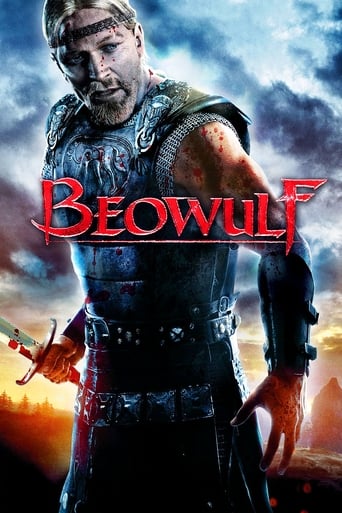
The movies "The Polar Express" and "Beowulf" both by Robert Zemeckis were early attempts at using facial animation captured and transferred to digital characters. Both had problems with the uncanny valley.
To be fair, chances are you and your friends are not representative of the mainstream. Just being on Hacker News makes that unlikely.
Michael Crichton is a famous enough author that people are more likely than not to see a movie based on his work because it's a "Michael Crichton movie" and neither know nor care about the source material. To most people, the Beowulf movie is just a fantasy movie where Angelina Jolie plays a sexy demon, not the adaptation of Beowulf they've been waiting for years to see, the way people were waiting to see (or dreading to see) the Lord of the Rings.
Beowulf just isn't that significant or relevant in popular culture - it just isn't. I don't even know why this is controversial.
>Plus, 2007 saw a film adaptation of Beowulf directed by Robert Zemeckis and written by Neil Gaiman and Roger Avary.
That film would likely not have happened if not for the success of the Lord of the Rings films, and most people likely never heard of Beowulf until then, unless they dimly remembered having to read it in class once.
And no translation of anything, much less any book without a big media tie in, gets anything close to "quite a bit of attention" in the mainstream press. Coverage in literature sections of the newspapers or dedicated literary sites are far from mainstream.
And this is an article in Ars Technica, which to HN may seem mainstream, but which is far from it for the masses. A quick Google of "Tolkein Beowulf single author" brings up little in the way of mainstream coverage, with the Ars article being on top.
Don't get me wrong, I love Beowulf and Seamus Heaney's translation is one of the few books I'll reread regularly, but elfakyn is correct. If Tolkein's name weren't involved, no one would be covering this at all, and really, almost no one is now.
Seamus Heaney’s translation of Beowulf two decades got quite a bit of attention in mainstream magazines and newspapers. Plus, 2007 saw a film adaptation of Beowulf directed by Robert Zemeckis and written by Neil Gaiman and Roger Avary. There is public interest in this poem as a classic of English literature even when Tolkien is not involved.
> They brought in the original actress and de-aged her face digitally
No, Sean Young (the original Rachael) was brought in to consult, but the CGI face was superimposed on a stand-in, Loren Peta [1].
I saw the movie on Monday and wasn't impressed with the quality there; worse than Rogue One Tarkin and on a par with Rogue One Leia. As many others have opined in this thread, the technology's fine for stills but really, really not there for animation.
YMMV, obviously. I have a friend who made it about a third of the way through Zemeckis' 2007 Beowulf before asking "hey, why did it all just go CGI?", and that movie wasn't remotely aiming for photorealism.
Even looking at The Witcher 3 running at its highest settings, the human characters are not photo-realistic. The game itself doesn't look like something that was captured on a camera; the output includes blur filters that look impressive but unrealistic (Toy Story isn't a good measuring stick, since it's not trying to be photo-realistic; something like the 2007 Beowulf movie would be a better comparison against live-action).
The biggest games aren't as profitable as movies today. Right now, there's about 35MM consoles capable of playing The Witcher 3 (PS4 and X1). Avengers: Age of Ultron passed $1 billion this summer. For TW3 to match its sales numbers, they'd have to sell roughly 16.7MM copies at $60. Almost half the number of console owners would have to buy this game at full-price for it's revenue number to be the same (yes, the PC market will have an impact, but that's harder to measure, but that market tends to be smaller than the consoles).
 Hacker Cinema



9 comments on Hacker News
It reminds me of the recent claim about how AI is resulting in a booming job market for philosophers. Then when you look at it, it turns out single-digit numbers have been hired at Anthropic and OpenAI, and that’s about it.
The point is it’s unlikely to have some sort of significantly or lasting cultural impact, any more than say “The 300” or “Beowulf” or “Gods of Egypt” or any of the other quite long list of such movies did.
> Go watch CGI in a movie theatre and it's worse than 20 years ago
Objectively this isn't true as CGI technology has improved by leaps and bounds (think e.g. subsurface skin scattering in new vs old Gollum), however there's a lot of other factors at play; old CGI used film tricks to make it blend better, new CGI uses full CGI and digital whatsits and doesn't care anymore. It also depends on budget and what studio takes care of it. Good CGI is invisible, and there's a number of non-superhero films where the CGI just isn't visible / you're not even aware of it. Anyway, what 20 year old CGI are you thinking about, and what are you comparing it with? I'm thinking The Spirits Within (2001) or Beowulf (2007); the former did not age well, the latter was already panned as having poor CGI when it came out. Avatar (2009) pushed the frontier again I think.
> go home to play video games and the new releases are all remasters of 20 year old games because no-one knows how to do anything any more.
This is a blinkered view of reality; there's thousands of game developers outside of this bubble, from single person developers making modern classics like Stardew Valley or even Minecraft when it first came out, to teams of developers that are bigger than those that made the games of 20 years ago.
Also, your opinion isn't fact; in the top 20 best selling games of 2024 [0] there is only one arguable remaster (GTA 5, which is on its 3rd remaster) and two complete remakes (FFVII Rebirth and CoD 3), with the former being a completely different game compared to the original. I share your cynicism about the "top of the line" video game market today, but you're not correct.
(meanwhile I'm playing 2007 video game (Supreme Commander))
[0] https://www.gamespot.com/gallery/2024s-best-selling-games-in-the-us/2900-5106/
It would be interesting to do a study on popular myths/fairy tales that have and have not been adapted by huge media companies.
For example, if I search "Beowulf" in Amazon, the first link is for 2007 movie, the second for the book, and the third for a TV show. If I search for "The Little Mermaid", the whole page is dominated by the Disney franchise or some off-brand adaptations. Hans Christian Andersen's book is nowhere to be seen.
The movies "The Polar Express" and "Beowulf" both by Robert Zemeckis were early attempts at using facial animation captured and transferred to digital characters. Both had problems with the uncanny valley.
To be fair, chances are you and your friends are not representative of the mainstream. Just being on Hacker News makes that unlikely.
Michael Crichton is a famous enough author that people are more likely than not to see a movie based on his work because it's a "Michael Crichton movie" and neither know nor care about the source material. To most people, the Beowulf movie is just a fantasy movie where Angelina Jolie plays a sexy demon, not the adaptation of Beowulf they've been waiting for years to see, the way people were waiting to see (or dreading to see) the Lord of the Rings.
Beowulf just isn't that significant or relevant in popular culture - it just isn't. I don't even know why this is controversial.
>Plus, 2007 saw a film adaptation of Beowulf directed by Robert Zemeckis and written by Neil Gaiman and Roger Avary.
That film would likely not have happened if not for the success of the Lord of the Rings films, and most people likely never heard of Beowulf until then, unless they dimly remembered having to read it in class once.
And no translation of anything, much less any book without a big media tie in, gets anything close to "quite a bit of attention" in the mainstream press. Coverage in literature sections of the newspapers or dedicated literary sites are far from mainstream.
And this is an article in Ars Technica, which to HN may seem mainstream, but which is far from it for the masses. A quick Google of "Tolkein Beowulf single author" brings up little in the way of mainstream coverage, with the Ars article being on top.
Don't get me wrong, I love Beowulf and Seamus Heaney's translation is one of the few books I'll reread regularly, but elfakyn is correct. If Tolkein's name weren't involved, no one would be covering this at all, and really, almost no one is now.
Seamus Heaney’s translation of Beowulf two decades got quite a bit of attention in mainstream magazines and newspapers. Plus, 2007 saw a film adaptation of Beowulf directed by Robert Zemeckis and written by Neil Gaiman and Roger Avary. There is public interest in this poem as a classic of English literature even when Tolkien is not involved.
> They brought in the original actress and de-aged her face digitally
No, Sean Young (the original Rachael) was brought in to consult, but the CGI face was superimposed on a stand-in, Loren Peta [1].
I saw the movie on Monday and wasn't impressed with the quality there; worse than Rogue One Tarkin and on a par with Rogue One Leia. As many others have opined in this thread, the technology's fine for stills but really, really not there for animation.
YMMV, obviously. I have a friend who made it about a third of the way through Zemeckis' 2007 Beowulf before asking "hey, why did it all just go CGI?", and that movie wasn't remotely aiming for photorealism.
[1] https://en.wikipedia.org/wiki/Blade_Runner_2049#Cast
I disagree on both counts.
Even looking at The Witcher 3 running at its highest settings, the human characters are not photo-realistic. The game itself doesn't look like something that was captured on a camera; the output includes blur filters that look impressive but unrealistic (Toy Story isn't a good measuring stick, since it's not trying to be photo-realistic; something like the 2007 Beowulf movie would be a better comparison against live-action).
The biggest games aren't as profitable as movies today. Right now, there's about 35MM consoles capable of playing The Witcher 3 (PS4 and X1). Avengers: Age of Ultron passed $1 billion this summer. For TW3 to match its sales numbers, they'd have to sell roughly 16.7MM copies at $60. Almost half the number of console owners would have to buy this game at full-price for it's revenue number to be the same (yes, the PC market will have an impact, but that's harder to measure, but that market tends to be smaller than the consoles).