 Hacker Cinema
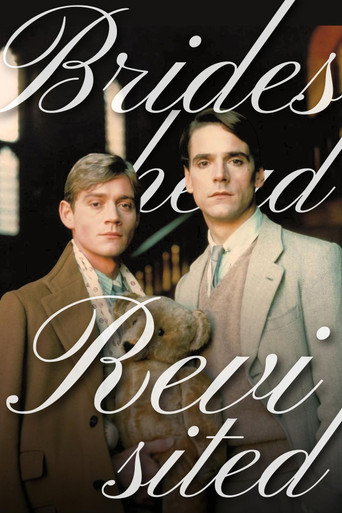
Brideshead Revisited
1981 · TV series · 60 min episodes · 1 season
Created by Derek Granger
Agnostic Charles Ryder is seduced by the allure of the Flytes, a wealthy aristocratic family. Although he finds himself at odds with their strong Catholicism, his ties to the family deepen for the decades between the two world wars.
3 positive1 negative1 neutralfrom 5 commenters
Where to watch
No streaming data for this title.

5 comments on Hacker News
How unexpected - beautifully written! It's almost surprising that the quoted passages are so familiar - I hadn't realised how affecting they are. Whilst loving the book I can't consider Brideshead Revisited without thinking of the wonderful 1980s Granada TV adaptation. I didn't dare watch the more recent film, lest it spoil the tableaux of the original.
Gatsby, like most officially great novels, is the least good of Fitzgerald's books. Tender is the Night and The Beautiful and the Damned were way better. There was something about critics of the time who needed to suffer to appreciate anything and it was good of Mencken to hold Fitzgerald to his own standards, but what made authors of the era great were the books that were actually enjoyable. When you look at other authors of the era, where W. Sommerset Maughm is known for his miserable slog, Of Human Bondage, when The Razors Edge, Cakes and Ale, and the Painted Veil were way better, and he's even credited with being the precursor of the spy novel with his Ashenden stories. Hemmingway was a short story writer, but somehow he is remembered for the fawning reception of Farewell to Arms. Evelyn Waugh was savagely funny if you have read Scoop, Decline and Fall or Black Mischief, but Brideshead Revisited was the critical success that got made into a sappy miniseries.
It's like critics take your least spectacular and most vulnerable work and tag you with it as your best so as to ensure you are never known for the great stuff that got you on their radar and that might put their own work to shame. However, it doesn't matter, their lives are absurd. Quite a number of them make a living criticising food now, mostly because it can't defend itself.
The era of great criticism that began with characters like Mencken and, earlier, Bierce ended with the death of Christopher Hitchens I think. None of them, including Vidal, or Hunter S. Thompson would survive the culture today. I think it's too bad that the idea of a literary rivalry now seems as dated as fighting a duel with sabres, and it's as though there is nobody writing today who is capable of putting down a challenger when instead they can claim to be the victim of harassment to attract a mob. Mencken was great, and given Fitzgeralds other work, his Gatsby review was an act of mercy, but I bet he would be banned from social platforms and probably have trouble getting a bank account if he were writing today. Hard to say what we lost, but reading Mencken now, it's definitely gone.
The BBC did a pretty good audio adaptation of Neuromancer. You can listen to it here:
https://www.youtube.com/watch?v=S89BHnaxULo
Neuromancer would be hard to do well as a film. But as fairly short TV series it would be excellent. There is huge potential as well because you could do, say Neuromancer in 4 hours and then do the rest of the trilogy.
The best screen adaptation of a book I know of, Brideshead Revisited from 1981, took the book almost word for word and made a fairly long TV series. Neuromancer and the rest of the trilogy could be done the same way.
> brideshead revisited
Is a novel, not a documentary.
IMHO the best 20th century novel in the English language: Brideshead Revisited. A cursory reading, or viewing of the TV series or recent film, can leave the misleading impression that it's a eulogy to aristocratic privilege. But that's because it wears its more profound themes so lightly. Those themes are life, love, the quest for happiness & acceptance, the nature of art, and the Catholic faith. As a work of apologetics it's extremely reticent; only Catholics will notice its Catholicity. All should read at a gentle pace to savour its wisdom. Some quotes...
“But I was in search of love in those days, and I went full of curiosity and the faint, unrecognized apprehension that here, at last, I should find that low door in the wall, which others, I knew, had found before me, which opened on an enclosed and enchanted garden, which was somewhere, not overlooked by any window, in the heart of that grey city.”
“To understand all is to forgive all.”
“... To know and love one other human being is the root of all wisdom.”
“Oxford, in those days, was still a city of aquatint. In her spacious and quiet streets men walked and spoke as they had done in Newman's day; her autumnal mists, her grey springtime, and the rare glory of her summer days - such as that day - when the chestnut was in flower and the bells rang out high and clear over her gables and cupolas, exhaled the soft airs of centuries of youth. It was this cloistral hush which gave our laughter its resonance, and carried it still, joyously, over the intervening clamour.”
And finally: "beware charm!"