 Hacker Cinema
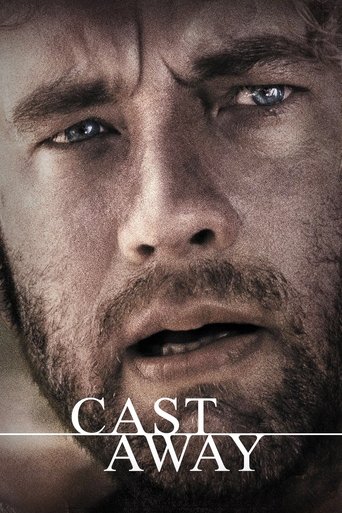
Cast Away
2000 · Film · 143 min
Directed by Robert Zemeckis
Chuck Noland, a top international manager for FedEx, and Kelly, a Ph.D. student, are in love and heading towards marriage. Then Chuck's plane to Malaysia crashes at sea during a terrible storm. He's the only survivor, and finds himself marooned on a desolate island. With no way to escape, Chuck must find ways to survive in his new home.
2 positive12 neutralfrom 14 commenters
Where to watch
No streaming data for this title.



17 comments on Hacker News
That's a good point. But as they say, the three genres of literary conflict are "man vs man", "man vs nature", and "man vs himself". There are many good films that don't have a human antagonist, such as Cast Away, and there's no reason Wilson couldn't be a dinosaur. =)
> “May your journey inspire a Tom Hanks movie” is a horrible curse.
As long as it’s not Cast Away (2001). I’d rather not be stranded on a remote island all alone :p
As a fan of post-modern movies, I would love if this was the case. However I’m afraid that you are misremembering history a bit here. Postmodern movies heydays have long passed. I’m afraid the reached their peak in the 90s with e.g. the Danish dogma movies (pun intended), independent American movies like Clerks, etc. In fact Pulp fiction was a counter punch to the scene by taking elements of postmodern movies, telling a pulp story and dressing it in a Hollywood film. Ironically it is a long running joke among postmodernists to over-analyze Pulp Fiction with a postmodern reading.
Postmodern films got a tiny resurgence around 2007, but never with the same popularity as the pomo scene of the 90s.
So Lord of the Rings is made between those two modes. The movie industry is living in the wake of the unexpected Titanic success, and the studios are trying to create the next big hit. Movies like Gladiator, Pearl Harbor, Cast Away, Meet the Parents, The Mummy, Moulin Rouge! or Chicken Run etc. is what most people are seeing. The themes of the post modern movies is indeed far away.
I got 5 right. Harold and Kumar, Space Jam, Cast Away, Willy Wonka, and Fear and Loathing. I feel like the prompts were generated off of movie frames? Space Jam for example was very obviously containing cartoons wearing Space Jam jerseys
Watching this movie called Cast away to the moon and found out about this today.
They are known as Japan’s “lost generation” or “invisible youth”.
No longer able to face society, they have locked themselves in their bedrooms and refuse to exist in the outside world.
> Then there's "it's all remakes now"—but 1) it's not,
It really is, if by "remake" you mean all ways of leveraging existing IP. Here are the top ten box office films of 2020:
* Bad Boys for Life (sequel) * Sonic the Hedgehog (videogame) * Birds of Prey (comic book) * Dolittle (book) * The Invisible Man (book) * The Call of the Wild (book) * Onward (original) * The Croods: A New Age (sequel) * Tenet (original) * Wonder Woman 1984 (sequal, comic book)
Two originals. Now go back 20 years:
* Mission: Impossible 2 (sequel) * Gladiator (book) * Cast Away (original) * What Women Want (original) * Dinosaur (original) * How the Grinch Stole Christmas (book) * Meet the Parents (remake) * The Perfect Storm (book) * X-Men (comic book) * What Lies Beneath (original)
Four originals. Go back another 10 years:
* Ghost (original) * Home Alone (original) * Pretty Woman (original) * Dances with Wolves (book) * Total Recall (short story) * Back to the Future Part III (sequel) * Die Hard 2 (sequel) * Presumed Innocent (book) * Teenage Mutant Ninja Turtles (comic book) * Kindergarten Cop (original)
Five originals. Another ten years to 1980:
* The Empire Strikes Back (sequel) * 9 to 5 (original) * Stir Crazy (original) * Airplane! (original) * Any Which Way You Can (sequel) * Private Benjamin (original) * Coal Miner's Daughter (original) * Smokey and the Bandit II (sequel) * The Blue Lagoon (book) * The Blues Brothers (SNL sketch)
Five originals again. I'm going by top box-office gross here because I think that's a good proxy for what is successful. You can look at other years, but there is a very clear (but not overwhelming) trend towards movies based on familiar content. It's not clear whether studios are leading audiences or vice versa. Probably some iterative process of both.
There's also a clear trend away from dramas. I think that's because drama (and non-slapstick comedies) tend to rely heavily on specific cultural norms for their effect which makes them translate poorly. There is a very clear trend especially in the last decade or so of Hollywood focusing on movies that will also do well in China in particular.
> Literature, fiction and cinema are all full of similar tales (not all in mountain scenarios) and so I expect that this "ability" is part of being human.
Cast Away with Tom Hanks is an example of that. Not sure if The Terminal or Into The Wild or Martyrs also had that concept, but it would've fit.
I wonder if (extreme) trauma can cause people to become so-called 'paranormal'.
No, I think you're the ideal audience member. To become so engrossed in the movie that you notice no artifact is the goal of most moviemakers. (I've studied filmmaking for 30 years.)
The same director, Robert Zemeckis, made Cast Away. There's a scene where Tom Hanks has removed the tape from a videocassette and tied strips of it to a tree, as streamers, to tell him when the wind changes direction. The strips of tape are blowing in the wind, and slowly they start blowing over to the other side, to show that the wind has finally changed direction. (He needs to know this as part of his plan to sail away.) Anyway, the tape was all computer animation! I guess they couldn't get it to act how they wanted with real tape and some fans. So they painstakingly animated it, and I would have never known, had I not heard it on the behind-the-scenes commentary.
I think the days of being stranded on islands are over. But what about oceans and being lost at sea? Would the film "Cast Away" make sense with today's satellite and object detection technology?
Ever seen the movie Cast Away? Find yourself a Wilson.
Or real people. Ha!
https://en.wikipedia.org/wiki/Rubber_duck_debugging
It's a classic piece written by a Vietnam War veteran: Why Men Love War (1984) By William Broyles, Jr. https://www.esquire.com/news-politics/news/a28718/why-men-love-war/
Boyles is a screenwriter who was involved in writing in the movies like Apollo 13, Cast Away, Jarhead, and Saving Private Ryan.
I'm reminded by the fictional movie Cast Away from 2000 starring Tom Hanks [1]
[1] https://en.wikipedia.org/wiki/Cast_Away
Inefficient, mostly not new either because in the past you'd have one person with that responsibility: the one who has experience with ledger. Now everyone's a notary. How it'd happen with centralized/specialization is another person would cut wood, yet another would hunt fish, and everyone would do their part (you can see this in effect in the movie The Beach [1] though the group is larger than 4 like in this example; also in Cast Away its just that there's only 1 person there who has to do everything by himself which makes it a redundant example). Everyone specializes in something because that is more efficient when HR are scarce. Because the group is small its easy to keep track who's doing what; instead of pet peeves like ledger.
So in short either you're so bored that you don't have anything better to do, or you're busy with surviving. If you're bored and you happen to have pen and paper I can recommend something different: PnP RPG. Such relies on something you'll always have with you even when you're alone (see Cast Away [2] as well): your imagination.
[1] https://www.imdb.com/title/tt0163978/
[2] https://www.imdb.com/title/tt0162222/
> Depends how hungry you are. If the alternative's dying, most people would.
Yeah, survival movies like Cast Away, Into The Wild, and 127 Hours (I just saw the latter) underline that people do weird things to survive including diet-wise. But I also saw the voluntary coin of the story in the beautiful documentary Happy People: A Year in the Taiga. An animal lives in freedom and relative peace, until it gets hunted and killed. That's different from ~45 days of prison life a chicken here gets. Can't compare that 1:1 and judge the former as non-vegan. Its as close to vegan as it gets due to being natural.
It's a fun way to find sequential tokens (words) that have a high probability of being the names of people.
- Take a lexicon (list) of single words in a given language (English for example).
- Take a block of text and think of it as an ordered sequence of tokens, news articles work really well for this approach, books not as much.
Example (from http://www.cnn.com/2012/11/02/showbiz/movies/flight-review-charity/index.html?hpt=hp_bn9): With its spectacular plane crash -- I would rate it fractionally behind the air disasters director Robert Zemeckis staged in "Cast Away" and Joe Carnahan in "The Grey," but still more than gut-wrenching enough to make you think about taking the train, next time -- "Flight" immediately raises the stakes on your typical addiction drama. But that's essentially what it is -- with a courtroom finish for extra lift.
- Stream through the text, any word that is in your lexicon, throw away.
---- ---- ----------- ----- ----- -- - ----- ---- -- ------------ ------ --- --- --------- ------- Robert Zemeckis ------ -- "---- ----" --- Joe Carnahan -- "--- ----," --- ----- ---- ---- ------------- ------ -- ---- --- ----- ---- ----- --- -----, ---- ---- -- "------" ----------- ------ --- ------ -- ---- ------- --------- -----. --- ----'- ----------- ---- -- -- -- ---- - --------- ------ --- ----- ----.
- treat each group of remaining tokens as separate objects, in this case we have 2
- write these non-lexical (not in your original lexicon) sequences out:
Robert Zemeckis
Joe Carnahan
Boom, you just made an entity extractor that plucks names out of text without having to model the English Language too rigorously. And it generally works in most languages that have a low intersection between name-part tokens and lexicon tokens. And it can be brutally fast.
Where this gets interesting is in suppressing junk and tweaking the algorithm around things like parenthesis, apostrophese, and sentence boundaries. There's lots of little edge cases like this that you have to be mindful of - numbers in the text for example are never parts of names but aren't in your lexicon so you have to figure out what to do with those. And then you can use other heuristics to improve the results, suppose another sentence just had "Zemeckis" in it, that's a name, but then suppose another sentence had a token not in your lexicon like "Samoflange"...do you count that as a name? What about lexical tokens that are names like "Bush"? So you can try things like only counting sequences of tokens that have more than 2 tokens (like "Robert Zemeckis") and ignoring ones that have only 1.
And it goes on and on -- endless tweaks to improve the quality of the names you get and suppress non-name sequences.
To make the project more interesting, try storing your lexicon in a database or some kind of index so you can search it quickly, I like to use SQLite files with indexes on the lexicon table myself, but it's a fun assignment to try different things like in-memory TRIEs.
If you want to try threading, you can try playing around with searching the text at different start and end points (thread 1 searches the first 25% of the text, thread 2 the second 25%, etc.) or have different threads search different articles.
You can try all kinds of different things to keep it interesting and as you start abstracting the problem you can play with all kinds of different control and data structures to accomplish the task. Trying to make this as fast as possible (with all the heuristics turned on) can also be a fun challenge.
Micro Men from BBC had some startuppy themes when Acorn began, although it was more about the rivalry with Sinclair than the startup experience itself.
In my head I associate all kinds of survival movies like Cast Away, Rescue Dawn etc. being startuppy as well in the sense that the characters are surviving on their wits and persistence, against forces of nature and their own doubts.
The movie / fedex commercial was Cast Away.