 Hacker Cinema
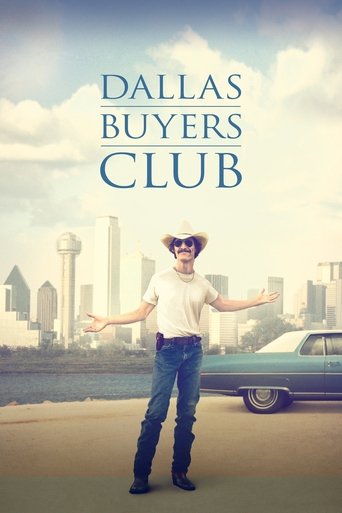
Dallas Buyers Club
2013 · Film · 117 min
Directed by Jean-Marc Vallée
Loosely based on the true-life tale of Ron Woodroof, a drug-taking, women-loving, homophobic man who in 1986 was diagnosed with HIV/AIDS and given thirty days to live.
4 positive1 negative7 neutralfrom 12 commenters
Where to watch
No streaming data for this title.




13 comments on Hacker News
Yep, check out Dallas Buyers Club v iiNet
Here's some commentary on it:
> Justice Perram discussed the idea of speculative invoicing within Australia [at 82]:
> Representing to a consumer that they have a liability which they do not may well be misleading and deceptive conduct within the meaning of s 18 of the Australian Consumer Law and it may be equally misleading to represent to someone that their potential liability is much higher than it could ever realistically be. There may also be something to be said for the idea that speculative invoicing might be a species of unconscionable conduct within one or other of s 21 of the Australian Consumer Law or s 12CB of the Australian Securities and Investments Commission Act 2001 (Cth).
> Further, even if speculative invoicing was deemed to be lawful within Australia, the damages that the individual may be liable to are often calculated differently to that of the United States. In Australia, damages are compensatory in nature, meaning to compensate the plaintiff for the loss suffered. One Intellectual Property Lawyer has been quoted as saying, ‘If a film costs $20, the damages would ordinarily be expected to be $20.’
https://www.kells.com.au/insights/business/dallas-buyers-club-llc-v-iinet-limited
It makes me wonder, is there a way to get this drug from a Chinese or Indian lab? I'm sure there are severe legal repercussions, but purely theoretically. It reminds me of the film The Dallas Buyers' Club
Good for Reddit. These piracy lawsuits are out of control. The same culprits seem to show up every time (I guess their crappy movies didn't make enough money):
The film companies seeking Reddit users' identities include After II Movie LLC, Bodyguard Productions, Hitman 2 Productions, Millennium Funding, Nikola Productions, Rambo V Productions, and Dallas Buyers Club LLC.
The first one is a great idea. Nationalizing pharma is much simpler and better roi than trying to nationalize all of medicine. As pharma makes up half of medical spending, it is by far the lowest hanging fruit.
Options 2 and 3 are wretched ideas. It’s the reason we have $100 insulin instead of $3. It’s also why the US has inferior treatments in certain areas.
Logically the FDA kills X amount of people per year by hindering rapid and accessible adoptable of medicine. They save Y by hindering the adoption of bad medicine.
In theory Y is higher than X, but I am skeptical if that is still true.
I’d recommend you watch Dallas Buyers Club.
I think it would be like this. "Dallas Buyers Club" https://www.imdb.com/title/tt0790636/.
https://slate.com/culture/2013/11/dallas-buyers-club-true-story-fact-and-fiction-in-the-matthew-mcconaughey-movie-about-ron-woodroof.html
> Facebook’s competitive advantage is its disregard for ethics.
This appears to be a quality that occurs in some business owners.
I know more than a single entrepreneur with similar disregard for things like data retention and PII. Their reluctance to address these issues when advised, I assume, would persist until they get burned.
Taking a step back, at the root it appears simply that some people are better at focusing than others. These entrepreneurs would work on improving metrics they see relevant and their effort will be more efficient thanks to zoning everything else out.
Seeing evil intent here would be counterproductive, similar to reprimanding someone on the spectrum for not saying hello: it might just not occur to a person. The key difference here is that these decisions negatively impact countless third parties, and those third parties lack the expertise to recognize the issue.
While there’s a lot that can be said against FDA[1], there seems to be a parallel here. I want to reserve my judgement about regulation in this area, but it seems like there’s a case for it, similar to how we’d like to keep food manufacturers in check.
[1] A movie called Dallas Buyers Club comes to mind.
Jeez that scene is truly heart wrenching. I wasn't awfully keen on McConaughey films previously, but you're right, there's something about this role where he knocks it out of the park. I then watched Dallas Buyers club, he nails that as well.
Food and clothes are more needed than health products. You'll literally die in less than one week without any of them, yet they're cheap and plenty.
And make no mistake: when the state intervened those markets people died like flies from starvation. Just look at Venezuela, that was a rich country 20 years ago.
If you want to learn something about state protection in the drug market, see "Dallas buyers club" movie.
I recommend to watch Dallas Buyers Club, it addresses the very point you make.
One could argue, how could the trials NOT be morally randomised? Are we doing a disservice by not conducting the trials in a way to study the efficacy of certain drugs.
> Since entertainment is fungible, the competition for for 12 Years a Slave isn't just Dallas Buyers Club, it's also 2048, reddit, Attack on Titan, the Olympics, and whatever piques my interest during a Steam Sale. That sounds like the increase in supply for entertainment is far outstripping the increase in demand.
That's only because the home video market allowed people the luxury to legally watch any existing movie anytime they want, once they have purchased it, without the possibility of the studio revoking permission.
Don't worry - studios are already trying to think of ways to "fix" that (stream-only content that is never released in DVD format is one example)
Here's his press release:
http://polis.house.gov/news/documentsingle.aspx?DocumentID=371808
March 5, 2014
Dear Secretary Lew, Chairwoman Yellen, Comptroller Curry, Acting Chairman Wetjen, Chairman Gruenberg, Chairwoman White:
I write today to express my concerns about United States dollar bills. The exchange of dollar bills, including high denomination bills, is currently unregulated and has allowed users to participate in illicit activity, while also being highly subject to forgery, theft, and loss. For the reasons outlined below, I urge regulators to take immediate and appropriate action to limit the use of dollar bills.
By way of background, a physical dollar bill is a printed version of a dollar note issued by the Federal Reserve and backed by the ephemeral “full faith and credit” of the United States. Dollar bills have gained notoriety in relation to illegal transactions; suitcases full of dollars used for illegal transactions were recently featured in popular movies such as American Hustle and Dallas Buyers Club, as well as the gangster classic, Scarface, among others. Dollar bills are present in nearly all major drug busts in the United States and many abroad. According to the U.S. Department of Justice study, “Crime in the United States,” more than $1 billion in cash was stolen in 2012, of which less than 3% was recovered. The United States’ Dollar was present by the truck load in Saddam Hussein’s compound, by the carload when Noriega was arrested for drug trafficking, and by the suitcase full in the Watergate case.
Unlike digital currencies, which are carbon neutral allowing us to breathe cleaner air, each dollar bill is manufactured from virgin materials like cotton and linen, which go through extensive treatment and processing. Last year, the Federal Reserve had to destroy $3 billion worth of $100 bills after a “printing error.” Certainly this cannot be the greenest currency.
Printed pieces of paper can fit in a person’s pocket and can be given to another person without any government oversight. Dollar bills are not only a store of value but also a method for transferring that value. This also means that dollar bills allow for anonymous and irreversible transactions.
The very features of dollar bills, such as anonymous transactions, have created ubiquitous uses from drug purchases, to hit men, to prostitutes, as dollar bills are attractive to criminals who are able to disguise their actions from law enforcement. Due to the dollar bills’ anonymity, the dollar bill market has been extremely susceptible to forgers, tax fraud, criminal cartels, and armed robbers stealing millions of dollars from their legitimate owners. Anonymity, combined with a dollar bills’ ability to finalize transactions quickly, makes it very difficult, if not impossible, to reverse fraudulent transactions.
Many of our foreign counterparts already understand the wide range of problems that physical currencies can have. Many physical currencies have enormous price fluctuations, and even experience deflation. 20 years ago Brazil had an inflation rate of 6281%. In 4 years (2001 to 2005), the Turkish Lira went from 1,650,000: $1 to 1.29 to $1. In 2009, Zimbabwe discontinued it’s dollar. Before it was eliminated, the Zimbabwe dollar was the least valuable currency in the world and their central bank even issued a $100 trillion dollar banknote. A person would starve on a billion Zimbabwe dollars and it took an entire wheelbarrow full of $100 billion dollars in notes to purchase a loaf of bread.
The clear use of dollar bills for transacting in illegal goods, anonymous transactions, tax fraud, and services or speculative gambling make me wary of their use. Before the United States gets too far behind the curve on this important topic, I urge the regulators to work together, act quickly, and prohibit this dangerous currency from harming hard-working Americans.
Sincerely,
Jared Polis Member of Congress
This is very disappointing to see.
I often see people wondering why HIV has evaded both a vaccine and cure for so long, despite the amount of attention and money it has received.
The HIV virus is remarkably fragile and (relatively) difficult to transmit. However, it mutates incredibly quickly compared to other viruses - an HIV+ patient may have multiple strains of the virus in their body at any one time, requiring the infamous "cocktail" of drugs as no single drug will be effective.
Vaccinations have been (so far) ineffective because they attempt to vaccinate against a rapidly moving target.
Hepatitis B, on the other hand, is a much more easily-transmitted virus, and yet we have been able to develop a reasonably effective vaccine against it[0]. For a while, it used to be standard practice to vaccinate all young children against Hepatitis B; I'm not sure if it still is.
Unfortunately, Hepatitis C, which kills more people in the US than HIV/AIDS[1], is arguably even worse - it is also much easier to transmit than HIV, but we don't have a vaccine against it either. Furthermore, because most of the public campaigns advocating safe sex and clean needles use HIV-specific language, many people aren't aware that it is such a huge threat. Like HIV, it is asymptomatic for several years, so as many as 75% of people infected with Hepatitis C don't even know it[2]:
Epidemiologically (not politically) Hepatitis C today is similar to the state of HIV in the 80s and 90s[3]. We have some medications to treat it, but they're not very effective - living with Hepatitis C is oftentimes worse than living with HIV.
[0] As with all vaccines, it is imperfect, which is why coverage across the general population is the best approach to eradication or containment.
[1] https://en.wikipedia.org/wiki/Hepatitis_C#Epidemiology.
[2] http://m.cdc.gov/en/VitalSigns/hepatitis-c
[3] At least outside the US - the US was one of the last countries to approve HIV antiretrovirals, which incidentally is the topic of a movie currently in theatres: https://en.wikipedia.org/wiki/Dallas_Buyers_Club