 Hacker Cinema
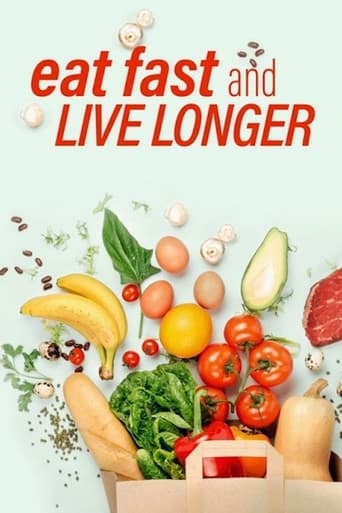
Eat, Fast and Live Longer
Horizon: Eat, Fast and Live Longer
2012 · Film · documentary · 59 min
Directed by Kate Dart
British journalist and physician Michael Mosley sets an ambitious goal: to become healthier and lose weight while making as few changes as possible to his life. In working toward these goals, Mosley discovers a powerful new science behind the old idea of fasting, a program that still allows him to enjoy his favorite foods. He takes a road trip across the U.S. to investigate how a little hunger can turn on the body’s “repair genes” and, of course, tries the new science himself. Mosley learns that a diet based on feast and famine has powerful effects on the body, reducing the risks of heart disease, diabetes and some cancers. The diet seems to pack the anti-aging clout of calorie restriction while still allowing for a taste of the good life. And it turns out to be not only good for the body; it may also be good for the brain.
5 positivefrom 5 commenters
Where to watch
No streaming data for this title.




9 comments on Hacker News
Fast was just an experiment. A colleague had done it for a year and I was curious. I lost about 8 lbs over 4 months. Other than that, uncertain of health effects.
The idea for it and some health claims are in a BBC documentary you can find online: "Eat Fast and Live Longer."
Fasting is something you need to train. If you have trouble with it so far, the approach outlined is to irregular. It's easier to get your body used to something you repeat on a schedule.
Fasting every second day is quite doable; and actually the subject of quite a bit of research. (I guess it's easy to write papers about it.) On the Internet limiting your eating hours every day to an 8h or even 4h window seems to be more popular. Eg from 13.00 to 17.00. People report it's doable to get used to those meal timings after a few days. And the limited time window make it easier to restrict calories; the only way any weight-loss diet scheme works in the end.
Just to give you something to Google: The former is often called alternate day fasting; the latter intermittent fasting.
The BBC ran an interesting documentary: "Eat, Fast and Live Longer" https://vimeo.com/103656060
See also https://www.reddit.com/r/intermittentfasting/
https://www.reddit.com/r/loseit/
And for a view of how the other half lives: https://www.reddit.com/r/gainit/
The BBC documentary Eat, Fast and Live Longer by Michael Mosley also discusses the benefits of fasting:
https://vimeo.com/103656060
Michael Mosley's documentary, ”Eat, Fast and Live Longer” (about the health benefits of calorie restriction) is also interesting in the context of this article:
https://vimeo.com/103656060
the plank (an exercise to help lose excess fat round the stomach)
This is incorrect. The plank is an excellent exercise for building core strength (much better than situps), but it does not help lose excess fat around the stomach more or less so than any other exercise does.
The companion documentary (Eat, Fast, and Live Longer) is worth watching - https://vimeo.com/50912488
Personal note: I've been following this diet since Jan 1. I also run ~ 70 miles/week. I've run 3 of my best marathons this year and lost 5 stubborn lbs (145 -> 140, I'm 5'8"). There are other styles of intermittent fasting. I'm enjoying this way of eating.
Aside, a related BBC/Horizon documentary I saw years ago flipped the question of obesity on its head and asked: Why Are Thin People Not Fat?
https://www.youtube.com/watch?v=U1hbPXooB1U
I've known (and have been following a form of fasting diet) about this since I watched this documentary: Eat, Fast and Live Longer (BBC Horizon, 2012-2013)[1]
> Michael Mosley has set himself a truly ambitious goal: he wants to live longer, stay younger and lose weight in the bargain. And he wants to make as few changes to his life as possible along the way. He discovers the powerful new science behind the ancient idea of fasting, and he thinks he's found a way of doing it that still allows him to enjoy his food. Michael tests out the science of fasting on himself - with life-changing results.
You can watch it here: http://www.dailymotion.com/video/xvdbtt_eat-fast-live-longer-hd_shortfilms
[1] http://www.bbc.co.uk/programmes/b01lxyzc
Still, it might have been interesting to have your blood work done before and after to see what the changes were. There's compelling evidence for fasting. See Micheal Mosley's Eat, Fast and Live Longer documentary:
https://vimeo.com/103656060
Personally, I'm following a 5:2 intermittent fast this year while also maintaining 63 mi/week running, including 9 mi on the days I fast.
The BBC produced a documentary on the fasting titled Eat, Fast and Live Longer, it's well worth a watch - http://www.dailymotion.com/video/xvdbtt_eat-fast-live-longer-hd_shortfilms
There was a great episode of Horizon titled Eat, Fast And Live Longer which tackled the benefits of fasting. Even a very reasonable fasting routine seemed to have a non-trivial positive effect on the show's host. It was convincing enough that I gave it a shot, and though I haven't been able to stick with it (or an exercise routine, for that matter), I felt significantly better in the ~week following even a one day fast.
One of the things suggested by a researcher in the episode, is to make your "cheat day" the day following a fast. Tell yourself that you can eat anything you want, because (and this was certainly my experience) even if you intend to binge heavily, you most likely will not. You will, however, still feel incredibly satisfied after devouring that bag of chips, or splurging on the cheesecake after dinner. I can't remember the exact number, but the researcher mentioned that during this routine, the subjects would only eat around 10% more than their recommended daily caloric intake.