 Hacker Cinema
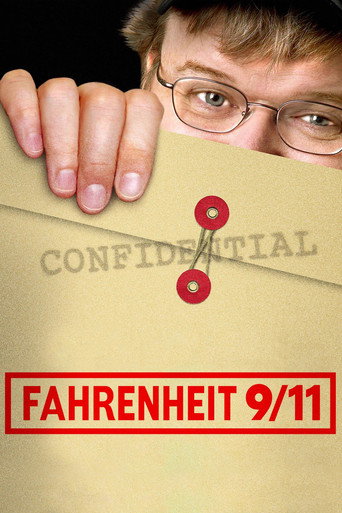
Fahrenheit 9/11
2004 · Film · documentary · 123 min
Directed by Michael Moore
Michael Moore's view on how the Bush administration allegedly used the tragic events on 9/11 to push forward its agenda for unjust wars in Afghanistan and Iraq.
1 positive1 negative1 mixed19 neutralfrom 22 commenters
Where to watch
No streaming data for this title.




25 comments on Hacker News
I thought that Citizens United was about who counts as a film maker and who doesn't. Quoting the background of the Wikipedia page for Citizens United.
"Citizens United had previously used the 2002 Bipartisan Campaign Reform Act, commonly known as the McCain–Feingold Act or BCRA, which prohibited "electioneering communications" by incorporated entities.[7] During the 2004 presidential campaign, the organization filed a complaint with the Federal Election Commission (FEC) charging that advertisements for Michael Moore's film Fahrenheit 9/11, a docudrama critical of the Bush administration's response to the terrorist attacks on September 11, 2001, constituted political advertising and thus could not be aired within the 30 days before a primary election or 60 days before a general election. The FEC dismissed the complaint after finding no evidence that advertisements featuring a candidate within the proscribed time limits had actually been made.[8] In response, Citizens United produced the documentary Celsius 41.11, which is highly critical of both Fahrenheit 9/11 and 2004 Democratic presidential nominee John Kerry. The FEC, however, held that showing Celsius 41.11 and advertisements for it would violate the Federal Election Campaign Act, because Citizens United was not a bona fide commercial film maker." It's a ruling that is against gate keeping. Like letting people who aren't with CNN or Fox News but who have massive online audiences into the white house briefing room.
Not a lawyer either, but I believe regulations on speech, as here, are scrutinized ("strictly") such that regulations are not allowed to discriminate based on content. Moderation is usually based on content. Whether something is fact or not, opinion or not, is content-based.
Citizens United held that criminalizing political films is illegal. Allowing Fahrenheit 9/11 to be advertised and performed but criminalizing Hillary: The Movie is exactly why Citizens United was correct and the illiberal leftists are wrong.
Agreed, I've found that much of the criticism of Citizens United isn't very well-informed. In a way it's an embarrassment that the Supreme Court had to affirm that a First Amendment right extends to corporations, because it's right there in the plain text: "abridging the freedom of speech, or of the press". "The press" has always, universally, been understood to mean publishing, which is a business, and hence a corporate practice.
It was naked partisan suppression of speech to rule that Fahrenheit 9-11 is protected speech but it's 'electioneering' when Citizen's United funds a documentary. Not that I'm a fan of Citizen's United, quite the contrary, they started the whole brouhaha by suing to prevent Moore's advertisements from showing before elections. But the grounds the FEC used to dismiss that suit were equally applicable to Celsius 41.11, it was a clear-cut case of administrative overreach.
You can't have freedom of the press if the government is allowed to decide which corporations are and are not "the press", that's a loophole you could barnstorm a Saturn V through.
Ya, it's ok to let other people like things.
(My response to) Behind the Bastards reminds me of (my response to) the movie Fahrenheit 9/11. While I emphatically agree with his POV, Michael Moore's creative voice makes me cringe. Worse, I feel that Fahrenheit 9/11 is the coloring book version of the Bush Admin's crimes and misdemeanors.
However. After watching the audience's reaction, I accept that Moore is right and I am wrong. He met people where they're at and showed them something new. Resulting in a greater awareness. I certainly could not have done that.
Given Behind the Bastard's popularity, I know that Robert Evans and friends are doing the same yeoman's work. Which I appreciate and respect very much.
> What is your thought process for thinking the president was not hustled onto air force one? He just stayed wherever he was at.... For how long?
There is an actual video recording of George W. Bush sitting in the classroom with the kids when the 9/11 attacks occurred. Watch it for yourself, in Michael Moore's documentary Fahrenheit 9/11: https://en.wikipedia.org/wiki/Fahrenheit_9/11
After that, you can come back here and apologize for disparaging me. Or you can apologize now...
They weren't fully illegal at the time. Citizens United actually got the idea to do it from Michael Moore's film Fahrenheit 9/11, which was theatrically released in the small window between primary and general election seasons but advertised and shown at Cannes during the primary. The FEC's policy was based on a standard of "bona fide commercial activity" - filmmakers were covered by the restriction if and only if the FEC didn't think they were trying hard enough to make money.
Of course, like you said earlier, maybe they would have been fully illegal if the US didn't have a written constitution requiring lawmakers to think in terms of principles. It's a hard hypothetical to reason about.
I have yet to see a feature-length film depicting Trump the way, e.g. Oliver Stone's "W" or Michael Moore's "Fahrenheit 9/11" depicted Bush. Trump's crimes are buried in a mountain of...other crimes, and the atmosphere is so thick with bullshit that investigating facts is to tempt a firehouse of political hate of epic proportions. I think certain topics are virtually suicide these days.
If you look at the case, I cannot imagine how SCOTUS could have ruled any other way. The government actually tried to argue that they had to power to censor a book, even if that book had one line that they deemed to be advocating for a candidate [1]. Worse, the FEC standard was arbitrary and capricious. They censored an anti-Hillary documentary put out by a conservative group (Citizens United) but did nothing against Moore's Fahrenheit 9/11 (which was expressly put out to advocate against Bush).
[1] https://en.wikipedia.org/wiki/Citizens_United_v._FEC#Arguments_before_the_Supreme_Court
"During the original oral argument, Deputy Solicitor General Malcolm L. Stewart (representing the FEC) argued that under Austin v. Michigan Chamber of Commerce, the government would have the power to ban books if those books contained even one sentence expressly advocating the election or defeat of a candidate and were published or distributed by a corporation or labor union. In response to this line of questioning, Stewart further argued that under Austin the government could ban the digital distribution of political books over the Amazon Kindle or prevent a union from hiring an author to write a political book."
To be clear, there are limits for direct political donations. What was decided, correctly, in the Citizens United vs. FEC case was the right for political activism from non-campaign affiliated entities (like corporates, nonprofits, labor unions, etc.). The context for that decision was FEC's attempt to censor a film from a conservative group made in response to FEC's refusal of classify Michael Moore's Fahrenheit 9/11 as political 'expenditure' (a film which had a clearly stated goal of getting Bush out of office). The FEC set a bullshit 'bona fide commercial film maker' as a standard for their decision, and when Citizen's United restablished itself as a film maker, their next film (an anti-Hillary documentary) was also found to be in violation. In no universe was FEC's policy fair and objective. From wikipedia, here's a crazy argument the government tried to make:
"During the original oral argument, Deputy Solicitor General Malcolm L. Stewart (representing the FEC) argued that under Austin v. Michigan Chamber of Commerce, the government would have the power to ban books if those books contained even one sentence expressly advocating the election or defeat of a candidate and were published or distributed by a corporation or labor union. In response to this line of questioning, Stewart further argued that under Austin the government could ban the digital distribution of political books over the Amazon Kindle or prevent a union from hiring an author to write a political book."
Isn't that an insane conjecture? This exchange by itself probably lost the FEC the case.
>Imagine a world where there was no money in politics.
Such a world never existed, does not exist, and will never exist. Politics are a center of power. You can ban money all you want, but all you'll accomplish is create a 'black market'. I posit that you do not want to live in such a world.
There's nothing to repeal. The aberration is not Citizens United, which has always been the law in the US. The aberration is the McCain-Feingold Campaign Reform Act, which Citizens United overturned. The relevant law is the First Amendment to the US Constitution. McCain-Feingold is the thing which tried to limit this, and was tossed out by the Supreme Court in Citizens United.
Most countries do not have strong protections on speech. The US does. There's no way to distinguish Fox News Media, a for-profit news organization with a distinct partisan slant, from One America News, a money-losing, overtly partisan news organization, from Citizens United, a political action committee trying to air a political documentary critical of Hillary Clinton on Pay-per-View.
You can't donate unlimited sums to candidates, but you can spend as much as you want on political media, including advertising. I'd love to hear how we can overturn Citizens United, but maintain things like Fahrenheit 9/11, a different political documentary critical of George W. Bush, and released right at the height of the 2004 election campaign.
Lawrence Lessig has a proposal to offer political donation vouchers to each and every private citizen. I think this is a great take on public financing that would help to level the playing field, while maintaining this country's strong protections on speech.
... Zuckerberg's instincts are 100% correct. I don't understand why people (usually democrats and the left now, but it could be right-wing evangelicals in the future) are pushing for social media companies to wade into the quagmire of politics. Twitter's 'fact check' of Trump's tweet is a perfect example of what happens if you try. Their fact check was wrong because it missed nuance and context of issues with mail-in ballots (as in, there is potential for fraud with related actions like 'vote harvesting'), and it pissed off people (not just Trump supporters) because it was ad hoc and arbitrary because you can easily find Democratic politicians making erroneous statements. Almost everything a politician will say is wrong in some way and from a certain perspective and having minimum wage Twitter reviewers be the arbiters of how political speech should be interpreted and in which way is a recipe for disaster.
The "Citizen's United" ruling came around when the FCC tried to enforce rules against political speech arbitrarily when they decided a right-wing documentary critical of Hillary was deemed to break election laws, but Micheal Moore's Fahrenheit 9/11 (which was also purposely designed to influence election) was not. And you know what, that is unfair. There is no universe in which it is fair that Moore's documentary gets to be exempted but a right-wing group's documentary doesn't. And because of the arbitrary politically-motived actions of the FCC, we ended up with completely unchecked election spending.
Get tech companies out of politics. If not, it will blow up in your face.
Serious question which didn’t escape the lawyers arguing the case, given that the primaries started in January, and the convention wasn’t until the end of July, how can it be said that their speech rights weren’t unduly restricted for an entire year, given that they would also have been restricted for 60 days prior to the general election (assuming that Hillary would have beat Obama)?
https://ballotpedia.org/2008_Primary_Elections_Calendar
And it is relevant, because the right to advertise Fahrenheit 9/11 was never restricted in this way, because the FEC decided that it was a different sort of documentary. Citizens United even sought to clarify this in 2004.
https://www.rcfp.org/fec-dismisses-fahrenheit-911-complaint/
The majority did decide on broader free speech grounds, on the urging of civil liberty groups like the ACLU, because they recognized that officials in the legislative and executive branches should not have the power to decide that some corporations (like Moore’s) were engaged in legitimate speech while others should be restricted. Or to decide which organizations were legitimate media orgs, and which were political activists, essentially making an artistic determination. Summarized in Wikipedia:
In Citizens United v. Federal Election Commission, however, the majority argued that the First Amendment purposefully keeps the government from interfering in the "marketplace of ideas" and "rationing" speech, and it is not up to the legislatures or the courts to create a sense of "fairness" by restricting speech.
The facts I referenced about the distinction in treatment of the two films are referenced in the annotation of the decision from the court here:
https://supreme.justia.com/cases/federal/us/558/310/#tab-opinion-1963051
Of note from Kennedy's decision:
Yet, the FEC has created a regime that allows it to select what political speech is safe for public consumption by applying ambiguous tests. If parties want to avoid litigation and the possibility of civil and criminal penalties, they must either refrain from speaking or ask the FEC to issue an advisory opinion approving of the political speech in question. Government officials pore over each word of a text to see if, in their judgment, it accords with the 11-factor test they have promulgated. This is an unprecedented governmental intervention into the realm of speech.
...
The law before us is an outright ban, backed by criminal sanctions. Section 441b makes it a felony for all corporations—including nonprofit advocacy corporations—either to expressly advocate the election or defeat of candidates or to broadcast electioneering communications within 30 days of a primary election and 60 days of a general election. Thus, the following acts would all be felonies under §441b: The Sierra Club runs an ad, within the crucial phase of 60 days before the general election, that exhorts the public to disapprove of a Congressman who favors logging in national forests; the National Rifle Association publishes a book urging the public to vote for the challenger because the incumbent U. S. Senator supports a handgun ban; and the American Civil Liberties Union creates a Web site telling the public to vote for a Presidential candidate in light of that candidate’s defense of free speech. These prohibitions are classic examples of censorship.
edit: noted the 60-day rule for general election, and added reference to decision.
> I don't see how that's a difficult distinction to make.
Citizens United is a non-profit that produces documentaries, and sought to distribute a documentary about Hillary Clinton during the 2008 primaries. It was sharply critical of her.
Fahrenheit 9/11 was a documentary produced and distributed by a for profit company called Dog Eat Dog Films, sharply critical of George Bush, and released in the summer preceding the 2004 election. The director, Michael Moore, was open about his hope that this film would impact the election.
You can watch both documentaries online now if you want to judge them on their merits and whether you consider each to be good political speech, or bad political speech. The idea that the FEC should be able to decide on your behalf is what the Citizens United decision was about.
Here from the Wikipedia backgrounder:
>In response, Citizens United produced the documentary Celsius 41.11, which is highly critical of both Fahrenheit 9/11 and 2004 Democratic presidential nominee John Kerry. The FEC, however, held that showing the movie and advertisements for it would violate the Federal Election Campaign Act, because Citizens United was not a bona fide commercial film maker.
Citizens United is a conservative non-profit organization, formed expressly to influence policy. Examples of a for-profit company engaging in free speech would be the New York Times Company, or Michael Moore’s film Fahrenheit 9/11.
Citizens United does not allow unlimited (or any) payments to a campaign. Citizens United was about the rights of a corporation to spend money publishing its own speech. Political speech is expressly protected by the first amendment, and the court decided that restraint of it was unconstitutional: https://www.supremecourt.gov/opinions/09pdf/08-205.pdf
> Because speech is an essential mechanism of democracy—it is the means to hold officials accountable to the people—political speech must prevail against laws that would suppress it by design or inadvertence. Premised on mistrust of governmental power, the First Amendment stands against attempts to disfavor certain subjects or viewpoints or to distinguish among different speakers, which may be a means to control content. (...) Political speech is indispensable to decision-making in a democracy, and this is no less true because the speech comes from a corporation. (...) All speakers, including individuals and the media, use money amassed from the economic marketplace to fund their speech, and the First Amendment protects the resulting speech.
What Citizens United wanted to do was distribute a documentary film critical of Hillary Clinton.
If someone feels that Citizens United was wrongly decided, then I would encourage that person to read through the case in detail to understand the issues evaluated by the court - specifically, the contradictions in reasoning, chilling effects, and violations of precedent that would result from deciding the case in the alternative. Difficult topics would need to be untangled such as: why should it be unlawful for Citizens United to distribute a political documentary when it's OK for media producers like Fox News or CNN or 60 Minutes or Netflix to do so? They engage in political speech whenever critiquing a policy position or candidate.
One must consider the sweeping consequences of what it would mean to restrain corporations, including the news media, from engaging in political speech. How does journalism and freedom of the press remain in this world, or what bright line distinguishes Citizens United from any other producer of documentaries like e.g. Michael Moore (Fahrenheit 9/11)?
Not a surprise with what the media has been doing. They've done it for every (R) President, but it gets worse every time. They protested Reagan, worried he was going to start a nuclear war with Soviet Russia. Worried he was going to take away rights from women. Worried what he was going to do in Central America. They called Bush 43 worse then Bin Laden, the worlds greatest terrorist. Hollywood commissioned movies like Fahrenheit 9/11 to try and conflate national tragedies with certain political views. Now with Trump, you have straight out suppression of certain viewpoints, implicit acceptance of violence against those in power, implicit acceptance of 'acceptable' racism, and constant ratcheting up of rhetoric by those who lost. I remember what Jon Stewart said on the Daily Show in 2012, to Republicans. "You LOST, it's SUPPOSED to taste like a shit sandwich!"
Must be regional?
The only movie I've ever heard people applaud for was a very political movie (Fahrenheit 9/11). That's also the only time I ever had to stand in line for a movie as well. If it wasn't opening weekend, it was close to it.
> I wonder which country don't censor movies?
The USA, for one.
The MPAA does rate movies, and most theater chains choose not to run movies rated to contain extreme violence or sexuality, but anyone can privately film and distribute a political (for example) film that might embarrass the US government.
Many such movies also run in theaters- see Fahrenheit 9/11, Citizenfour, All the President’s Men, etc.
One obvious place to draw the line - indeed, the place where used to be drawn - is the part where Citizens United tried to pay channels to air their film about Hillary. Normal media outlets are businesses, which means that they need to cover their costs somehow. They also have to gain and keep the trust of their audience through their reporting. If you're just paying off existing media outlets to show your propaganda to their audience solely for your political gain, then you're engaged in campaigning. This is why Citizens United's earlier attempts to get Fahrenheit 9/11 and its trailers banned failed; the FEC found that it was bona fide commercial activity.
I'm not sure there's a reasonable way past the "Napoleon Dynamite Problem". They mentioned, in the article, other movies where it's difficult to predict if someone would like them or not.
The list was “I Heart Huckabees,” “Lost in Translation,” “Fahrenheit 9/11,” “The Life Aquatic With Steve Zissou,” “Kill Bill: Volume 1” and “Sideways.”
Personally, the common thread I see across those is that the viewer would be more likely to enjoy the movie if they had the right context.
Kill Bill, for example, is far easier to enjoy if you've seen (not necessarily liked...but have seen) cheesy old Kung Fu / Karate movies.
Napoleon Dynamite is easier to appreciate if you were socially awkward yourself in high school. There's also some humor in there that's more relevant if you were a kid in the 80's, as well as some humor that might make more sense if you lived somewhere rural, or even more specifically, rural Idaho/Utah/Wisconsin.
All that to say that Netflix may not have enough data at their disposal to know if you have the right context to enjoy movies that almost require it.
"Let us summarize what our algorithm achieves. Given a user's /public/ IMDb ratings, which the user posted voluntarily to reveal /some/ of his (or her; but we'll use the male pronoun without loss of generality) movie likes and dislikes, we discover /all/ ratings that he entered /privately/ into the Netflix system" (em. orig.)
One's "political orientation maybe revealed by his strong opinions about "Power and Terror: Noam Chomsky in Our Times" and "Fahrenheit 9/11," and his religious views by ratings on "Jesus of Nazareth" and "The Gospel of John." Even though one should not make inferences solely from someone's movie preferences, in many workplaces and social settings opinions about movies with predominantly gay themes such as "Bent" and "Queer as folk" (both present and rated in [one individual's] Netflix record) would be considered sensitive"
I draw a slightly different conclusion than the author.
>I noticed they were all similar in some way to “Napoleon Dynamite” — culturally or politically polarizing and hard to classify, including “I Heart Huckabees,” “Lost in Translation,” “Fahrenheit 9/11,” “The Life Aquatic With Steve Zissou,” “Kill Bill: Volume 1” and “Sideways.”
To me, what all these movies share in common is that they are so original that they are less accessible to the first-time viewer (or, in the case of Farenheit 9/11, completely tied to one's political leanings).
For example, I walked out of Napolean Dynamite and was bored to tears with Lost in Translation. The second time I watched those movies, I laughed my butt off at Napolean Dynamite and I found Lost in Translation to be one of the deepest movies I'd ever seen. Just the thought of Lost in Translation now gives me a yearning heartache. If I used Netflix to rate these movies after my first viewings, I probably would have given them 1 or 2 stars. Now I give them both 5 stars.
(As an aside, I highly recommend all of the above mentioned movies. I'd love to see an expanded list, so if anyone has one, please share. Going by my theory, I bet The Big Lebowski is in there. :)
As one of the poeple who broke the anonymity of the first Netflix Prize dataset, here's my take on why this is an issue we should worry about.
First, some links: Paul Ohm's paper on the consequences of re-identification for privacy laws and public policy: http://papers.ssrn.com/sol3/papers.cfm?abstract_id=1450006 Ohm's article about Netflix Prize 2: http://freedom-to-tinker.com/blog/paul/netflixs-impending-still-avoidable-multi-million-dollar-privacy-blunder Our FAQ about the re-identification attack on the first dataset: http://www.cs.utexas.edu/~shmat/netflix-faq.html
An excerpt from our paper, showing the kind of information you can learn about a person just from movie preferences:
First, his political orientation may be revealed by his strong opinions about “Power and Terror: Noam Chomsky in Our Times” and “Fahrenheit 9/11,” and his religious views by his ratings on “Jesus of Nazareth” and “The Gospel of John.” Even though one should not make inferences solely from someone’s movie preferences, in many workplaces and social settings opinions about movies with predominantly gay themes such as “Bent” and “Queer as folk” (both present and rated in this person’s Netflix record) would be considered sensitive. In any case, it should be for the individual and not for Netflix to decide whether to reveal them publicly.
A quote from Paul Ohm on why this is problematic even if no one cares about movie privacy:
The "accretion problem" is this: once an adversary has linked two anonymized databases together, he can add the newly linked data to his collection of outside information and use it to help unlock other anonymized databases. ... Because of the accretion problem, every reidentification event, no matter how seemingly benign, brings people closer to harm. Had Narayanan and Shmatikov not been restricted by academic ethical standards (not to mention moral compunction), they might have connected people to harm themselves.
He then goes on to postulate the "database of ruin":
It is as if reidentification and the accretion problem join the data from all of the databases in the world together into one, giant, database-in-the-sky, an irresistible target for the malevolent.
At a first reading, this might all sound like science fiction, but it's a lot more plausible than most people think. On my blog http://33bits.org/ I have several more examples of re-identification. And let's not forget that there are companies such as Acxiom and Choicepoint which already specialize in aggregating every available piece of information about people, and then selling it.
That's hilarious. The list of movies that are hard to classify reads like a list of my favorites...
[Like] “Napoleon Dynamite” — culturally or politically polarizing and hard to classify, including “I Heart Huckabees,” “Lost in Translation,” “Fahrenheit 9/11,” “The Life Aquatic With Steve Zissou,” “Kill Bill: Volume 1” and “Sideways.”