 Hacker Cinema
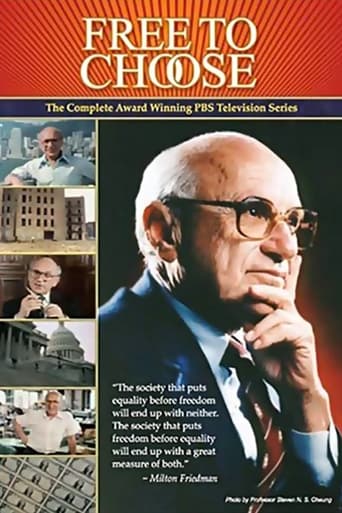
Free to Choose
1980 · TV series · documentary · 2 seasons
Free to Choose is a ten-part television series broadcast on public television by economists Milton and Rose D. Friedman that advocates free market principles. It was primarily a response to an earlier landmark book and television series: The Age of Uncertainty, by the noted economist John Kenneth Galbraith. Milton Friedman won the Nobel Memorial Prize in Economics in 1976.
13 positive2 neutralfrom 15 commenters
Where to watch
No streaming data for this title.
Videos commenters linked
From YouTube links in the comments below. Most are clips and trailers; “Full” means the uploader says so.


16 comments on Hacker News
>I'm not talking about you, but the rhetoric, the ideas. But another part of the rhetoric is to shift the conversation to being a victim, and away from the merits of the ideas so one doesn't have to talk about them. Heck, looking back, I even took trouble to say it wasn't about you.
A survey of the 'rhetoric' (which you've somehow shifted to even though it's quite obvious you are personifying the rhetoric to reflect the person) of Friedman's life and the people espousing his 'rhetoric' finds your accusation to be blatantly and utterly false. Nothing about Friedman's 'rhetoric' was focused around shifting away from the merits of the ideas. I recommend watching "Free to Choose" series where you will learn almost none of the 'rhetoric' is focused around 'victimhood' and almost entirely around how to deal with the circumstances he's recognized.
This 'victim' peddling of your 'rhetoric' assessment is purely aimed at assassinating Friedman's assessment with a thought terminating dismissal as appeal to victimhood, not grounded in truth nor is it even aimed at understanding what was said.
Thank you for that recommendation. Added this 10-hour documentary featuring Milton Friedman to the top of my to-watch list: https://www.freetochoosenetwork.org/programs/free_to_choose/index_80.php
The very worth watching Milton Friedman PBS series about the merits of free markets was called “Freedom to Choose” for a good reason. For such markets to function you must be free to choose what you do to earn money and free to choose on what goods and services you wish to spend it on. Much of the series is arguing about what happens when governments attempt to control this dynamic leading to the exact opposite of the stated objectives.
But really who wants to live in a system where you are so clearly funnelled from what it is you do every day to what it is you consume?
It took me a long time to grasp market economics. I knew it worked somehow but I didn't quite understand why. What really made it click was Milton Friedman's "Free to Choose" TV series[0].
[0] https://www.youtube.com/watch?v=dngqR9gcDDw&list=PLXD32Z5YYifX8J3Kp-WBA9Ongy0p1C1u9
There are complex and strict rules around commercial banks that direct to their loan to value ratios, capitalisation and auditing arrangements (Basel accords). Tether is not subject to this.
The biggest difference you highlight is a big difference. On youtube, you can watch a series of documentaries by Milton Friedman, Free to Choose. In an early episode of this, he explains how the Great Depression was triggered by the fed failing to lend liquidity to a legitimate commercial bank that needed it.
As you point out, there is no equivalent liquidity safety net for Tether. It may be that in a tether crisis the fed would feel compelled to step in and bailout anyway to prevent systemic problems. The Long Term Capital Management bailout had this character. It was not the fed’s responsibility to bail it out, but there was noone else to do it, and if they had not then it would have created a systemic crisis comparable to the start of the great depression.
This will not happen in 2021. Crypto is not systemically important now. But as it becomes integrated, Tether becomes a larger problem.
It should remind you of I, Pencil since it is essentially the modern telling of Smith's pin factory.
Milton Friedman described the pencil in his Free to Choose series: https://www.youtube.com/watch?v=67tHtpac5ws
And in 2012 CEI made a movie version: https://www.youtube.com/watch?v=IYO3tOqDISE
I know the rules here are such that we don't talk about voting up/down, but I have no idea why you were voted down. Your post is on-topic and informative. I didn't know their was a book version or the CEI movie version, I had only watched the Free to Choose series. Thanks for sharing.
Milton Friedman famously put forth an argument against minimum wage in his TV series Free to Choose:
https://www.youtube.com/watch?v=x-BGi4NIFww
I’ve got no clue what this has to do here, but all that article shows is that The NY Times is doing a swell job in providing substance free material and a love for the almighty state.
The author of that article is this fella [0]. While I do not doubt his writing abilities, I do doubt his expertise in economics and his political motivations.
Simply put, I do not show up at X field and pretend to know things just because I think I’m smart, even if I don’t have anything to do with said field. It’s interesting how with economics everyone thinks they can do just as much.
If you would like a basic intro to free markets checkout Milton Friedman’s Free To Choose series on YouTube. It’s from the 80s but well worth the time investment. It’s an easy to understand documentary series and at the end he talks to a group of people about the subject shown.
[0] https://en.m.wikipedia.org/wiki/Pankaj_Mishra
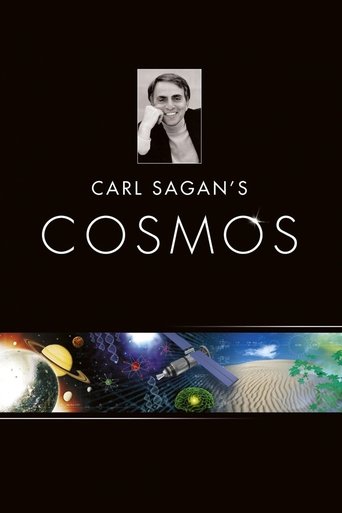
I think you give too much credit to economists as propagandists. Pretty much any other kind of social scientist receives way more space in the media than economists do. And an educated layman seems way more likely to be acquainted with the Milgram experiments or with the Sapir-Whorf hypothesis than he is to be acquainted with comparative advantage. Specially today. Back in the 1970s you could have seen Milton Friedman and John Kenneth Galbraith exchange passive aggressions through their own TV series (respectively "Free to Choose" and "Age of Uncertainty"). I don't know of a contemporary equivalent.
Unless you literally mean that they're making justifications for the ruling class and have them as their captive audience. Which, I'm ... rather tempted to agree. Unfortunately, people have a self-serving bias, and like paying people to say what they want to hear.
I haven't listened to this episode yet, but it's worth noting that Milton Friedman was advocating for this very position in the 1960s. Here's the relevant clip from Free to Choose:
https://youtu.be/82SG_EpCsVs?t=1524
And a 1968 clip from an interview with William Buckley Jr.:
https://www.youtube.com/watch?v=xtpgkX588nM
Hong Kong is a good example. You can watch the first episode of Milton Friedman's PBS series "Free to Choose" for more details.
*edit for clarity
On the political philosophy side, I'd recommend Milton Friedman's "Free To Choose" documentary: http://www.freetochoose.tv/
Agreed.
If you want, here is a list [http://miltonfriedman.blogspot.com/2006/08/pbs-tv-series-free-to-choose-by.html] of videos of his free to choose tv series.
Well probably the people who are interested on this know the name Milton Friedman very well, but I agree that for others an about page would be nice.
Just FYI: this is a television series from Friedmans book "Free to Choose", a classic book that advocates laissez-faire politics (free markets). Highly recommanded if you are interested in economics.
EDIT: Actually I checked and it seems that the book was written after the first TV-series, my bad.
The "Free to Choose" television series is really great, second that. They're all on google video, search for the obvious keywords and "long" duration (20+ mins) to find them easily.
I especially liked the debate segment in each show, where Friedman argues his points with both supporters and detractors. It struck me while watching it, you really can't find stuff like this on TV anymore.
If you are asking for introductory economics +1 for "Basic Economics" by Sowell and "Free to Choose" by Milton Friedman (Sowell is one of Friedman's proteges).
PBS made "Free to Choose" into a series back in the 1980s. You can find all the episodes on YouTube.