 Hacker Cinema

The Ascent of Man
1973 · TV series · documentary · 50 min episodes · 1 season
Created by Jacob Bronowski
The Ascent of Man is a thirteen-part documentary television series produced by the BBC and Time-Life Films first transmitted in 1973, written and presented by Jacob Bronowski. Intended as a series of "personal view" documentaries in the manner of Kenneth Clark's 1969 series Civilisation, the series received acclaim for Bronowski's highly informed but eloquently simple analysis, his long unscripted monologues and its extensive location shoots.
13 positive2 neutralfrom 15 commenters
Where to watch
No streaming data for this title.
Videos commenters linked
From YouTube links in the comments below. Most are clips and trailers; “Full” means the uploader says so.




19 comments on Hacker News
Worthwhile program deeply considering how one thing leads to another in history without any intention. Burke is one of several thinkers who wrote and produced educational series for the BBC: two notable others are Kenneth Clark's Civilization, which considers European art and architecture as being more than the sum of artifacts, and Jacob Bronowski's Ascent of Man that traces major epiphanies in the evolution of intellect. While some points are dated, these series are an excellent initiation to curiosity about the long tail of human achievement. After these three, move to Adam Curtis' collection of mini-series on recent history. All all British in a fine sense of educational TV.
The late 1970's were the golden age of documentaries: Connections, Cosmos, Civilization, The Ascent of Man and Attenborough's Life on Earth.
Perhaps it's just me, but modern documentaries are rather dumbed down?
As a side note: Quite ironic that he ends up pointing to a rocket propelled mostly by solid fuels.
He is far more than just a narrator. His 77-year career created and defined the wildlife/nature documentary as a genre, beginning at a time when television was so new that it really was just him and a few individuals making all the decisions. In his youth, he was given some cash and sent to travel the world in a 2-3 man team, off-grid for months, in the “Zoo Quest” series - the first time anyone had really seen animals, in the wild, on television.
Switching to a desk job, he went on to use his position in the BBC to green-light then-pioneering documentaries like “Civilisation” and “The Ascent of Man” (and still travelled occasionally for anthropological and nature documentaries, that he also green-lit) that remain a huge influence on all documentaries today.
Then in 1979, “Life on Earth” created an entirely new format of nature documentary that has only seen iterative change in the almost-50-years since. The rest, as they say, is history. He’s been heavily involved in the production of so many documentaries in the decades since, only reducing his role as he got older. Even in his 90s most of the series he narrates have short on-location sequences with him.
It’s safe to say that he, perhaps more than anyone else, created the “nature documentary” - both in experimenting with the format, and in green-lighting shows - and therefore shares a huge amount of responsibility for the many positive second order effects. Certainly in the UK, I would argue that a significant amount of public awareness of climate change comes from BBC documentaries. As attested to by others in this thread, generations of scientists and conservationists pursued their professions in part because they were inspired by him (and I can throw my own hat in the ring for this). It was also spoken about today, at his 100th birthday concert, about what an outsized influence his documentaries had on increased worldwide awareness of plastics pollution and the recent UN treaty beginning to address it.
His voice, really, is secondary to all that.
(I really would recommend reading his “Adventures of a Young Naturalist” and “Journeys to the Other Side of the World” books for anyone with an interest in this sort of stuff. They’re combined volumes of books he wrote back in the 1950s and 60s about his Zoo Quest expeditions - both a wondrous first-person view of the travels and interactions with wildlife, but also a fascinating teleportation back in time into a world where air travel and television were brand new, and all of these remote communities were near-untouched compared to today).
I think the finest BBC documentary series was The Ascent of Man - probably because my father made me watch it when I was about 8:
https://en.wikipedia.org/wiki/The_Ascent_of_Man
In an episode of the The Ascent of Man, Jacob Bronowski narrates the seasonal migration (transhumance) of the Bakhtiari tribe of SW Iran. When they get to the raging river, an old man can't make it, so is left on the bank to die.
https://www.dailymotion.com/video/x1ztord river crossing at 14-17 mins
This is the same epic migration recorded in the classic Grass
1925 ETHNOGRAPHIC DOCUMENTARY FILM " GRASS " MIGRATION OF BAKHTIARI TRIBE OF PERSIA
https://www.youtube.com/watch?v=0fVftguHwFc
And the tribe moves on .....
People in the UK can watch his TV series [1].
[1] https://www.bbc.co.uk/iplayer/episodes/b00wms4m/the-ascent-of-man
The greatest documentary to me is not a film but a series - The Ascent of Man by Jacob Bronowski.
It charts the cultural and technological milestones that brought humanity to where it is today. Well, the 1970s rather than today, since it is quite old. However don't let that put you off! It is a BBC documentary of the highest calibre. David Attenborough commissioned its production.
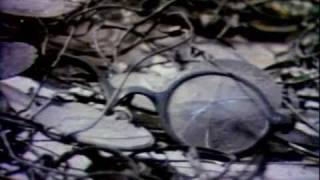
Bronowski is an incredible, if unusual, presenter - he has an interesting history (he personally knew Einstein, Von Neumann, and others), is knowledgeable in many fields, and doesn't waste a word. His off the cuff monologue at Auschwitz where some of his family died at the hands of the nazis is both heart-wrenching and profound. But thays just one of many incredible moments.
I have watched this countless times, and am always struck by the scope, scale, and beauty of the production.
https://en.wikipedia.org/wiki/The_Ascent_of_Man
Connections was savvy in finding faires, working museaums, and access to the BBC's film vaults for providing much (though not all) such footage. Burke describes going to reenactment festivals to film many of the medieval life scenes.
And his journalist background and connections enabled him to have the access necessary to shoot single-take sequences such as this:
https://youtube.com/watch?v=2WoDQBhJCVQ
(Hardly the only impressive on-location scene in his work.)
Agreed with your comments on the primary importance of writing and research. I'd argue that Chris & Evan Hadfield's "Rare Earth" is getting close, Tom Scott is doing quite well, and Derrek Muller's "Veritasium" and Destin Sandlin's "Smarter Every Day" have promise.
Several YouTubers have been picked up by traditional broadcasters/production organisations, notably Hank Green ("Crash Course"), with PBS, and Emily Graslie ("Prehistoric Road Trip"), with the Chicago Field Museum. YouTube as a training and recruiting ground has merits.
One reason Connections is so hard to compare to is that it's pretty incomparable: forty years on we're still discussing it in glowing terms. It was produced by someone well-established and experienced at least within the BBC, and backed by the organisation. Notably, little from either national/public broadcasting or commercial production has even approached it. My short list includes Sagan's Cosmos, Burke's own The Day the Universe Changed, Ken Burns. Daniel Yergin's The Prize. And of course Kenneth Clarke's Civilisation and Jacob Bronowski's The Ascent of Man, which had paved the way for Burke himself. I might include Adam Curtis's works.
The role of the author or creative voice --- a Burke, Sagan, Burns, Bronowski, Clark, Curtis --- cannot be overstated. That talent seems rare, perhaps also the ability to simply get out of its way. Also realising when it's circled too hard back in on itself --- Burke had 2--3 good series in him, but he hasn't matched himself in at least three decades.
Related HN thread with additional recommendations: https://news.ycombinator.com/item?id=2698026
Part of that is a more crowded field: there's more produced, it's harder to get noticed. Part my own near-total avoidance of broadcast television. But I don't think that's all of it.
And yes my HN history shows I'm quite the fan of Burke: https://hn.algolia.com/?dateRange=all&page=0&prefix=true&query=by%3Adredmorbius%20connections%20burke%20&sort=byPopularity&type=comment
In that era typically only things recorded in studios would be video, the rest would be film. So Connections could certainly he remastered, and I hope the BBC does so. Some of their older documentaries, like Ascent of Man, already got that treatment.
Other shows from that era worth a watch:
The Ascent of Man
Civilisation
There's also Connections series 2, although it is not as good.
Plus any of BBC Adam Curtis documentaries...
Jacob Bronowski appeared to believe that if Ludwig Boltzmann hadn't done his bit for atomic theory then Physics would be set back "decades, and perhaps a hundred years".
https://youtu.be/LPBjcMKiezg?t=36m50s
Either way this clip from The Ascent of Man is always worth watching, as is the whole series. It was the inspiration for Carl Sagan's Cosmos which I understand is fondly received in this community.
You're right, but I would retort that not all innovations are created equal.
Example: The French artisans, the middle class of their time, created wonderful toys for the gentry but almost none of their wonderfully intricate work had any impact on the Industrial Revolution in Britain, while a handful of illiterate working class types turned the Roman water wheel on its side and massively improved mechanical power production.
Their work would have been seen as obscene by the artisans but it was fundamentally more important.
There is a wonderful 1973 documentary by Jacob Bronowski on this topic:
http://www.dailymotion.com/video/x206z0e_bbc-ascent-of-man-07-the-drive-for-power_tv
Anybody can be 'possessed' by an idea, but it is clear that Silicon Valley has too many smart and well educated people wasting their time on trifles, their choices significantly retard what ought to be natural advantages.
Most important thing anyone can do is to choose their environment carefully e.g. having the right mentor, role models, choosing the right problem.
> Thank you, this was a wonderfully thought-provoking response (also, the first season of Connections is probably my favourite documentary of all time!).
Thank you. I hope to meet or communicate with Mr Burke at some point soon, I know Dan Carlin had a podcast with him a little while back if you're interested in his new take on the world. Connections remains the high water mark for documentary making and it is worth reading the books. If you want to watch a documentary in a similar style I suggest The Ascent of Man.
> In a sense, I think that although television itself isn't interactive, you could say that our family was 'interactive about' television. So we got the benefits of being able to use television in a positive way.
I believe you, I am mainly thinking of the average 5 hours per day the average American (or European) spends in front of the television. The dose makes the poison!
> This really resonated with me at the time, given that I was really getting into the Space Quest & other 'Quest games
Yes, it is clear that videogaming can provide for a shared community and culture, most obviously the MMORPGS. This is not something television achieves, or if it does, it is rare, like fans of Mythbusters or Connections. In the present we are concerned with developing the foundations of the Net, like commerce or the law. But ultimately I think a Net culture will be the most valued feature we ascribe to the Net.
One of my favorite texts back in my college days was The Ascent of Man by Jacob Bronowski. USA folks may not be familiar with this. It was actually more of a polished transcript of his TV series, which had aired in the UK and some other countries (including Malta, where it was required reading for getting into college in fact). Leo Szilard is a familiar name from that text - he certainly gets plenty of airtime in there.
The Ascent of Man is utterly fantastic. It, along with Civilisation[0] and Connections[1] are among my favourite documentaries ever.
Here's an excerpt from Charlie Brooker's Screenwipe on Jacob Bronowski[2]
[0] http://en.wikipedia.org/wiki/Civilisation_(TV_series)
[1] http://en.wikipedia.org/wiki/Connections_(TV_series)
[2] https://www.youtube.com/watch?v=3bNK97nIsKs#t=141
You'd certainly find something to interest you in the Ascent Of Man documentary series, although it covers many other areas.
Cosmos was based on it. Potentially the greatest television programme ever IMO.
Even more than Cosmos I regard The Ascent of Man as the documentary series that had the biggest impact on me - I was probably only 8 when it was shown on the BBC, but I can still remember watching it, particularly this:
http://www.youtube.com/watch?v=K0PDGZKGAWs
NB The Leó Szilárd he mentions was the Hungarian physicist who had the original idea for an atomic bomb while crossing a road in London in 1933, as Richard Rhodes described it:
"The stoplight changed to green. Szilárd stepped off the curb. As he crossed the street time cracked open before him and he saw a way to the future, death into the world and all our woes, the shape of things to come."
http://en.wikipedia.org/wiki/Le%C3%B3_Szil%C3%A1rd
I love The Ascent of Man. Bronowski's presentation style and the camera work (e.g. a wide shot of some landscape with Bronowski narrating then you notice actually he's a couple of hundred metres in the distance walking by) amuses me to no end, but it's a great watch. I haven't heard of the others you list, so I'll check them out, thanks.
Some of my favourites:
Microcoosmos
Anything by David Attenborough
Capturing The Friedmans
Anything by Louis Theoroux
The Music of the Primes (this was technically a 3 part series, but it's a great look at the mathematicians who have tried to find the secret to the prime numbers, most of whom drove themselves insane)
The (R)evolution of Immortal Technique - a documentary about political activist/musician, great watch
Bought this series on DVD recently, only watched a few episodes but it really is great. His presenting style leaves a little to be desired but this is a man of extraordinary intelligence and breadth of knowledge.
If anyone is wondering on the subject matter, it plots of the ascent of man not in terms of biological evolution but cultural evolution - which seems to me to be an oft overlooked facet of how we came to be.